Plato: the allegory of the cave (Republic 514a to 520a)
In the words of Pranav Ashar
How we renderThe heart of the Plato: the allegory of the cave (Republic 514a to 520a)
In brief
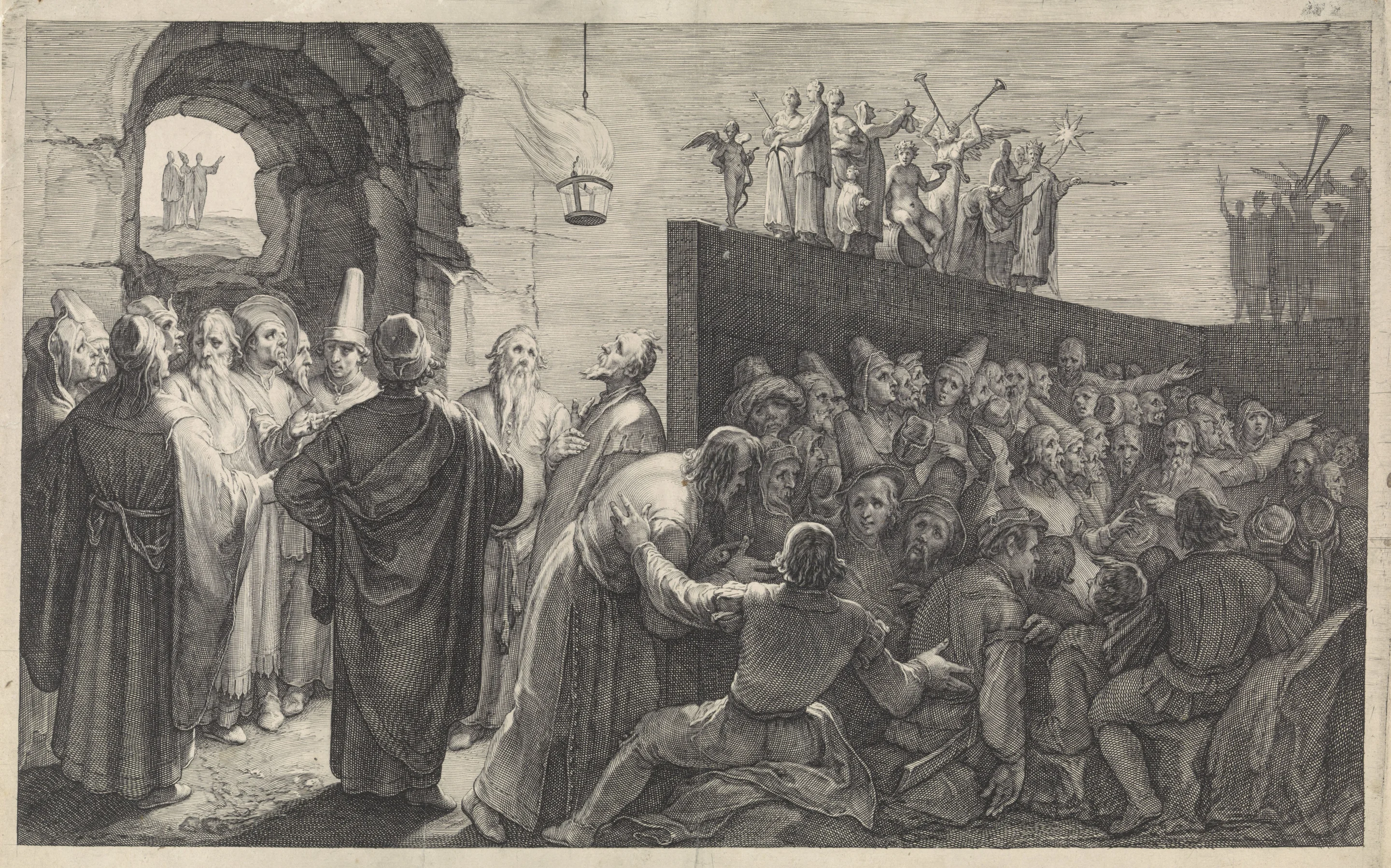
In the seventh book of the Republic (written about 375 BC) Socrates asks Glaucon to picture people chained in a cave since childhood, watching shadows on the wall and taking them for the things themselves. One is freed, dragged into the sun, and comes back down to be laughed at. The passage (514a to 520a) is given whole, section by section, in plain words, with the Greek and Jowett's translation of 1888 beside it; the Greek tradition's own sense comes first, and the site's reading is marked.
Contents
μετὰ ταῦτα δή, εἶπον, ἀπείκασον τοιούτῳ πάθει τὴν ἡμετέραν φύσιν παιδείας τε πέρι καὶ ἀπαιδευσίας. ἰδὲ γὰρ ἀνθρώπους οἷον ἐν καταγείῳ οἰκήσει σπηλαιώδει, ἀναπεπταμένην πρὸς τὸ φῶς τὴν εἴσοδον ἐχούσῃ μακρὰν παρὰ πᾶν τὸ σπήλαιον, ἐν ταύτῃ ἐκ παίδων ὄντας ἐν δεσμοῖς καὶ τὰ σκέλη καὶ τοὺς αὐχένας, ὥστε μένειν τε αὐτοὺς εἴς τε τὸ
meta tauta dē, eipon, apeikason toioutō pathei tēn hēmeteran phusin paideias te peri kai apaideusias. ide gar anthrōpous hoion en katageiō oikēsei spēlaiōdei, anapeptamenēn pros to phōs tēn eisodon echousē makran para pan to spēlaion, en tautē ek paidōn ontas en desmois kai ta skelē kai tous auchenas, hōste menein te autous eis te to
After that, I said, compare our nature, as far as education and its lack go, to a condition like this. Picture people in an underground dwelling like a cave, with a long entrance open to the light along the whole width of the cave. They have been there since childhood, legs and necks in chains, so that they stay where they are and can only look
Note //
The word is paideia, education in the broad sense of being formed; Socrates' picture is of the untaught human position, not of a special prison. The site's position 5 calls the same condition mistaking, natural and beginningless.
πρόσθεν μόνον ὁρᾶν, κύκλῳ δὲ τὰς κεφαλὰς ὑπὸ τοῦ δεσμοῦ ἀδυνάτους περιάγειν, φῶς δὲ αὐτοῖς πυρὸς ἄνωθεν καὶ πόρρωθεν καόμενον ὄπισθεν αὐτῶν, μεταξὺ δὲ τοῦ πυρὸς καὶ τῶν δεσμωτῶν ἐπάνω ὁδόν, παρ᾽ ἣν ἰδὲ τειχίον παρῳκοδομημένον, ὥσπερ τοῖς θαυματοποιοῖς πρὸ τῶν ἀνθρώπων πρόκειται τὰ παραφράγματα, ὑπὲρ ὧν τὰ θαύματα δεικνύασιν.ὁρῶ, ἔφη.ὅρα τοίνυν παρὰ τοῦτο τὸ τειχίον φέροντας ἀνθρώπους
prosthen monon horan, kuklō de tas kephalas hupo tou desmou adunatous periagein, phōs de autois puros anōthen kai porrōthen kaomenon opisthen autōn, metaxu de tou puros kai tōn desmōtōn epanō hodon, par᾽ hēn ide teichion parōkodomēmenon, hōsper tois thaumatopoiois pro tōn anthrōpōn prokeitai ta paraphragmata, huper hōn ta thaumata hdeiknuasin.orō, hephē.ora toinun para touto to teichion pherontas anthrōpous
in front of them, because the chain keeps them from turning their heads round. Light reaches them from a fire burning behind them, above and some way off, and between the fire and the prisoners there is a road running along higher up, and beside it, picture a low wall built along the road, like the screen that puppet-showmen set up in front of the audience, over which they show their puppets. I see it, he said. Then see, along this wall, people carrying
Note //
Thaumatopoioi are wonder-workers, puppeteers; Jowett's marionettes.
σκεύη τε παντοδαπὰ ὑπερέχοντα τοῦ τειχίου καὶ ἀνδριάντας
skeuē te pantodapa huperechonta tou teichiou kai andriantas
all kinds of objects that stick up above the wall, statues of men
καὶ ἄλλα ζῷα λίθινά τε καὶ ξύλινα καὶ παντοῖα εἰργασμένα, οἷον εἰκὸς τοὺς μὲν φθεγγομένους, τοὺς δὲ σιγῶντας τῶν παραφερόντων.ἄτοπον, ἔφη, λέγεις εἰκόνα καὶ δεσμώτας ἀτόπους.ὁμοίους ἡμῖν, ἦν δ᾽ ἐγώ: τοὺς γὰρ τοιούτους πρῶτον μὲν ἑαυτῶν τε καὶ ἀλλήλων οἴει ἄν τι ἑωρακέναι ἄλλο πλὴν τὰς σκιὰς τὰς ὑπὸ τοῦ πυρὸς εἰς τὸ καταντικρὺ αὐτῶν τοῦ σπηλαίου προσπιπτούσας;πῶς γάρ, ἔφη, εἰ ἀκινήτους γε τὰς κεφαλὰς ἔχειν ἠναγκασμένοι
kai alla zōa lithina te kai xulina kai pantoia eirgasmena, hoion eikos tous men phthengomenous, tous de sigōntas tōn parapherontōn.atopon, ephē, legeis eikona kai desmōtas hatopous.omoious hēmin, ēn d᾽ egō: tous gar toioutous prōton men heautōn te kai allēlōn oiei an ti heōrakenai allo plēn tas skias tas hupo tou puros eis to katantikru autōn tou spēlaiou prospiptousas;pōs gar, ephē, ei akinētous ge tas kephalas echein ēnankasmenoi
and other living things, in stone and wood and every material. Some of the carriers, as you would expect, are talking and some are silent. , he said, and strange prisoners. Like us, I said. To begin with, do you think such people would have seen anything of themselves or of one another except the shadows thrown by the fire on the wall of the cave in front of them? How could they, he said, if they were forced to keep their heads still
Note //
'Like us' (homoious hemin) is the hinge; the prisoners are not other people. The shadows of themselves come first in the list: the site's position 5, the Self taken for the body-mind.
εἶεν διὰ βίου;τί δὲ τῶν παραφερομένων; οὐ ταὐτὸν τοῦτο;τί μήν;εἰ οὖν διαλέγεσθαι οἷοί τ᾽ εἶεν πρὸς ἀλλήλους, οὐ ταῦτα ἡγῇ ἂν τὰ ὄντα αὐτοὺς νομίζειν ἅπερ ὁρῷεν;ἀνάγκη.τί δ᾽ εἰ καὶ ἠχὼ τὸ δεσμωτήριον ἐκ τοῦ καταντικρὺ ἔχοι; ὁπότε τις τῶν παριόντων φθέγξαιτο, οἴει ἂν ἄλλο τι αὐτοὺς ἡγεῖσθαι τὸ φθεγγόμενον ἢ τὴν παριοῦσαν σκιάν;μὰ Δί᾽ οὐκ ἔγωγ᾽, ἔφη.
eien dia biou;ti de tōn parapheromenōn; ou tauton touto;ti mēn;ei oun dialegesthai hoioi t᾽ eien pros allēlous, ou tauta hēgē an ta onta autous nomizein haper horōen;anankē.ti d᾽ ei kai ēchō to desmōtērion ek tou katantikru echoi; hopote tis tōn pariontōn phthenxaito, oiei an allo ti autous hēgeisthai to phthengomenon ē tēn pariousan skian;ma Di᾽ ouk egōg᾽, ephē.
all their lives? And of the things being carried past? Isn't it the same? Of course. So if they could talk to one another, don't you think they would take the things they saw to be the real things, and name them so? They would have to. And if the prison had an echo from the wall in front of them, whenever one of the passers-by spoke, do you think they would take the speaker to be anything but the passing shadow? By Zeus, no, he said.
Note //
Ta onta, 'the things that are', is the word the prisoners use for shadows; the site's dependent reality, real as appearance and taken as standing on its own.
παντάπασι δή, ἦν δ᾽ ἐγώ, οἱ τοιοῦτοι οὐκ ἂν ἄλλο τι νομίζοιεν τὸ ἀληθὲς ἢ τὰς τῶν σκευαστῶν σκιάς.πολλὴ ἀνάγκη, ἔφη.σκόπει δή, ἦν δ᾽ ἐγώ, αὐτῶν λύσιν τε καὶ ἴασιν τῶν τε δεσμῶν καὶ τῆς ἀφροσύνης, οἵα τις ἂν εἴη, εἰ φύσει τοιάδε συμβαίνοι αὐτοῖς: ὁπότε τις λυθείη καὶ ἀναγκάζοιτο ἐξαίφνης ἀνίστασθαί τε καὶ περιάγειν τὸν αὐχένα καὶ βαδίζειν καὶ πρὸς τὸ φῶς ἀναβλέπειν, πάντα δὲ ταῦτα ποιῶν ἀλγοῖ τε καὶ διὰ τὰς μαρμαρυγὰς ἀδυνατοῖ καθορᾶν ἐκεῖνα ὧν
pantapasi dē, ēn d᾽ egō, hoi toioutoi ouk an allo ti nomizoien to alēthes ē tas tōn skeuastōn skias.pollē anankē, ephē.skopei dē, ēn d᾽ egō, autōn lusin te kai iasin tōn te desmōn kai tēs aphrosunēs, hoia tis an eiē, ei phusei toiade sumbainoi autois: hopote tis lutheiē kai anankazoito exaiphnēs anistasthai te kai periagein ton auchena kai badizein kai pros to phōs anablepein, panta de tauta poiōn algoi te kai dia tas marmarugas adunatoi kathoran ekeina hōn
Then such people, I said, would hold that the truth is nothing else but the shadows of the made objects. They must, he said. Now consider, I said, what their release and cure from the chains and from their foolishness would be like, if it happened to them naturally like this. Suppose one of them were untied and made to stand up at once, turn his neck, walk, and look up toward the light; doing all this would hurt him, and because of the dazzle he could not make out the things whose
Note //
Lusis and iasis, release and cure: the chains and the foolishness go together, which is the site's position 7, knowledge removing a covering.
τότε τὰς σκιὰς ἑώρα, τί ἂν οἴει αὐτὸν εἰπεῖν, εἴ τις αὐτῷ λέγοι ὅτι τότε μὲν ἑώρα φλυαρίας, νῦν δὲ μᾶλλόν τι ἐγγυτέρω τοῦ ὄντος καὶ πρὸς μᾶλλον ὄντα τετραμμένος ὀρθότερον βλέποι, καὶ δὴ καὶ ἕκαστον τῶν παριόντων δεικνὺς αὐτῷ ἀναγκάζοι ἐρωτῶν ἀποκρίνεσθαι ὅτι ἔστιν; οὐκ οἴει αὐτὸν ἀπορεῖν τε ἂν καὶ ἡγεῖσθαι τὰ τότε ὁρώμενα ἀληθέστερα ἢ τὰ νῦν δεικνύμενα;πολύ γ᾽, ἔφη.
tote tas skias heōra, ti an oiei auton eipein, ei tis autō legoi hoti tote men heōra phluarias, nun de mallon ti enguterō tou ontos kai pros mallon onta tetrammenos orthoteron blepoi, kai dē kai hekaston tōn pariontōn deiknus autō anankazoi erōtōn apokrinesthai hoti estin; ouk oiei auton aporein te an kai hēgeisthai ta tote horōmena alēthestera ē ta nun deiknumena;polu g᾽, ephē.
shadows he used to see. What do you think he would say if someone told him that before he had been seeing , but now he was nearer to what is and turned toward things that are more, and saw more rightly? And if the man pointed to each of the things going past and made him answer what it was, don't you think he would be at a loss, and would hold that what he saw before was truer than what he was being shown now? Much truer, he said.
Note //
'Nearer to what is' (engutero tou ontos): Plato's degrees of being are kept as his, not flattened. Jowett's word for phluaria (nonsense, trifles) is his and not the Greek's.
οὐκοῦν κἂν εἰ πρὸς αὐτὸ τὸ φῶς ἀναγκάζοι αὐτὸν βλέπειν, ἀλγεῖν τε ἂν τὰ ὄμματα καὶ φεύγειν ἀποστρεφόμενον πρὸς ἐκεῖνα ἃ δύναται καθορᾶν, καὶ νομίζειν ταῦτα τῷ ὄντι σαφέστερα τῶν δεικνυμένων;οὕτως, ἔφη.εἰ δέ, ἦν δ᾽ ἐγώ, ἐντεῦθεν ἕλκοι τις αὐτὸν βίᾳ διὰ τραχείας τῆς ἀναβάσεως καὶ ἀνάντους, καὶ μὴ ἀνείη πρὶν ἐξελκύσειεν εἰς τὸ τοῦ ἡλίου φῶς, ἆρα οὐχὶ ὀδυνᾶσθαί τε
oukoun kan ei pros auto to phōs anankazoi auton blepein, algein te an ta ommata kai pheugein apostrephomenon pros ekeina ha dunatai kathoran, kai nomizein tauta tō onti saphestera tōn hdeiknumenōn;outōs, ephē.ei de, ēn d᾽ egō, enteuthen helkoi tis auton bia dia tracheias tēs anabaseōs kai anantous, kai mē aneiē prin exelkuseien eis to tou hēliou phōs, ara ouchi odunasthai te
And if he were made to look at the light itself, his eyes would hurt and he would turn away and run back to the things he could make out, and hold that these were really clearer than what was being shown him? So he would, he said. And if, I said, someone dragged him up the rough, steep way out by force, and did not let go until he had hauled him into the light of the sun, wouldn't he be in pain
Note //
The way out is by force (bia) and uphill; nothing in the picture makes the prisoner want to go.
ἂν καὶ ἀγανακτεῖν ἑλκόμενον, καὶ ἐπειδὴ πρὸς τὸ φῶς ἔλθοι, αὐγῆς ἂν ἔχοντα τὰ ὄμματα μεστὰ ὁρᾶν οὐδ᾽ ἂν ἓν δύνασθαι τῶν νῦν λεγομένων ἀληθῶν;οὐ γὰρ ἄν, ἔφη, ἐξαίφνης γε.συνηθείας δὴ οἶμαι δέοιτ᾽ ἄν, εἰ μέλλοι τὰ ἄνω ὄψεσθαι. καὶ πρῶτον μὲν τὰς σκιὰς ἂν ῥᾷστα καθορῷ, καὶ μετὰ τοῦτο ἐν τοῖς ὕδασι τά τε τῶν ἀνθρώπων καὶ τὰ τῶν ἄλλων εἴδωλα, ὕστερον δὲ αὐτά: ἐκ δὲ τούτων τὰ ἐν τῷ οὐρανῷ καὶ αὐτὸν τὸν οὐρανὸν νύκτωρ ἂν ῥᾷον θεάσαιτο, προσβλέπων τὸ τῶν
an kai aganaktein helkomenon, kai epeidē pros to phōs elthoi, augēs an echonta ta ommata mesta horan oud᾽ an hen dunasthai tōn nun legomenōn alēthōn;ou gar an, ephē, exaiphnēs ge.sunētheias dē oimai deoit᾽ an, ei melloi ta anō opsesthai. kai prōton men tas skias an hrasta kathorō, kai meta touto en tois hudasi ta te tōn anthrōpōn kai ta tōn allōn eidōla, husteron de auta: ek de toutōn ta en tō ouranō kai auton ton ouranon nuktōr an hraon theasaito, prosblepōn to tōn
and angry at being dragged? And when he came to the light, with his eyes full of its glare, he could not see even one of the things now called true. Not at first, he said. He would need to get used to it, I think, if he was going to see what is above. First he would make out shadows most easily, then the reflections of people and other things in water, and later the things themselves; after that he would look at what is in the sky, and at the sky itself, more easily by night, looking at the light of the
Note //
The order of getting used to it, shadows, reflections, things, sky, is the ladder of the divided line in the previous book; the site reads it as degrees of reflection, position 9.
ἄστρων τε καὶ σελήνης φῶς, ἢ μεθ᾽ ἡμέραν τὸν ἥλιόν τε καὶ τὸ τοῦ ἡλίου.πῶς δ᾽ οὔ;τελευταῖον δὴ οἶμαι τὸν ἥλιον, οὐκ ἐν ὕδασιν οὐδ᾽ ἐν ἀλλοτρίᾳ ἕδρᾳ φαντάσματα αὐτοῦ, ἀλλ᾽ αὐτὸν καθ᾽ αὑτὸν ἐν τῇ αὑτοῦ χώρᾳ δύναιτ᾽ ἂν κατιδεῖν καὶ θεάσασθαι οἷός ἐστιν.ἀναγκαῖον, ἔφη.καὶ μετὰ ταῦτ᾽ ἂν ἤδη συλλογίζοιτο περὶ αὐτοῦ ὅτι οὗτος ὁ τάς τε ὥρας παρέχων καὶ ἐνιαυτοὺς καὶ πάντα ἐπιτροπεύων
astrōn te kai selēnēs phōs, ē meth᾽ hēmeran ton hēlion te kai to tou hēliou.pōs d᾽ ou;teleutaion dē oimai ton hēlion, ouk en hudasin oud᾽ en allotria hedra phantasmata autou, all᾽ auton kath᾽ hauton en tē hautou chōra dunait᾽ an katidein kai theasasthai hoios estin.anankaion, ephē.kai meta taut᾽ an ēdē sullogizoito peri autou hoti houtos ho tas te hōras parechōn kai eniautous kai panta epitropeuōn
stars and the moon, than by day at the sun and the sun's light. Of course. Last of all, I think, he could look at the sun, not its appearances in water or , but the sun itself, by itself, in its own place, and see what it is like. He must, he said. And after that he would work out that it is the sun that gives the seasons and the years, and governs everything
Note //
Auton kath' hauton, 'itself by itself': the sun seen in its own place and not as a reflection is Plato's figure for the good; the site's self-shining awareness is the same figure read from the inside.
τὰ ἐν τῷ ὁρωμένῳ τόπῳ, καὶ ἐκείνων ὧν σφεῖς ἑώρων τρόπον τινὰ πάντων αἴτιος.δῆλον, ἔφη, ὅτι ἐπὶ ταῦτα ἂν μετ᾽ ἐκεῖνα ἔλθοι.τί οὖν; ἀναμιμνῃσκόμενον αὐτὸν τῆς πρώτης οἰκήσεως καὶ τῆς ἐκεῖ σοφίας καὶ τῶν τότε συνδεσμωτῶν οὐκ ἂν οἴει αὑτὸν μὲν εὐδαιμονίζειν τῆς μεταβολῆς, τοὺς δὲ ἐλεεῖν;καὶ μάλα.τιμαὶ δὲ καὶ ἔπαινοι εἴ τινες αὐτοῖς ἦσαν τότε παρ᾽ ἀλλήλων καὶ γέρα τῷ ὀξύτατα καθορῶντι τὰ παριόντα, καὶ μνημονεύοντι μάλιστα ὅσα τε πρότερα αὐτῶν καὶ ὕστερα
ta en tō horōmenō topō, kai ekeinōn hōn spheis heōrōn tropon tina pantōn aitios.dēlon, ephē, hoti epi tauta an met᾽ ekeina elthoi.ti oun; anamimnēskomenon auton tēs prōtēs oikēseōs kai tēs ekei sophias kai tōn tote sundesmōtōn ouk an oiei hauton men eudaimonizein tēs metabolēs, tous de eleein;kai mala.timai de kai epainoi ei tines autois ēsan tote par᾽ allēlōn kai gera tō oxutata kathorōnti ta parionta, kai mnēmoneuonti malista hosa te protera autōn kai hustera
in the visible place, and is in a way the cause of everything they used to see. Clearly, he said, he would come to that after the rest. Well then. When he remembered his first home, and the wisdom there, and his fellow prisoners of that time, don't you think he would count himself happy in the change and pity them? Very much. And if they had had honours and praises among themselves, and prizes for the one who saw the passing things most sharply and best remembered which usually came before and after and together,
εἰώθει καὶ ἅμα πορεύεσθαι, καὶ ἐκ τούτων δὴ δυνατώτατα ἀπομαντευομένῳ τὸ μέλλον ἥξειν, δοκεῖς ἂν αὐτὸν ἐπιθυμητικῶς αὐτῶν ἔχειν καὶ ζηλοῦν τοὺς παρ᾽ ἐκείνοις τιμωμένους τε καὶ ἐνδυναστεύοντας, ἢ τὸ τοῦ Ὁμήρου ἂν πεπονθέναι καὶ σφόδρα βούλεσθαι ἐπάρουρον ἐόντα θητευέμεν ἄλλῳ ἀνδρὶ παρ᾽ ἀκλήρῳ καὶ ὁτιοῦν ἂν πεπονθέναι μᾶλλον ἢ 'κεῖνά τε δοξάζειν καὶ ἐκείνως ζῆν;
eiōthei kai hama poreuesthai, kai ek toutōn dē dunatōtata apomanteuomenō to mellon hēxein, dokeis an auton epithumētikōs autōn echein kai zēloun tous par᾽ ekeinois timōmenous te kai endunasteuontas, ē to tou Homērou an peponthenai kai sphodra boulesthai eparouron eonta thēteuemen allō andri par᾽ aklērō kai hotioun an peponthenai mallon ē 'keina te doxazein kai ekeinōs zēn;
and was best at guessing from that what would come next, do you think he would want those prizes, or envy the ones who were honoured and had power down there? Or would he feel as Homer says, and much rather 'work the land as a hired man for some landless other', and go through anything rather than hold those opinions and live that life?
Note //
The Homer line is what the dead Achilles says to Odysseus in the underworld (Odyssey 11.489): better a poor man's hired hand alive than king of the dead.
οὕτως, ἔφη, ἔγωγε οἶμαι, πᾶν μᾶλλον πεπονθέναι ἂν δέξασθαι ἢ ζῆν ἐκείνως.καὶ τόδε δὴ ἐννόησον, ἦν δ᾽ ἐγώ. εἰ πάλιν ὁ τοιοῦτος καταβὰς εἰς τὸν αὐτὸν θᾶκον καθίζοιτο, ἆρ᾽ οὐ σκότους ἂν ἀνάπλεως σχοίη τοὺς ὀφθαλμούς, ἐξαίφνης ἥκων ἐκ τοῦ ἡλίου;καὶ μάλα γ᾽, ἔφη.τὰς δὲ δὴ σκιὰς ἐκείνας πάλιν εἰ δέοι αὐτὸν γνωματεύοντα διαμιλλᾶσθαι τοῖς ἀεὶ δεσμώταις ἐκείνοις, ἐν ᾧ ἀμβλυώττει,
houtōs, ephē, egōge oimai, pan mallon peponthenai an dexasthai ē zēn ekeinōs.kai tode dē ennoēson, ēn d᾽ egō. ei palin ho toioutos katabas eis ton auton thakon kathizoito, ar᾽ ou skotous an anapleōs schoiē tous ophthalmous, exaiphnēs hēkōn ek tou hēliou;kai mala g᾽, ephē.tas de dē skias ekeinas palin ei deoi auton gnōmateuonta diamillasthai tois aei desmōtais ekeinois, en hō ambluōttei,
That is how I think it would be, he said; he would accept anything rather than live that way. Then think of this too, I said. If such a man went down again and sat in his old seat, wouldn't his eyes be full of darkness, coming suddenly out of the sun? Very much so, he said. And if he had to compete again with those lifelong prisoners in judging the shadows, while his sight was still dim,
Note //
The descent is as much a part of the picture as the climb; the site's free while living is the one who has come back down and sees the shadows as shadows.
πρὶν καταστῆναι τὰ ὄμματα, οὗτος δ᾽ ὁ χρόνος μὴ πάνυ ὀλίγος εἴη τῆς συνηθείας, ἆρ᾽ οὐ γέλωτ᾽ ἂν παράσχοι, καὶ λέγοιτο ἂν περὶ αὐτοῦ ὡς ἀναβὰς ἄνω διεφθαρμένος ἥκει τὰ ὄμματα, καὶ ὅτι οὐκ ἄξιον οὐδὲ πειρᾶσθαι ἄνω ἰέναι; καὶ τὸν ἐπιχειροῦντα λύειν τε καὶ ἀνάγειν, εἴ πως ἐν ταῖς χερσὶ δύναιντο λαβεῖν καὶ ἀποκτείνειν, ἀποκτεινύναι ἄν;σφόδρα γ᾽, ἔφη.ταύτην τοίνυν, ἦν δ᾽ ἐγώ, τὴν εἰκόνα, ὦ φίλε Γλαύκων,
prin katastēnai ta ommata, houtos d᾽ ho chronos mē panu oligos eiē tēs sunētheias, ar᾽ ou gelōt᾽ an paraschoi, kai legoito an peri autou hōs anabas anō diephtharmenos hēkei ta ommata, kai hoti ouk axion oude peirasthai anō ienai; kai ton epicheirounta luein te kai anagein, ei pōs en tais chersi dunainto labein kai apokteinein, apokteinunai an;sphodra g᾽, ephē.tautēn toinun, ēn d᾽ egō, tēn eikona, ō phile Glaukōn,
before his eyes had settled, and the time it took to get used to it was not short, wouldn't he be laughed at? Wouldn't they say of him that he had gone up and come back with his eyes ruined, and that it was not worth even trying to go up? And if they could get their hands on the one who was trying to free them and lead them up, wouldn't they kill him? They certainly would, he said. This whole picture, I said, dear Glaucon,
Note //
The killing of the one who frees them is Socrates' own death, told in advance by Plato.
προσαπτέον ἅπασαν τοῖς ἔμπροσθεν λεγομένοις, τὴν μὲν δι᾽ ὄψεως φαινομένην ἕδραν τῇ τοῦ δεσμωτηρίου οἰκήσει ἀφομοιοῦντα, τὸ δὲ τοῦ πυρὸς ἐν αὐτῇ φῶς τῇ τοῦ ἡλίου δυνάμει: τὴν δὲ ἄνω ἀνάβασιν καὶ θέαν τῶν ἄνω τὴν εἰς τὸν νοητὸν τόπον τῆς ψυχῆς ἄνοδον τιθεὶς οὐχ ἁμαρτήσῃ τῆς γ᾽ ἐμῆς ἐλπίδος, ἐπειδὴ ταύτης ἐπιθυμεῖς ἀκούειν. θεὸς δέ που οἶδεν εἰ ἀληθὴς οὖσα τυγχάνει. τὰ δ᾽ οὖν ἐμοὶ φαινόμενα οὕτω φαίνεται, ἐν τῷ γνωστῷ τελευταία ἡ τοῦ
prosapteon hapasan tois emprosthen legomenois, tēn men di᾽ opseōs phainomenēn hedran tē tou desmōtēriou oikēsei aphomoiounta, to de tou puros en autē phōs tē tou hēliou dunamei: tēn de anō anabasin kai thean tōn anō tēn eis ton noēton topon tēs psuchēs anodon titheis ouch hamartēsē tēs g᾽ emēs elpidos, epeidē tautēs epithumeis akouein. theos de pou oiden ei alēthēs ousa tunchanei. ta d᾽ oun emoi phainomena houtō phainetai, en tō gnōstō teleutaia hē tou
you must fit to what was said before: the place that appears through sight is the prison dwelling, and the light of the fire in it is the power of the sun. If you take the climb up and the seeing of what is above as the rising of the into the place of thought, you will not miss what I hope, since that is what you want to hear. Whether it happens to be true, a god knows. But this is how it looks to me: in what can be known, the form of the
Note //
Psyche is kept as 'soul' here, in the Greek sense of what lives and knows, because the site's 'the Self' would decide a question Plato leaves open; the note on 518c says where the two meet. Noetos topos, the place of thought, is the intelligible.
ἀγαθοῦ ἰδέα καὶ μόγις ὁρᾶσθαι, ὀφθεῖσα δὲ συλλογιστέα εἶναι ὡς ἄρα πᾶσι πάντων αὕτη ὀρθῶν τε καὶ καλῶν αἰτία, ἔν τε ὁρατῷ φῶς καὶ τὸν τούτου κύριον τεκοῦσα, ἔν τε νοητῷ αὐτὴ κυρία ἀλήθειαν καὶ νοῦν παρασχομένη, καὶ ὅτι δεῖ ταύτην ἰδεῖν τὸν μέλλοντα ἐμφρόνως πράξειν ἢ ἰδίᾳ ἢ δημοσίᾳ.συνοίομαι, ἔφη, καὶ ἐγώ, ὅν γε δὴ τρόπον δύναμαι.ἴθι τοίνυν, ἦν δ᾽ ἐγώ, καὶ τόδε συνοιήθητι καὶ μὴ θαυμάσῃς ὅτι οἱ ἐνταῦθα ἐλθόντες οὐκ ἐθέλουσιν τὰ τῶν ἀνθρώπων πράττειν, ἀλλ᾽ ἄνω ἀεὶ ἐπείγονται αὐτῶν αἱ ψυχαὶ διατρίβειν:
agathou idea kai mogis horasthai, ophtheisa de sullogistea einai hōs ara pasi pantōn hautē orthōn te kai kalōn aitia, en te horatō phōs kai ton toutou kurion tekousa, en te noētō autē kuria alētheian kai noun paraschomenē, kai hoti dei tautēn idein ton mellonta emphronōs praxein ē idia ē dēmosia.sunoiomai, ephē, kai egō, hon ge dē tropon dunamai.ithi toinun, ēn d᾽ egō, kai tode sunoiēthēti kai mē thaumasēs hoti hoi entautha elthontes ouk ethelousin ta tōn anthrōpōn prattein, all᾽ anō aei epeigontai autōn hai psuchai diatribein:
good is seen last, and with difficulty, and when seen it must be reckoned the cause of everything right and beautiful for everyone: in the visible it gives birth to light and to the master of light, and in the thinkable it is itself the master and gives truth and understanding; and whoever means to act wisely, in private or in public, must see it. I think so too, he said, as far as I can. Then think this too, I said, and don't be surprised that those who have come this far are unwilling to deal with human affairs, but their souls are always pressing to spend their time above.
Note //
The idea of the good is the cause of being and of knowing both; the site reads it, with Plotinus and against most of Plato's commentators, as the whole of position 1, awareness and being as one, and marks that as the site's reading.
εἰκὸς γάρ που οὕτως, εἴπερ αὖ κατὰ τὴν προειρημένην εἰκόνα τοῦτ᾽ ἔχει.εἰκὸς μέντοι, ἔφη.τί δέ; τόδε οἴει τι θαυμαστόν, εἰ ἀπὸ θείων, ἦν δ᾽ ἐγώ, θεωριῶν ἐπὶ τὰ ἀνθρώπειά τις ἐλθὼν κακὰ ἀσχημονεῖ τε καὶ φαίνεται σφόδρα γελοῖος ἔτι ἀμβλυώττων καὶ πρὶν ἱκανῶς συνήθης γενέσθαι τῷ παρόντι σκότῳ ἀναγκαζόμενος ἐν δικαστηρίοις ἢ ἄλλοθί που ἀγωνίζεσθαι περὶ τῶν τοῦ δικαίου σκιῶν ἢ ἀγαλμάτων ὧν αἱ σκιαί, καὶ διαμιλλᾶσθαι
eikos gar pou houtōs, eiper au kata tēn proeirēmenēn eikona tout᾽ echei.eikos mentoi, ephē.ti de; tode oiei ti thaumaston, ei apo theiōn, ēn d᾽ egō, theōriōn epi ta anthrōpeia tis elthōn kaka aschēmonei te kai phainetai sphodra geloios eti ambluōttōn kai prin hikanōs sunēthēs genesthai tō paronti skotō anankazomenos en dikastēriois ē allothi pou agōnizesthai peri tōn tou dikaiou skiōn ē agalmatōn hōn hai skiai, kai diamillasthai
That is to be expected, if things are as the picture says. It is, he said. And is it any wonder, I said, if someone who comes from looking at divine things to the troubles of men cuts a poor figure and looks quite ridiculous, while his sight is still dim and before he has got used to the dark around him, when he is forced to argue in law courts or elsewhere about the shadows of the just, or the statues whose shadows they are, and to fight
περὶ τούτου, ὅπῃ ποτὲ ὑπολαμβάνεται ταῦτα ὑπὸ τῶν αὐτὴν δικαιοσύνην μὴ πώποτε ἰδόντων;οὐδ᾽ ὁπωστιοῦν θαυμαστόν, ἔφη.
peri toutou, hopē pote hupolambanetai tauta hupo tōn autēn dikaiosunēn mē pōpote idontōn;oud᾽ hopōstioun thaumaston, ephē.
about how these things are understood by people who have never seen justice itself? No wonder at all, he said.
ἀλλ᾽ εἰ νοῦν γε ἔχοι τις, ἦν δ᾽ ἐγώ, μεμνῇτ᾽ ἂν ὅτι διτταὶ καὶ ἀπὸ διττῶν γίγνονται ἐπιταράξεις ὄμμασιν, ἔκ τε φωτὸς εἰς σκότος μεθισταμένων καὶ ἐκ σκότους εἰς φῶς. ταὐτὰ δὲ ταῦτα νομίσας γίγνεσθαι καὶ περὶ ψυχήν, ὁπότε ἴδοι θορυβουμένην τινὰ καὶ ἀδυνατοῦσάν τι καθορᾶν, οὐκ ἂν ἀλογίστως γελῷ, ἀλλ᾽ ἐπισκοποῖ ἂν πότερον ἐκ φανοτέρου βίου ἥκουσα ὑπὸ ἀηθείας ἐσκότωται, ἢ ἐξ ἀμαθίας πλείονος εἰς φανότερον ἰοῦσα ὑπὸ λαμπροτέρου μαρμαρυγῆς
all᾽ ei noun ge echoi tis, ēn d᾽ egō, memnēt᾽ an hoti dittai kai apo dittōn gignontai epitaraxeis ommasin, ek te phōtos eis skotos methistamenōn kai ek skotous eis phōs. tauta de tauta nomisas gignesthai kai peri psuchēn, hopote idoi thoruboumenēn tina kai adunatousan ti kathoran, ouk an alogistōs gelō, all᾽ episkopoi an poteron ek phanoterou biou hēkousa hupo aētheias eskotōtai, ē ex amathias pleionos eis phanoteron iousa hupo lamproterou marmarugēs
But anyone with sense, I said, would remember that the eyes are confused in two ways and from two causes, when they move from light to dark and from dark to light. He would take the same to be true of the , and when he saw one confused and unable to make something out, he would not laugh without thinking; he would ask whether it had come from a brighter life and was darkened by not being used to this, or was coming from greater ignorance into brightness and was filled with
Note //
Plato's two confusions, coming out of the light and going into it, are the site's position 7 read both ways: the knower blinks in the world and the beginner blinks in the light.
ἐμπέπλησται, καὶ οὕτω δὴ τὴν μὲν εὐδαιμονίσειεν ἂν τοῦ πάθους τε καὶ βίου, τὴν δὲ ἐλεήσειεν, καὶ εἰ γελᾶν ἐπ᾽ αὐτῇ βούλοιτο, ἧττον ἂν καταγέλαστος ὁ γέλως αὐτῷ εἴη ἢ ὁ ἐπὶ τῇ ἄνωθεν ἐκ φωτὸς ἡκούσῃ.καὶ μάλα, ἔφη, μετρίως λέγεις.δεῖ δή, εἶπον, ἡμᾶς τοιόνδε νομίσαι περὶ αὐτῶν, εἰ ταῦτ᾽ ἀληθῆ: τὴν παιδείαν οὐχ οἵαν τινὲς ἐπαγγελλόμενοί φασιν εἶναι τοιαύτην καὶ εἶναι. φασὶ δέ που οὐκ ἐνούσης ἐν τῇ
empeplēstai, kai houtō dē tēn men eudaimoniseien an tou pathous te kai biou, tēn de eleēseien, kai ei gelan ep᾽ autē bouloito, hētton an katagelastos ho gelōs autō eiē ē ho epi tē anōthen ek phōtos hēkousē.kai mala, ephē, metriōs legeis.dei dē, eipon, hēmas toionde nomisai peri autōn, ei taut᾽ alēthē: tēn paideian ouch hoian tines epangellomenoi phasin einai toiautēn kai einai. phasi de pou ouk enousēs en tē
the glare. The first he would count happy in what it had gone through and how it lived, and the second he would pity; and if he wanted to laugh at it, his laugh would be less laughable than a laugh at the one coming down from the light. That is fairly said, he said. Then, I said, if this is true, we must think of education like this: it is not what some people who profess it say it is. They say, I think, that knowledge is not in the
ψυχῇ ἐπιστήμης σφεῖς ἐντιθέναι, οἷον τυφλοῖς ὀφθαλμοῖς ὄψιν ἐντιθέντες.φασὶ γὰρ οὖν, ἔφη.ὁ δέ γε νῦν λόγος, ἦν δ᾽ ἐγώ, σημαίνει ταύτην τὴν ἐνοῦσαν ἑκάστου δύναμιν ἐν τῇ ψυχῇ καὶ τὸ ὄργανον ᾧ καταμανθάνει ἕκαστος, οἷον εἰ ὄμμα μὴ δυνατὸν ἦν ἄλλως ἢ σὺν ὅλῳ τῷ σώματι στρέφειν πρὸς τὸ φανὸν ἐκ τοῦ σκοτώδους, οὕτω σὺν ὅλῃ τῇ ψυχῇ ἐκ τοῦ γιγνομένου περιακτέον εἶναι, ἕως ἂν εἰς τὸ ὂν καὶ τοῦ ὄντος τὸ φανότατον δυνατὴ γένηται ἀνασχέσθαι θεωμένη: τοῦτο δ᾽ εἶναί φαμεν
psuchē epistēmēs spheis entithenai, hoion tuphlois ophthalmois opsin entithentes.phasi gar oun, hephē.o de ge nun logos, ēn d᾽ egō, sēmainei tautēn tēn enousan hekastou dunamin en tē psuchē kai to organon hō katamanthanei hekastos, hoion ei omma mē dunaton ēn allōs ē sun holō tō sōmati strephein pros to phanon ek tou skotōdous, houtō sun holē tē psuchē ek tou gignomenou periakteon einai, heōs an eis to on kai tou ontos to phanotaton dunatē genētai anaschesthai theōmenē: touto d᾽ einai phamen
and they put it in, as if they were putting sight into blind eyes. They do say that, he said. But our present account, I said, shows that this power is in each person's already, along with ; and that just as an eye could not be turned from the dark to the bright except together with the whole body, so this organ has to be together with the whole , away from what comes to be, until it can bear to look at what is, and at the brightest of what is; and that, we say,
Note //
The power is already there; education turns it, it does not put it in. This is the Platonic form of the site's position 7, that knowledge removes a covering and adds nothing, and of position 6, that the claim falls and what remains is recognised.
τἀγαθόν. ἦ γάρ;ναί.τούτου τοίνυν, ἦν δ᾽ ἐγώ, αὐτοῦ τέχνη ἂν εἴη, τῆς περιαγωγῆς, τίνα τρόπον ὡς ῥᾷστά τε καὶ ἀνυσιμώτατα μεταστραφήσεται, οὐ τοῦ ἐμποιῆσαι αὐτῷ τὸ ὁρᾶν, ἀλλ᾽ ὡς ἔχοντι μὲν αὐτό, οὐκ ὀρθῶς δὲ τετραμμένῳ οὐδὲ βλέποντι οἷ ἔδει, τοῦτο διαμηχανήσασθαι.ἔοικεν γάρ, ἔφη.αἱ μὲν τοίνυν ἄλλαι ἀρεταὶ καλούμεναι ψυχῆς κινδυνεύουσιν ἐγγύς τι εἶναι τῶν τοῦ σώματος—τῷ ὄντι γὰρ
tagathon. ē gar;nai.toutou toinun, ēn d᾽ egō, autou technē an eiē, tēs periagōgēs, tina tropon hōs hrasta te kai anusimōtata metastraphēsetai, ou tou empoiēsai autō to horan, all᾽ hōs echonti men auto, ouk orthōs de tetrammenō oude bleponti hoi edei, touto diamēchanēsasthai.eoiken gar, hephē.ai men toinun allai aretai kaloumenai psuchēs kinduneuousin engus ti einai tōn tou sōmatos—tō onti gar
is the good. Isn't it? Yes. So there would be an art of this very thing, I said, of : how it can be turned most easily and effectively, not an art of putting sight into it, but of managing this for something that has sight already but is not turned the right way and is not looking where it should. So it seems, he said. Now the other virtues of the , as they are called, are probably close to those of the body,
Note //
Periagoge, the turning round, is Plato's word for what the site calls inquiry: not gaining a faculty but turning the one there is.
οὐκ ἐνοῦσαι πρότερον ὕστερον ἐμποιεῖσθαι ἔθεσι καὶ ἀσκήσεσιν—ἡ δὲ τοῦ φρονῆσαι παντὸς μᾶλλον θειοτέρου τινὸς τυγχάνει, ὡς ἔοικεν, οὖσα, ὃ τὴν μὲν δύναμιν οὐδέποτε ἀπόλλυσιν, ὑπὸ δὲ τῆς περιαγωγῆς χρήσιμόν τε καὶ ὠφέλιμον
ouk enousai proteron husteron empoieisthai ethesi kai haskēsesin—ē de tou phronēsai pantos mallon theioterou tinos tunchanei, hōs eoiken, ousa, ho tēn men dunamin oudepote apollusin, hupo de tēs periagōgēs chrēsimon te kai ōphelimon
for they really are not there at first and are put in later by habit and practice; but the virtue of understanding, it seems, belongs to something more divine, which never loses its power, and by becomes useful and helpful,
Note //
Phronesis, understanding, never loses its power whichever way it is turned; Plato's 'something more divine' is as near as the passage comes to the site's awareness that is equal in all, position 9.
καὶ ἄχρηστον αὖ καὶ βλαβερὸν γίγνεται. ἢ οὔπω ἐννενόηκας, τῶν λεγομένων πονηρῶν μέν, σοφῶν δέ, ὡς δριμὺ μὲν βλέπει τὸ ψυχάριον καὶ ὀξέως διορᾷ ταῦτα ἐφ᾽ ἃ τέτραπται, ὡς οὐ φαύλην ἔχον τὴν ὄψιν, κακίᾳ δ᾽ ἠναγκασμένον ὑπηρετεῖν, ὥστε ὅσῳ ἂν ὀξύτερον βλέπῃ, τοσούτῳ πλείω κακὰ ἐργαζόμενον;πάνυ μὲν οὖν, ἔφη.τοῦτο μέντοι, ἦν δ᾽ ἐγώ, τὸ τῆς τοιαύτης φύσεως εἰ ἐκ παιδὸς εὐθὺς κοπτόμενον περιεκόπη τὰς τῆς γενέσεως
kai achrēston au kai blaberon gignetai. ē oupō ennenoēkas, tōn legomenōn ponērōn men, sophōn de, hōs drimu men blepei to psucharion kai oxeōs diora tauta eph᾽ ha tetraptai, hōs ou phaulēn echon tēn opsin, kakia d᾽ ēnankasmenon hupēretein, hōste hosō an oxuteron blepē, tosoutō pleiō kaka ergazomenon;panu men oun, ephē.touto mentoi, ēn d᾽ egō, to tēs toiautēs phuseōs ei ek paidos euthus koptomenon periekopē tas tēs geneseōs
or again useless and harmful. Haven't you noticed how sharply the little of those called bad but clever sees, and how keenly it makes out the things it is turned toward? Its sight is not poor; it is forced to serve badness, so that the more keenly it sees, the more harm it does. Certainly, he said. Yet if this part of such a nature, I said, had been hammered at from childhood and cut free of the
Note //
Psycharion, 'little soul', is Plato's contempt for the clever rogue; the point, that sight is not the problem but its direction, is the site's position 5, mistaking done by the mind.
συγγενεῖς ὥσπερ μολυβδίδας, αἳ δὴ ἐδωδαῖς τε καὶ τοιούτων ἡδοναῖς τε καὶ λιχνείαις προσφυεῖς γιγνόμεναι περὶ κάτω στρέφουσι τὴν τῆς ψυχῆς ὄψιν: ὧν εἰ ἀπαλλαγὲν περιεστρέφετο εἰς τὰ ἀληθῆ, καὶ ἐκεῖνα ἂν τὸ αὐτὸ τοῦτο τῶν αὐτῶν ἀνθρώπων ὀξύτατα ἑώρα, ὥσπερ καὶ ἐφ᾽ ἃ νῦν τέτραπται.εἰκός γε, ἔφη.τί δέ; τόδε οὐκ εἰκός, ἦν δ᾽ ἐγώ, καὶ ἀνάγκη ἐκ τῶν προειρημένων, μήτε τοὺς ἀπαιδεύτους καὶ ἀληθείας ἀπείρους
sungeneis hōsper molubdidas, hai dē edōdais te kai toioutōn hēdonais te kai lichneiais prosphueis gignomenai peri katō strephousi tēn tēs psuchēs opsin: hōn ei apallagen periestrepheto eis ta alēthē, kai ekeina an to auto touto tōn autōn anthrōpōn oxutata heōra, hōsper kai eph᾽ ha nun tetraptai.eikos ge, ephē.ti de; tode ouk eikos, ēn d᾽ egō, kai anankē ek tōn proeirēmenōn, mēte tous apaideutous kai alētheias apeirous
leaden weights that belong to becoming, the ones that grow onto it through eating and such pleasures and greeds and turn the 's sight downward; if it were freed of these and turned round toward the true, that same sight in the same people would have seen the true things most keenly, just as it now sees the things it is turned toward. Very likely, he said. Well then, I said, isn't this likely too, and necessary from what was said: that neither those with no education and no experience of truth
ἱκανῶς ἄν ποτε πόλιν ἐπιτροπεῦσαι, μήτε τοὺς ἐν παιδείᾳ ἐωμένους διατρίβειν διὰ τέλους, τοὺς μὲν ὅτι σκοπὸν ἐν τῷ βίῳ οὐκ ἔχουσιν ἕνα, οὗ στοχαζομένους δεῖ ἅπαντα πράττειν ἃ ἂν πράττωσιν ἰδίᾳ τε καὶ δημοσίᾳ, τοὺς δὲ ὅτι ἑκόντες εἶναι οὐ πράξουσιν, ἡγούμενοι ἐν μακάρων νήσοις ζῶντες ἔτι ἀπῳκίσθαι;ἀληθῆ, ἔφη.ἡμέτερον δὴ ἔργον, ἦν δ᾽ ἐγώ, τῶν οἰκιστῶν τάς τε βελτίστας φύσεις ἀναγκάσαι ἀφικέσθαι πρὸς τὸ μάθημα ὃ ἐν τῷ πρόσθεν ἔφαμεν εἶναι μέγιστον, ἰδεῖν τε τὸ ἀγαθὸν
hikanōs an pote polin epitropeusai, mēte tous en paideia eōmenous diatribein dia telous, tous men hoti skopon en tō biō ouk echousin hena, hou stochazomenous dei hapanta prattein ha an prattōsin idia te kai dēmosia, tous de hoti hekontes einai ou praxousin, hēgoumenoi en makarōn nēsois zōntes eti apōkisthai;alēthē, hephē.ēmeteron dē ergon, ēn d᾽ egō, tōn oikistōn tas te beltistas phuseis anankasai aphikesthai pros to mathēma ho en tō prosthen ephamen einai megiston, idein te to agathon
would ever manage a city well, nor those who are allowed to spend their whole lives in education; the first because they have no single aim in life at which all their actions, private and public, should be directed, and the second because they will not act willingly, thinking they have already settled in the islands of the blessed while still alive? True, he said. Then it is our task, I said, as founders, to compel the best natures to reach the learning we said before was the greatest, to see the good
Note //
Position 9 in the site's words: freedom is not escaping the human position; the knower is sent back down.
καὶ ἀναβῆναι ἐκείνην τὴν ἀνάβασιν, καὶ ἐπειδὰν ἀναβάντες ἱκανῶς ἴδωσι, μὴ ἐπιτρέπειν αὐτοῖς ὃ νῦν ἐπιτρέπεται.τὸ ποῖον δή;τὸ αὐτοῦ, ἦν δ᾽ ἐγώ, καταμένειν καὶ μὴ ἐθέλειν πάλιν καταβαίνειν παρ᾽ ἐκείνους τοὺς δεσμώτας μηδὲ μετέχειν τῶν παρ᾽ ἐκείνοις πόνων τε καὶ τιμῶν, εἴτε φαυλότεραι εἴτε σπουδαιότεραι.ἔπειτ᾽, ἔφη, ἀδικήσομεν αὐτούς, καὶ ποιήσομεν χεῖρον ζῆν, δυνατὸν αὐτοῖς ὂν ἄμεινον;
kai anabēnai ekeinēn tēn anabasin, kai epeidan anabantes hikanōs idōsi, mē epitrepein autois ho nun epitrepetai.to poion dē;to autou, ēn d᾽ egō, katamenein kai mē ethelein palin katabainein par᾽ ekeinous tous desmōtas mēde metechein tōn par᾽ ekeinois ponōn te kai timōn, eite phauloterai eite spoudaioterai.epeit᾽, ephē, adikēsomen autous, kai poiēsomen cheiron zēn, dunaton autois on ameinon;
and make that climb, and when they have climbed and seen enough, not to allow them what is allowed them now. What is that? To stay up there, I said, and be unwilling to go down again to those prisoners and share their labours and honours, whether the lesser or the greater. Then will we do them an injustice, he said, and make them live worse when they could live better?
ἐπελάθου, ἦν δ᾽ ἐγώ, πάλιν, ὦ φίλε, ὅτι νόμῳ οὐ τοῦτο μέλει, ὅπως ἕν τι γένος ἐν πόλει διαφερόντως εὖ πράξει, ἀλλ᾽ ἐν ὅλῃ τῇ πόλει τοῦτο μηχανᾶται ἐγγενέσθαι, συναρμόττων τοὺς πολίτας πειθοῖ τε καὶ ἀνάγκῃ, ποιῶν μεταδιδόναι
epelathou, ēn d᾽ egō, palin, ō phile, hoti nomō ou touto melei, hopōs hen ti genos en polei diapherontōs eu praxei, all᾽ en holē tē polei touto mēchanatai engenesthai, sunarmottōn tous politas peithoi te kai anankē, poiōn metadidonai
You have forgotten again, my friend, I said, that the law does not care that one kind of person in the city should do especially well; it works to bring this about in the whole city, fitting the citizens together by persuasion and compulsion, making them share with
Note //
Holē tē polei, 'in the whole city': the good of the whole and not of a part, which the site reads alongside its own 'the whole'.
ἀλλήλοις τῆς ὠφελίας ἣν ἂν ἕκαστοι τὸ κοινὸν δυνατοὶ ὦσιν ὠφελεῖν καὶ αὐτὸς ἐμποιῶν τοιούτους ἄνδρας ἐν τῇ πόλει, οὐχ ἵνα ἀφιῇ τρέπεσθαι ὅπῃ ἕκαστος βούλεται, ἀλλ᾽ ἵνα καταχρῆται αὐτὸς αὐτοῖς ἐπὶ τὸν σύνδεσμον τῆς πόλεως.ἀληθῆ, ἔφη: ἐπελαθόμην γάρ.σκέψαι τοίνυν, εἶπον, ὦ Γλαύκων, ὅτι οὐδ᾽ ἀδικήσομεν τοὺς παρ᾽ ἡμῖν φιλοσόφους γιγνομένους, ἀλλὰ δίκαια πρὸς αὐτοὺς ἐροῦμεν, προσαναγκάζοντες τῶν ἄλλων ἐπιμελεῖσθαί τε καὶ φυλάττειν. ἐροῦμεν γὰρ ὅτι οἱ μὲν ἐν ταῖς ἄλλαις
allēlois tēs ōphelias hēn an hekastoi to koinon dunatoi ōsin ōphelein kai autos empoiōn toioutous andras en tē polei, ouch hina aphiē trepesthai hopē hekastos bouletai, all᾽ hina katachrētai autos autois epi ton sundesmon tēs poleōs.alēthē, ephē: epelathomēn gar.skepsai toinun, eipon, ō Glaukōn, hoti oud᾽ adikēsomen tous par᾽ hēmin philosophous gignomenous, alla dikaia pros autous eroumen, prosanankazontes tōn allōn epimeleisthai te kai phulattein. eroumen gar hoti hoi men en tais allais
one another the benefit each can bring to the common good, and itself producing such people in the city, not to let each turn wherever he likes, but to use them to bind the city together. True, he said; I had forgotten. Then consider, Glaucon, I said, that we will not be doing an injustice to the philosophers who grow up among us either; we will say just things to them when we compel them to care for and guard the others. We will tell them that in other
Note //
The section ends mid-sentence, as the Stephanus pages do; the speech goes on in 520b. Sundesmos, the bond of the city, is the last word of the passage, and the whole, not the escaped individual, is where the cave ends.
Touch an underlined word to see the Greek behind it. The lighter lines are how the tradition read the verse; the rest is the verse.
The renderings on this page are shared under CC BY-NC 4.0, in the words of Pranav Ashar.