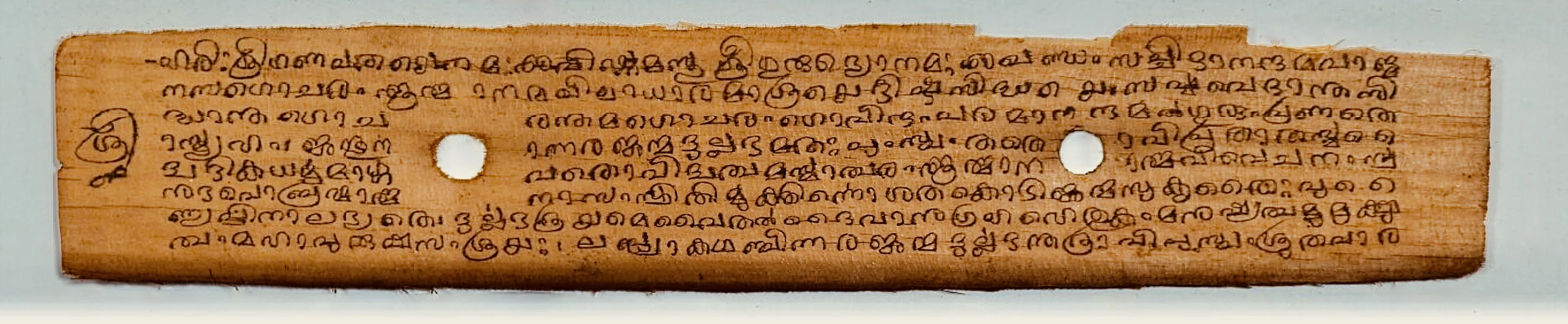
The Panchadashi, 'fifteen chapters', is Vidyaranya's handbook of Advaita, written in the fourteenth century at Sringeri, and the book most students are given after the Upanishads and the Gita. Its first chapter, Tattvaviveka, telling apart what is real, is the whole system in sixty-five verses: the one knowing through waking, dream and sleep; the Self as what is most dear; appearance in two grades, the order and the person; the five layers; the test of what stays and what goes; 'you are that'; hearing, reflecting, abiding. Chapter 1 is given here, with the 1912 translation beside it.
This is the Self, the highest ,
since it is the seat of the highest love.
'May I not cease to be; may I be':
so love for the Self is seen.
The Self is fullness because it is the seat of the highest love: 'may I not cease to be; may I be'.
What most readings miss
The chapter is read as a syllabus, a list of terms to learn before the real books. It is better read as one argument that never leaves experience. Verses 3 to 7 ask only what you already know: the things known in waking differ, the things known in dream differ, and in deep sleep you knew that you knew nothing; the knowing in all three is one and did not rise or set. Verse 8 then proves fullness not from scripture but from this: no one wants to stop existing. Everything after that, the two grades of appearance, the five layers, the great sentence, is machinery for not losing hold of those two findings. The site's position 8, that the witness is not a someone watching, is verse 5: 'I knew nothing' is a report, and a report has a witness.