The blade of grass
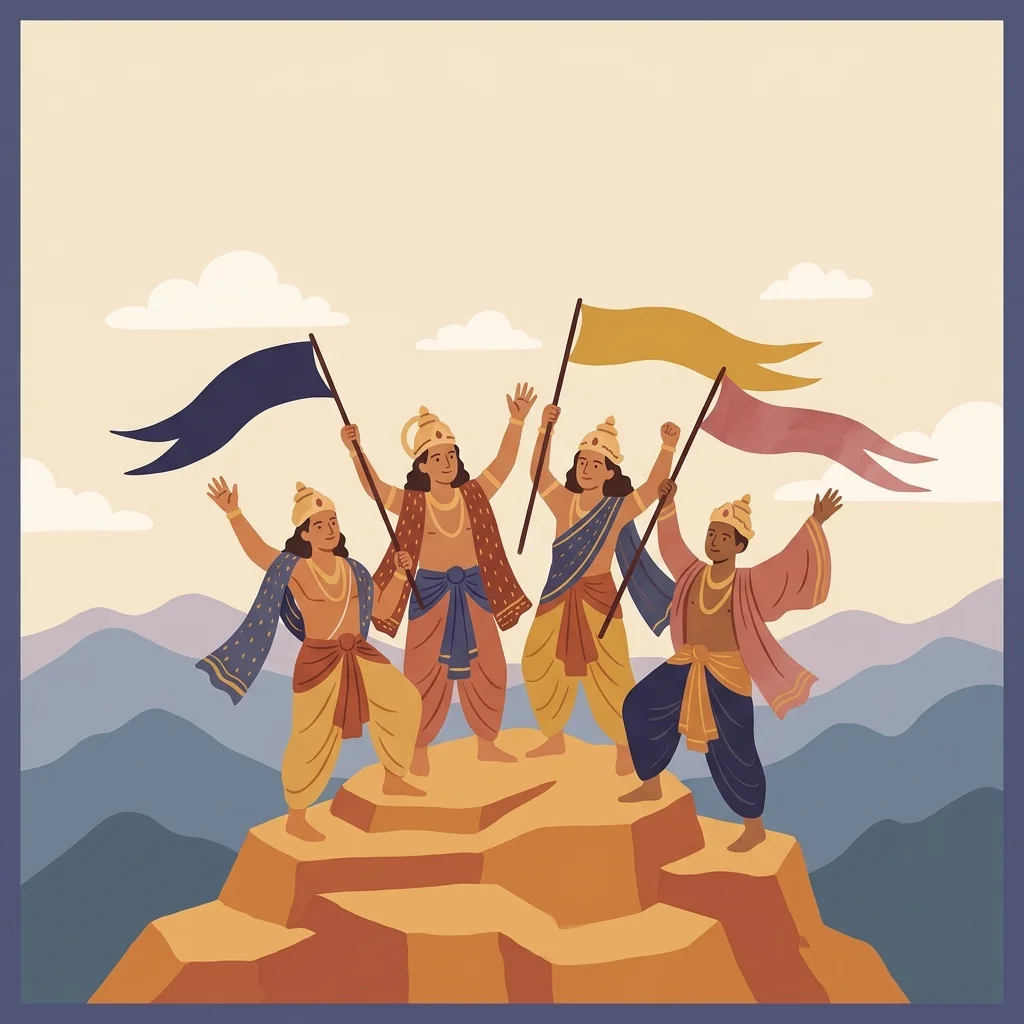
The gods have won a great victory. They celebrate, and each says: “We did this. This greatness is ours.”
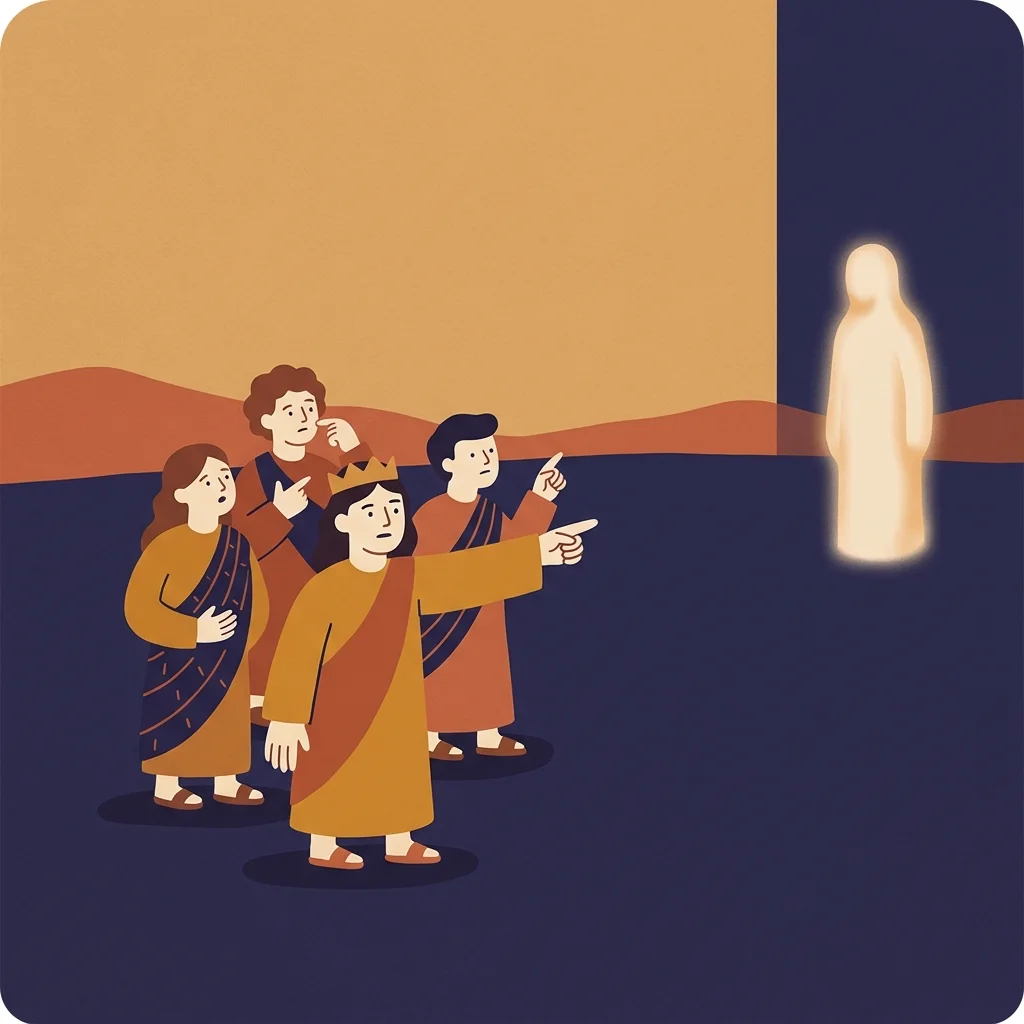
Brahman, the whole, by whose power they won, sees their pride and appears before them as a mysterious being they do not recognise.
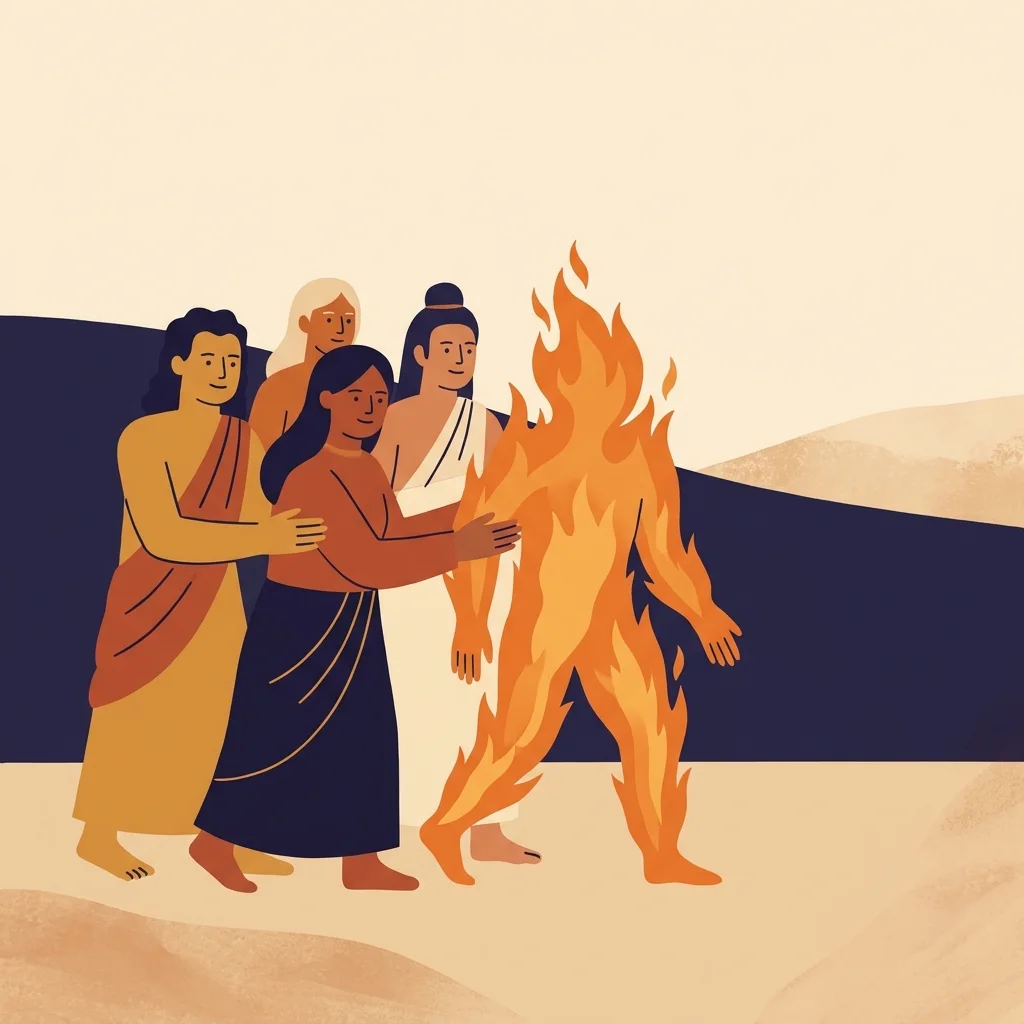
“Who is that?” the gods ask. They send Agni, the god of fire. “Go and find out.”
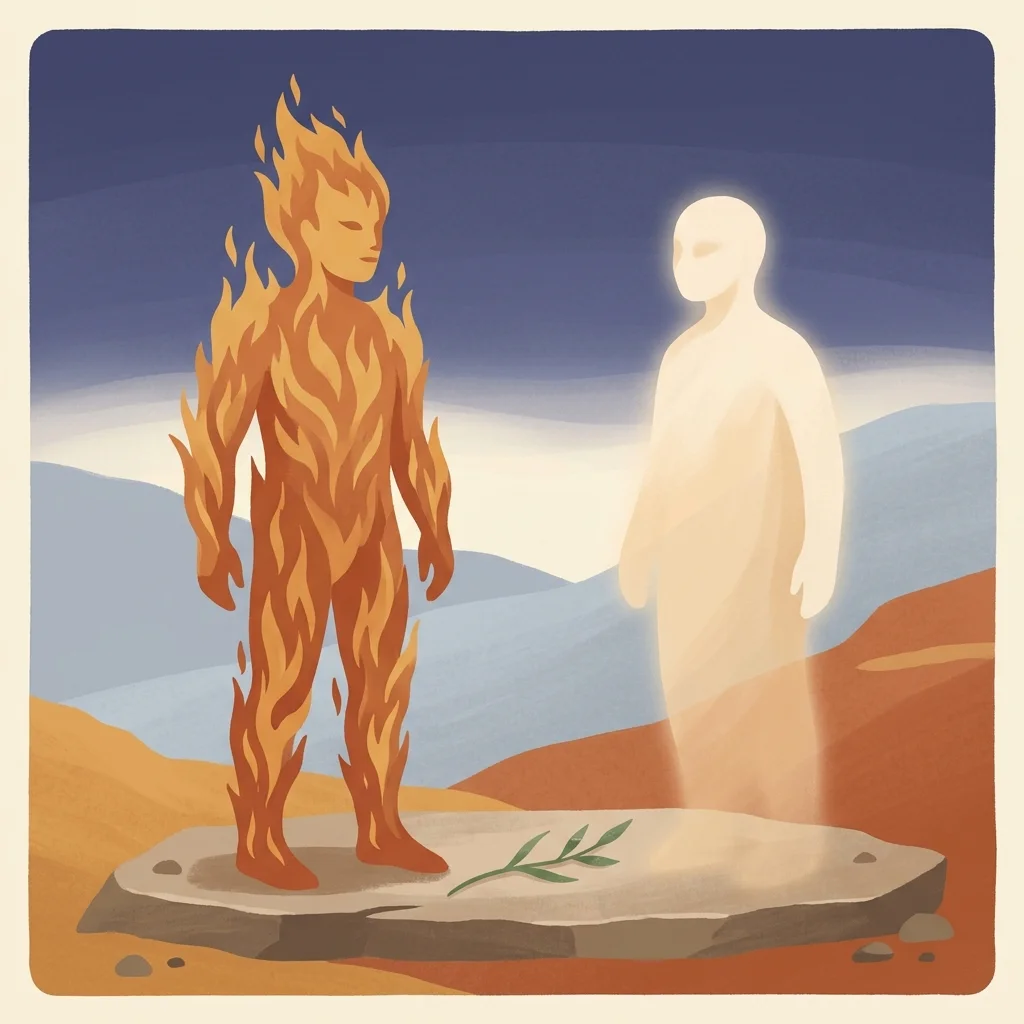
Agni strides up. The being asks, “Who are you?” “I am Agni, knower of all. I can burn anything on earth.”
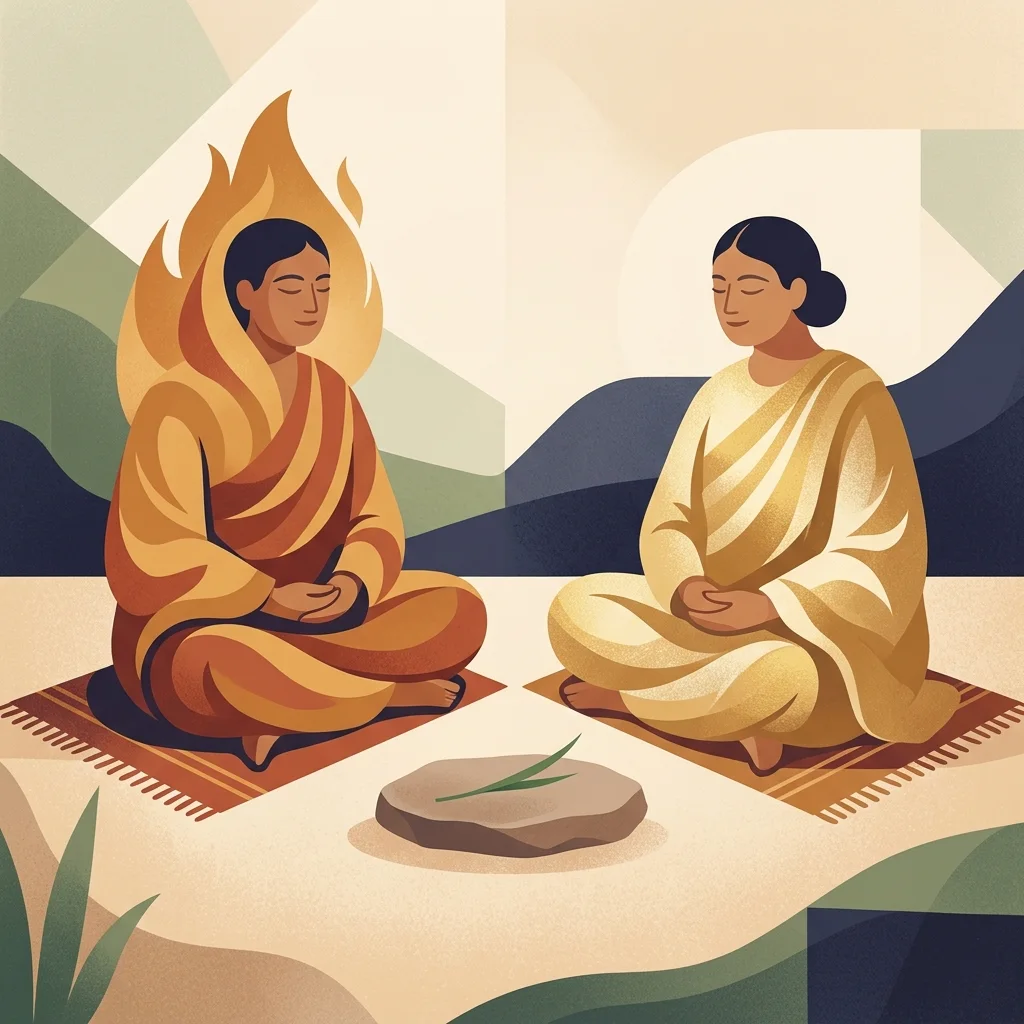
The being lays a single blade of grass before him. “Burn this.”
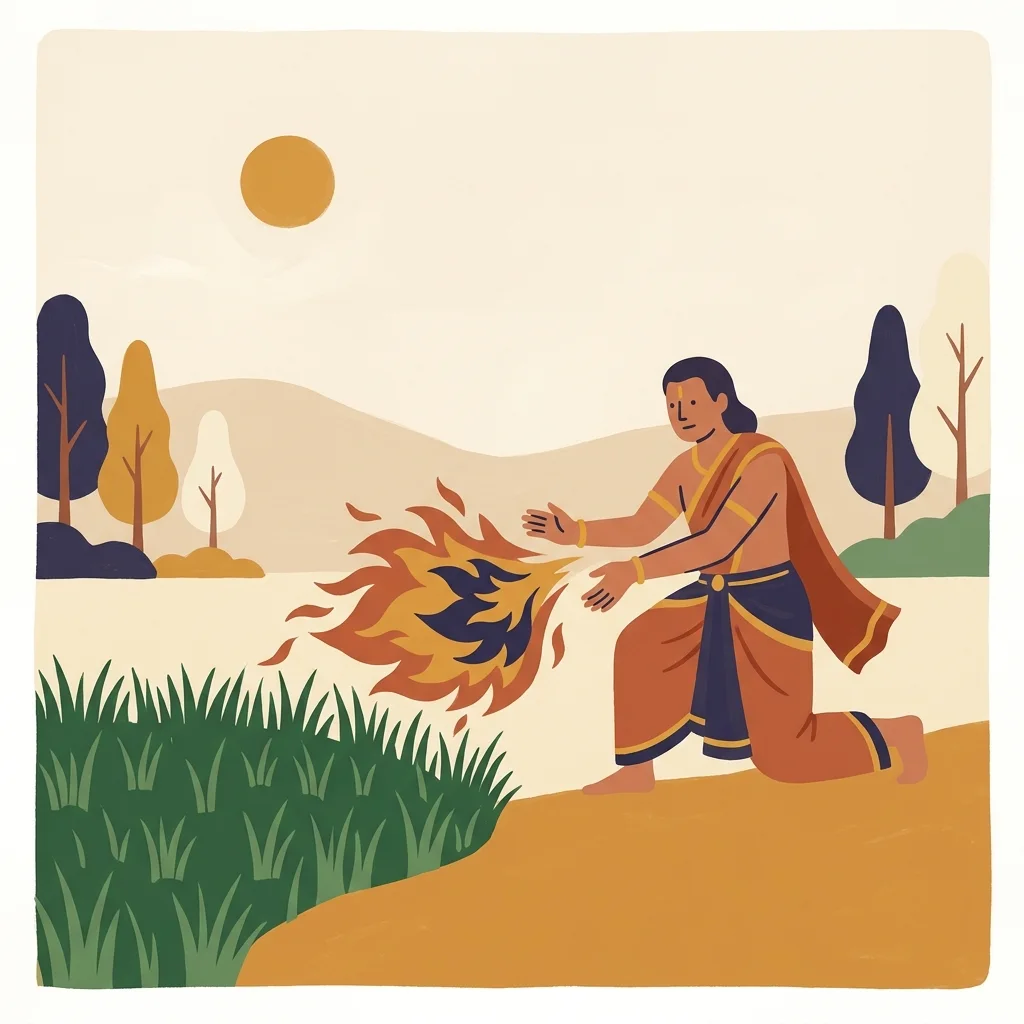
Agni rushes at it with all his power. The grass does not even curl. He goes back: “I could not find out who it is.”
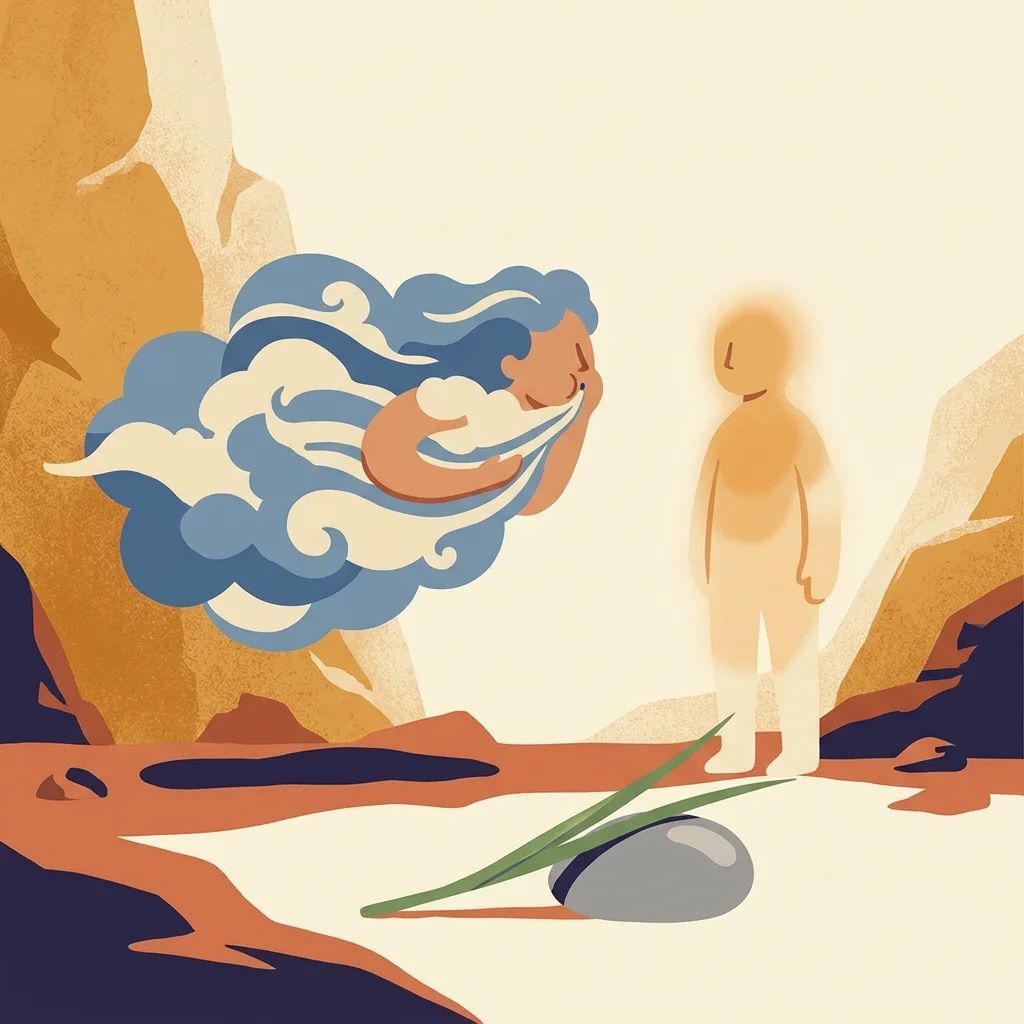
They send Vayu, the wind. “I can carry off anything on earth,” he boasts. Again, a blade of grass. “Lift this.”
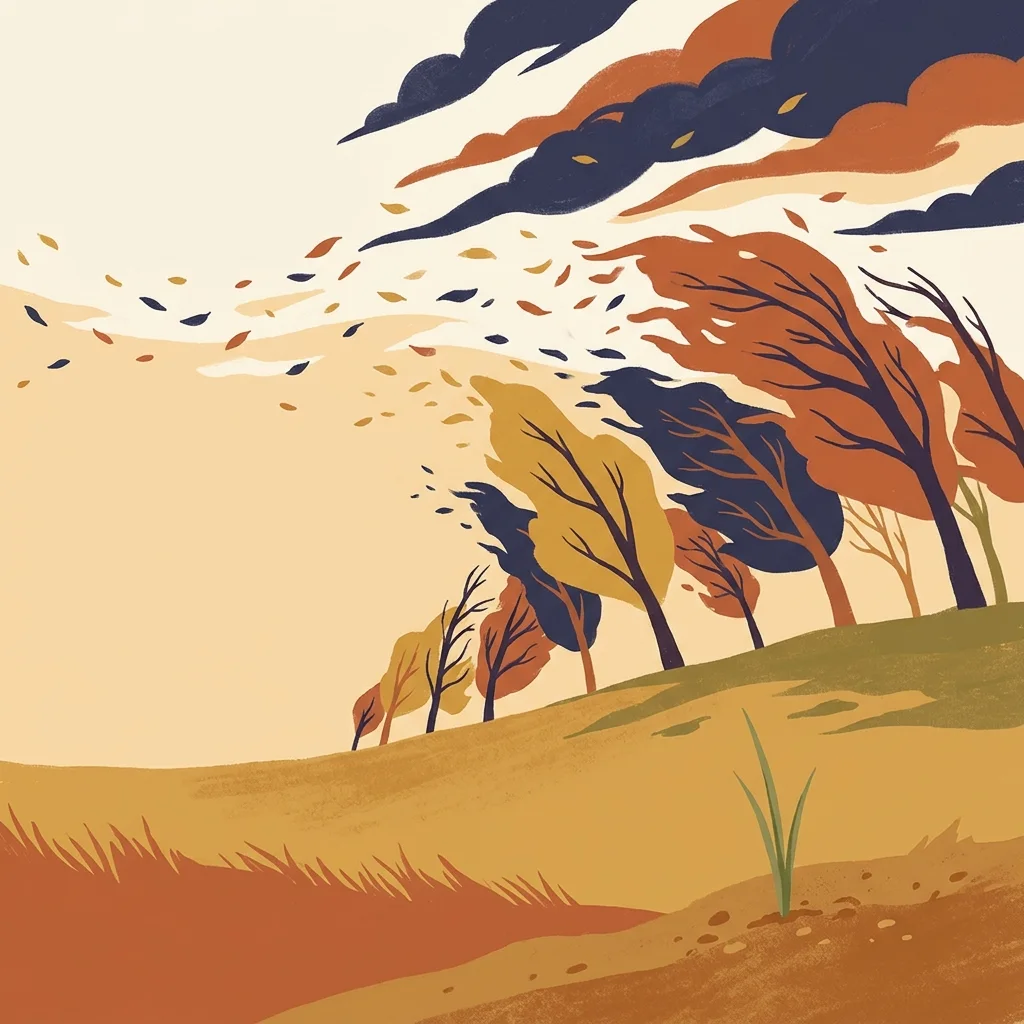
Vayu blows with all his strength. The grass does not stir. He too goes back, puzzled.
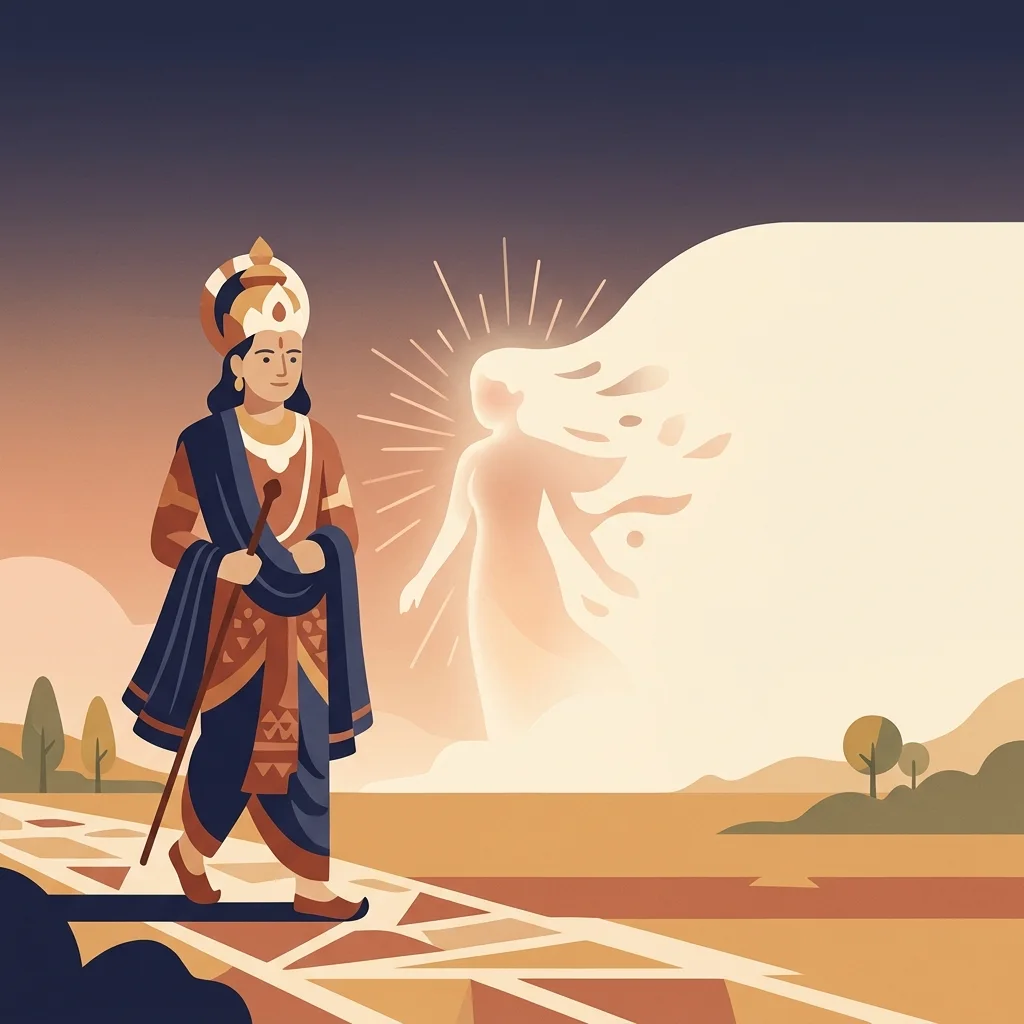
Then Indra, king of the gods, goes himself. But as he comes near, the being vanishes.

In that same space stands a radiant woman, Uma, daughter of the Himalaya. Indra asks her: “Who was that?”
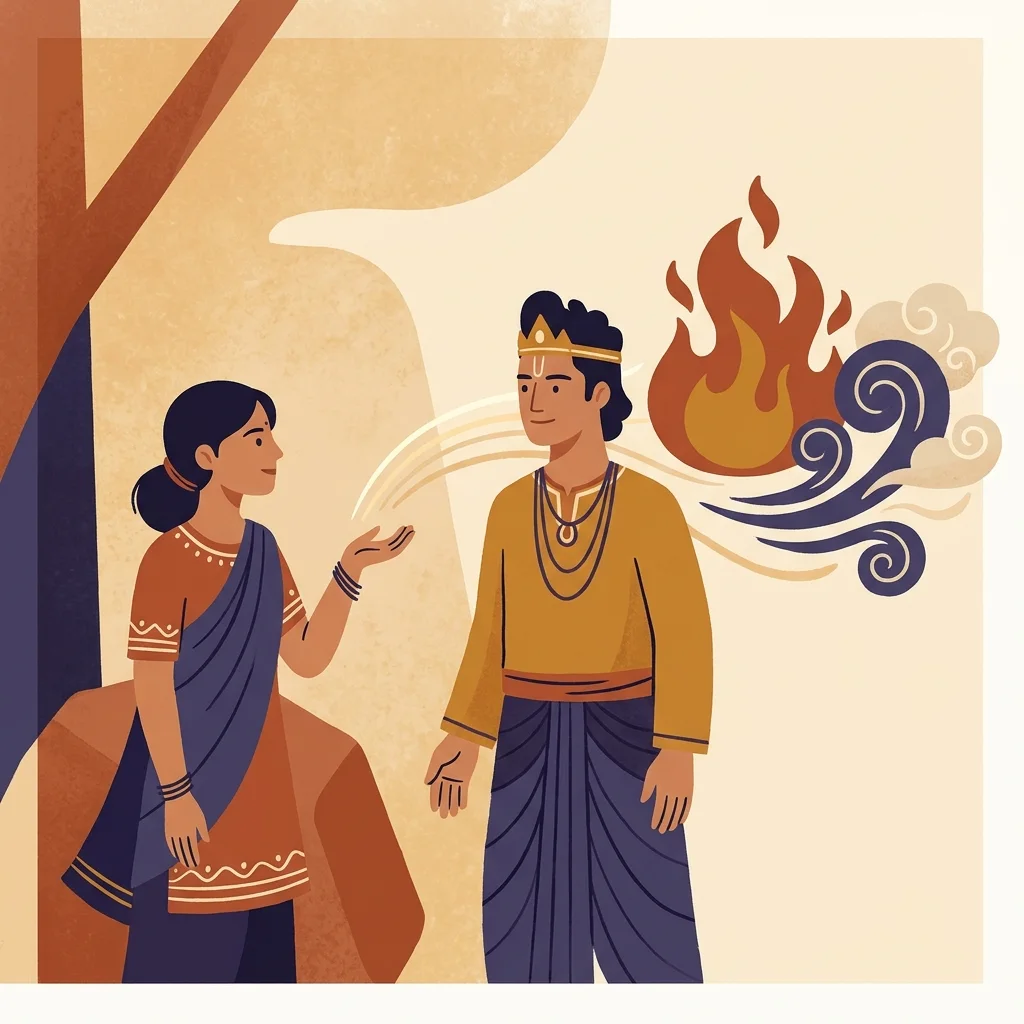
“That was Brahman,” she says. “It was by its victory that you became great.” Fire could burn, and wind could blow, only by its power.

The power was never theirs. It was only ever lent, by the whole, to the forms through which it shines.
“It is Brahman. It is through the victory of Brahman that you have thus become great.”
Kena Upanishad 4.1, tr. Max Müller (1879)
Read the full text