William James
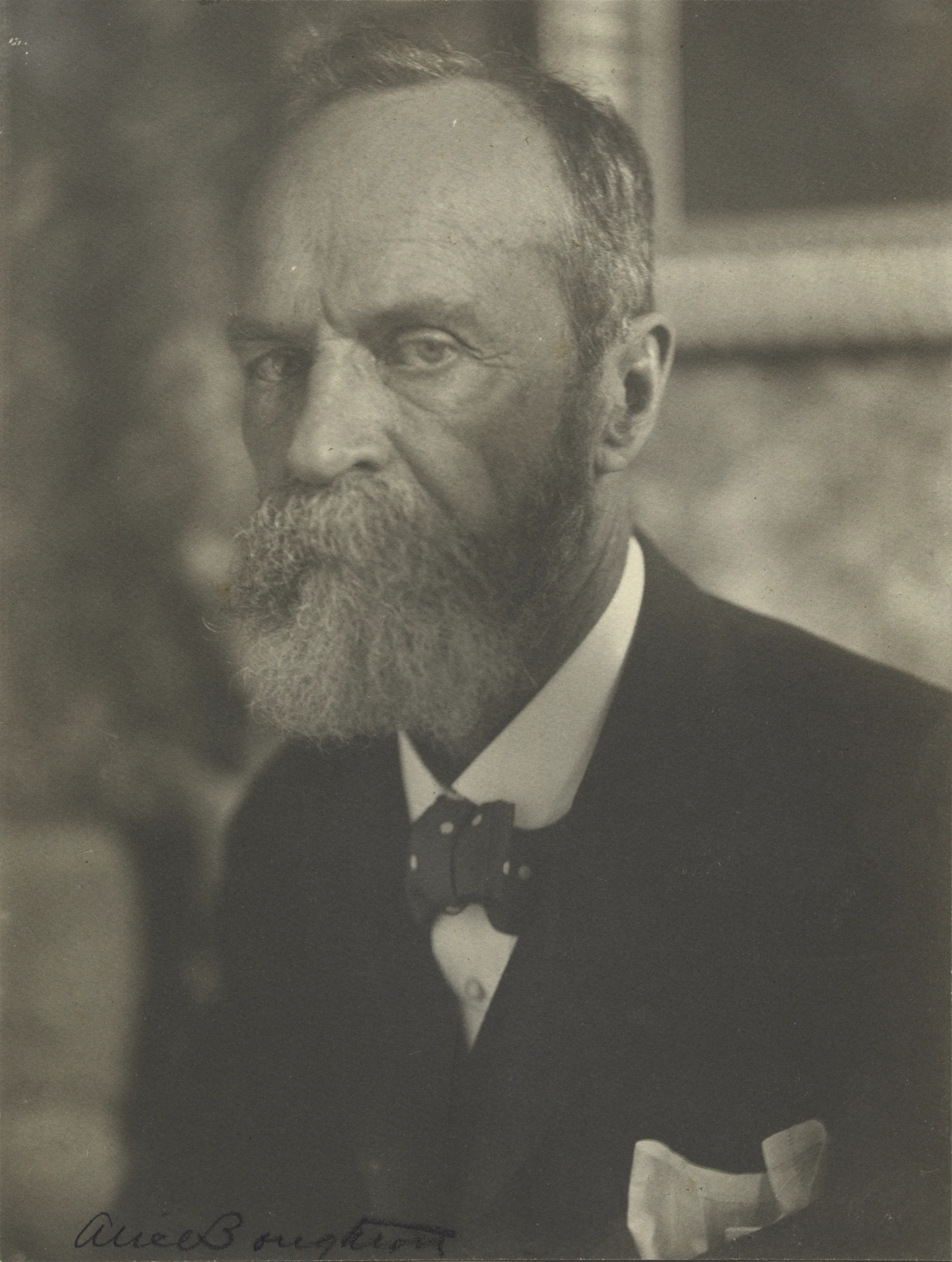
11 January 1842 to 26 August 1910 · Born in New York; taught at Harvard, Cambridge, Massachusetts
Life
William James trained in medicine, suffered a long depression in his twenties, and became one of the founders of modern psychology with his Principles of Psychology (1890). He was also a philosopher of pragmatism, and the elder brother of the novelist Henry James. His Gifford Lectures in Edinburgh were published in 1902 as The Varieties of Religious Experience, a study of conversion, saintliness and mysticism drawn from first-hand accounts. Emerson was a friend of the family.
What they saw
James coined the phrase “stream of consciousness” for the flow of the mind. In the Varieties he examined mystical states as a scientist would. What do they report? What do they do to a life? He found that they are hard to put into words, give a sense of knowing, pass quickly, and come to the person rather than being made.
His conclusion was cautious but striking: ordinary waking experience is only one kind of experience among many, and any account of the world that leaves the others out is incomplete.
In their words
“our normal waking consciousness, rational consciousness as we call it, is but one special type of consciousness, whilst all about it, parted from it by the filmiest of screens, there lie potential forms of consciousness entirely different.”
William James, The Varieties of Religious Experience (1902), Lectures 16 and 17, “Mysticism”
Where this path meets the others
James studies experiences. Advaita says what you are is what every experience appears to. His filmy screen between states is close to the Mandukya Upanishad's waking, dream and deep sleep, and the fourth (turiya) that runs through them. See What happens at death? and The Science of Being.
Waking is one way of being aware. It is not the only one.
Works
- The Principles of Psychology1890
- The Varieties of Religious Experience1902
Further reading
- William James, The Varieties of Religious Experience (1902)
- William James, The Principles of Psychology (1890)
Next on your path
Sources
- William James, The Varieties of Religious Experience: A Study in Human Nature (New York: Longmans, Green, 1902), Lectures 16 and 17. Public domain. Wording checked against several reproductions; the four marks of mystical states (ineffability, noetic quality, transiency, passivity) are paraphrased.
- “Stream of consciousness”: The Principles of Psychology (1890), chapter 9.