Totaka (Totakacharya)
c. 8th century CE · India; by tradition the first head of the monastery at Jyotirmath, near Badrinath
Life
Totaka, first called Giri, was one of Shankara's four direct students. The story goes that the other students thought him dull, because he spent his time serving the teacher. One day, when the class waited for him, he arrived singing eight verses in praise of Shankara, in a metre called totaka, and the others saw that he had understood everything. The hymn became known as the Totakashtakam. He was named for its metre. Tradition makes him the first head of the monastery at Jyotirmath in the Himalayas.
What they saw
Totaka's hymn is devotion, not argument. Each verse asks the teacher for refuge and names what the teaching does: it dries up the ocean of becoming, it shows the Self, it makes the knot of the heart come loose.
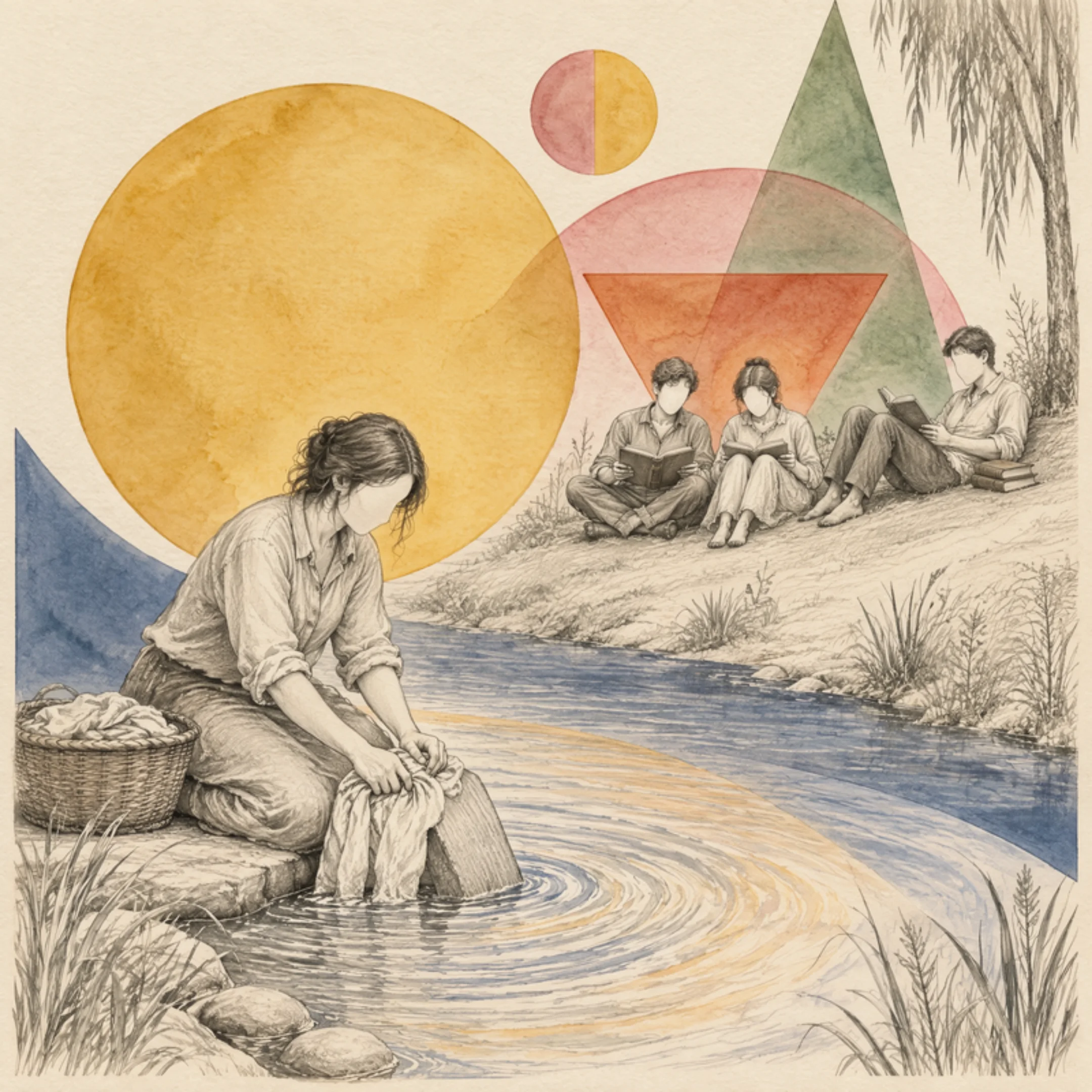
That is the point of his story. Knowledge in Advaita has little to do with cleverness. It is clarity, and clarity can grow quietly in someone who serves, listens and does not push themselves forward. The I-claim falls as easily through humility as through debate.
In their words
bhava śaṅkara deśika me śaraṇam. Plain rendering: Shankara, teacher, be my refuge.
Totakashtakam, refrain of each verse; Sanskrit with a plain rendering made for notdual.org (draft)
Where this path meets the others
Totaka's love for his teacher is close to the Sufi bond between disciple and master, and to Rumi's love for Shams. See Rumi and the Upanishads.
Clarity often arrives quietly, in the one who was only listening.
Works
- Totakashtakamc. 8th century CE
- Shruti Sara Samuddharanac. 8th century CE
Further reading
- The Totakashtakam (eight verses; many translations)
Next on your path
Sources
- The story of the hymn is traditional, told in the lives of Shankara; it cannot be checked historically.
- Refrain of the Totakashtakam rendered from the Sanskrit for this site.