Nisargadatta Maharaj
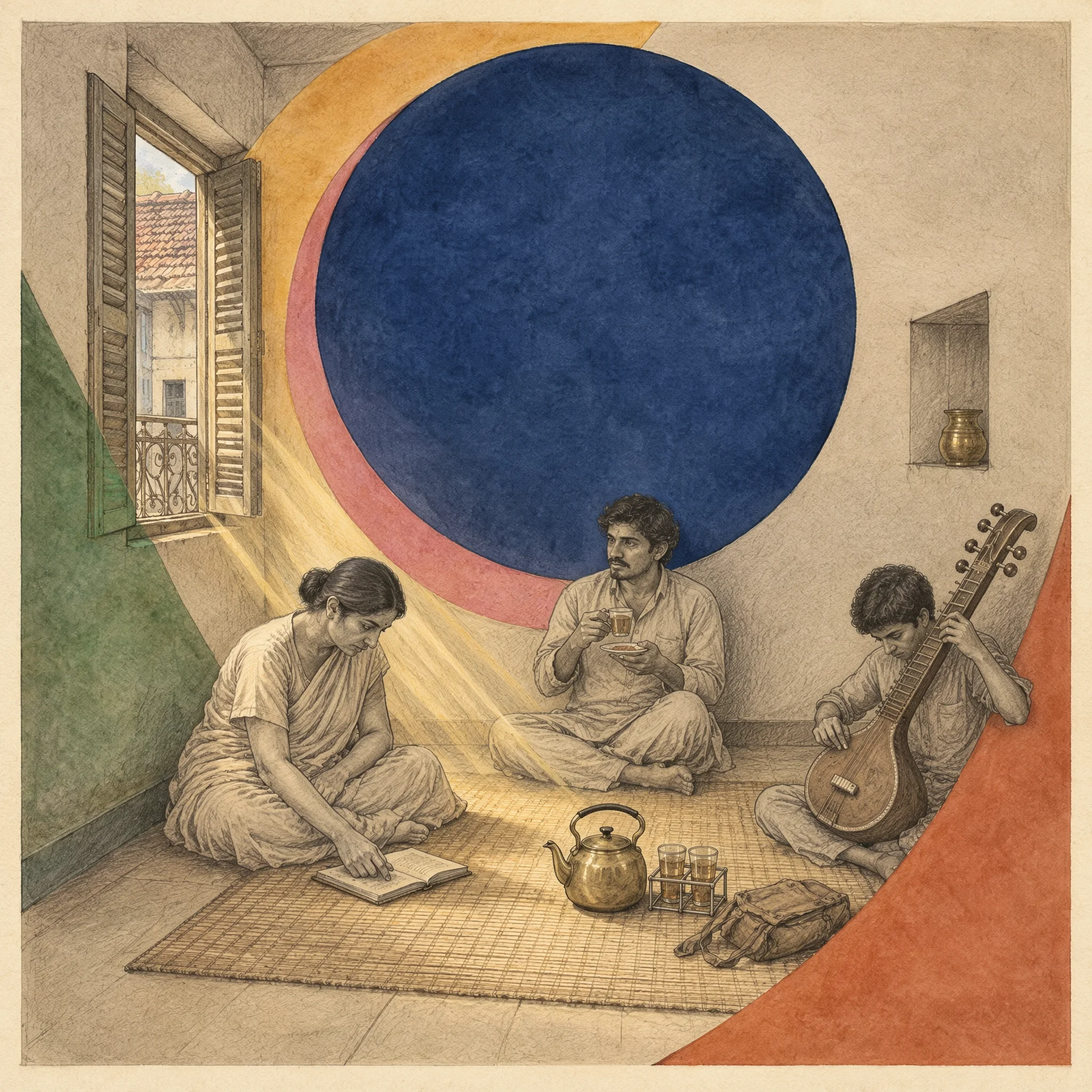
17 April 1897 to 8 September 1981 · Born in Bombay (Mumbai); lived and taught there
Life
Maruti Shivrampant Kambli was born in Bombay in 1897 and grew up in a village in the Konkan. He moved to Bombay, ran small shops selling bidis (leaf-rolled cigarettes) and household goods, and raised a family. In 1933 he met his teacher, Siddharameshwar Maharaj of the Inchegiri branch of the Navnath tradition, who told him to hold to the sense “I am”. He did. Within a few years he found it opened onto what was before it. He kept teaching from a small loft above his flat in Khetwadi until his death in 1981. A book of his talks, I Am That (1973), edited by Maurice Frydman, made him known worldwide.
What they saw
Nisargadatta started where everyone is: with the plain sense of being, “I am”. Stay with that sense, he said, without adding “I am this” or “I am that”, and it becomes clear that it is not an object among others. Hold to it. It gives way to what knows it.
He was blunt. The person you take yourself to be is a bundle of memories and habits; you are not that. You are what the person appears to. Even the sense “I am” is something that came with the body and will go with it; what you are is before it.
In their words
In paraphrase: stay with the sense “I am”, without adding anything to it, and it will lead you beyond itself.
After Nisargadatta Maharaj, I Am That, ed. Maurice Frydman (1973); paraphrase, not a quotation
Where this path meets the others
His “I am” sits right beside classical Advaita, with one difference in emphasis: he treats even the sense of being as something to go beyond, where Advaita treats being (sat) as one name for the whole. The Meeting Advaita and Nisargadatta works through it.
You are. Begin there, and add nothing.
Works
- I Am That, ed. Maurice Frydman1973
Further reading
- I Am That, ed. Maurice Frydman (Chetana, 1973; in copyright)
Next on your path
Sources
- Biographical details from Maurice Frydman's introduction to I Am That (1973) and standard biographies; date of meeting Siddharameshwar (1933) as usually given.
- I Am That is in copyright and is paraphrased only.