Mulla Sadra
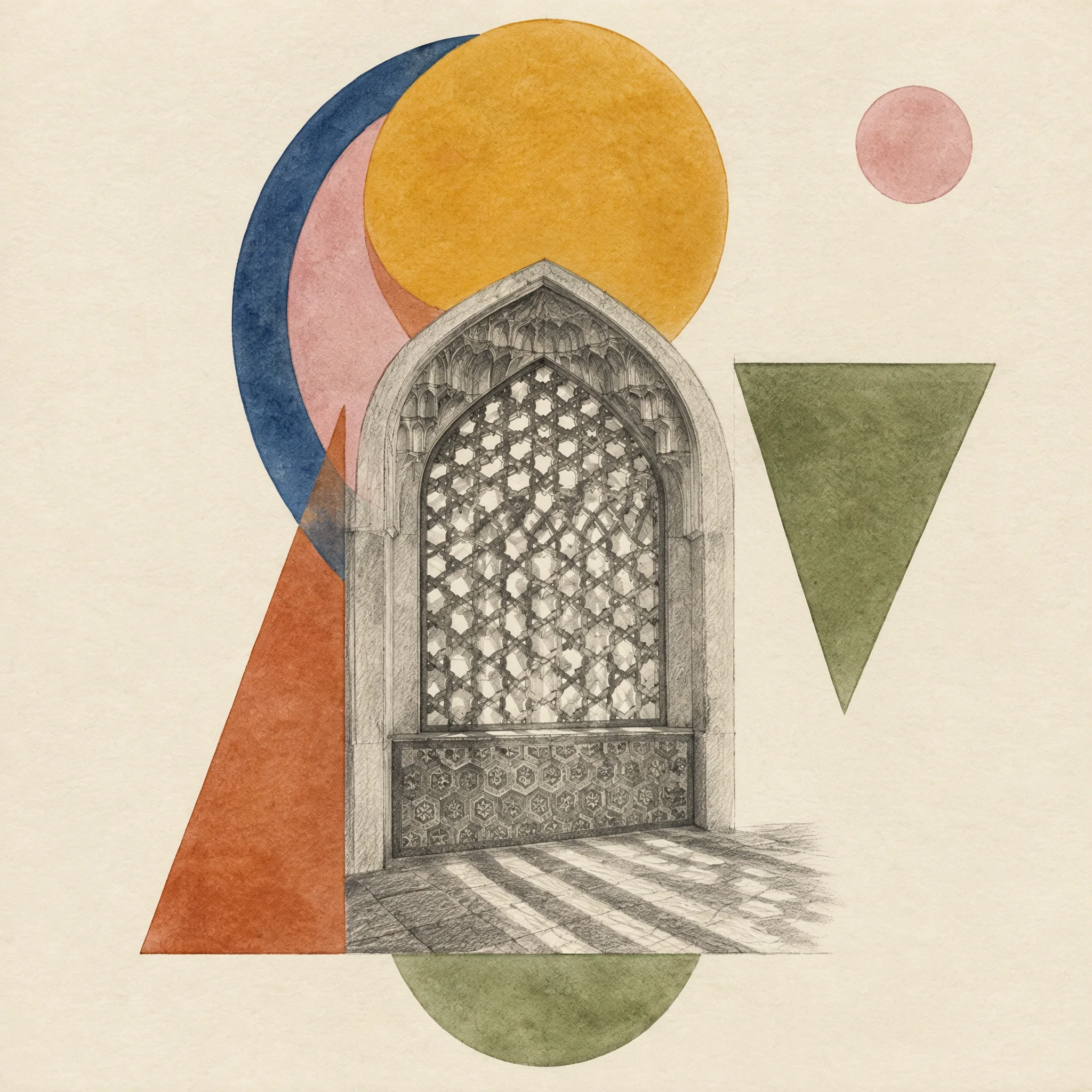
About 1571 to 1635 or 1640 (sources differ) · Born in Shiraz; studied in Isfahan; lived for years at Kahak near Qom; died at Basra
Life
Sadr al-Din Muhammad Shirazi, called Mulla Sadra, was born in Shiraz to a wealthy family and studied in Isfahan with the great teachers of the Safavid capital, including Mir Damad. His independent views made enemies, and he withdrew for years to the village of Kahak near Qom to write and meditate. He later taught in Shiraz. His major work, al-Asfar al-arba'a (the Four Voyages of the intellect), joins philosophy, Sufi insight and the Quran. He died on pilgrimage at Basra; the year is given as 1635 or 1640.
What they saw
Mulla Sadra overturned a long habit of Islamic philosophy, which treated what a thing is (its essence) as primary. He argued that existence is primary: what is real in every thing is its existing, and essences are only the shapes that existence takes in our minds.
Existence, he said, is one reality in degrees, like light, from the dimmest to the fullest. He also taught substantial motion: the world is existence itself, always becoming, more than a set of fixed things that move.
The site's reading is that this is a near match for Advaita's being, one and in all things, with its degrees of reflection. Sadra keeps the Creator and the creature distinct at the end, where Advaita does not.
In their words
In paraphrase: existence is one reality with degrees, as light is one, stronger and weaker. What differs between things is how fully they exist.
After Mulla Sadra, al-Asfar; paraphrase, not a quotation.
Where this path meets the others
Mulla Sadra's being in degrees is a near neighbour of the site's degrees of reflection, and of Ibn Arabi's one being. See Being and Ibn Arabi.
All of it is light. How much is the only difference.
Works
- al-Asfar al-arba'a (The Transcendent Philosophy of the Four Voyages)completed c. 1628 (date debated)
Further reading
- Fazlur Rahman, The Philosophy of Mulla Sadra (1975; in copyright)
- Sajjad H. Rizvi, Mulla Sadra Shirazi (2007; in copyright)
Next on your path
Sources
- Rahman (1975) and Rizvi (2007), for the life and the ideas, paraphrased. The death year is disputed (1635 or 1640).