Lalon Fakir
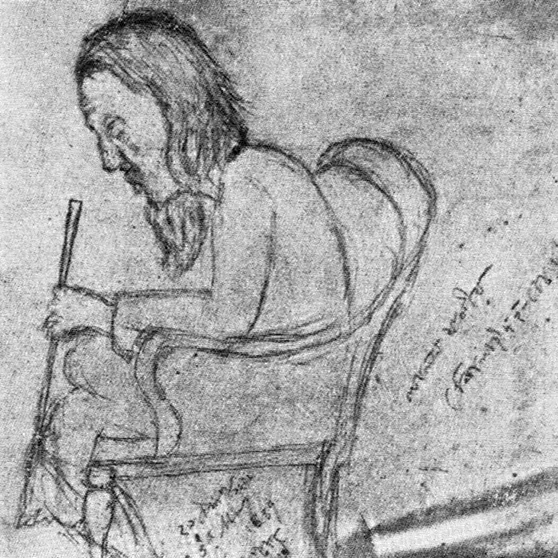
Died 17 October 1890; birth year unknown (traditionally about 1774) · Bengal; his shrine is at Cheuriya, Kushtia (today Bangladesh)
Life
Lalon, called Lalon Shah or Lalon Fakir, was the greatest of the Bauls, the wandering singers of Bengal who belong to no temple and no mosque. His birth and childhood are disputed; legend says he fell ill with smallpox on a pilgrimage, was left for dead and was nursed back by a Muslim family, and that a teacher named Siraj Sain taught him. He settled at Cheuriya near Kushtia and gathered disciples. Hundreds of his songs survive, because followers wrote them down. Rabindranath Tagore collected and admired them. Lalon died in 1890.
What they saw
Bauls look for the one they call the Man of the Heart (moner manush), who lives inside the body. Lalon's songs ask where that one is, and why we look everywhere else.
His most famous image is the unknown bird in the cage. It comes and goes, and you cannot catch it. The cage is the body. The bird is what lives in it and was never caught by it. He sings of it with longing, and also with a kind of grin: you have had it all along, and you still cannot hold it.
He refused caste and creed as firmly as Kabir. Bauls in Bangladesh and West Bengal still sing his songs at the anniversary of his death.
In their words
Khā̃cār bhitor ocin pākhi kemne āse jāy. Plain rendering: How does the unknown bird inside the cage come and go?
Refrain of a song by Lalon; Bengali original (transliterated) with a rendering made for notdual.org (draft)
Where this path meets the others
Lalon's bird is the Mundaka's second bird, the one that looks on. His refusal of caste sits beside Kabir's and Shankara's outcaste story. See The two birds.
You cannot catch it. You never lost it.
Works
- Songs (Lalon Giti)19th century
Further reading
- Carol Salomon, City of Mirrors: Songs of Lalan Sai (2017; in copyright)
- Recordings by Farida Parveen and many Baul singers
Next on your path
Sources
- Carol Salomon, City of Mirrors (2017), for the life and the songs, paraphrased (in copyright).
- The refrain is given in Bengali with the site's own rendering; the song is not reproduced.
- The smallpox story is legend; the date of death is recorded.