Kitaro Nishida
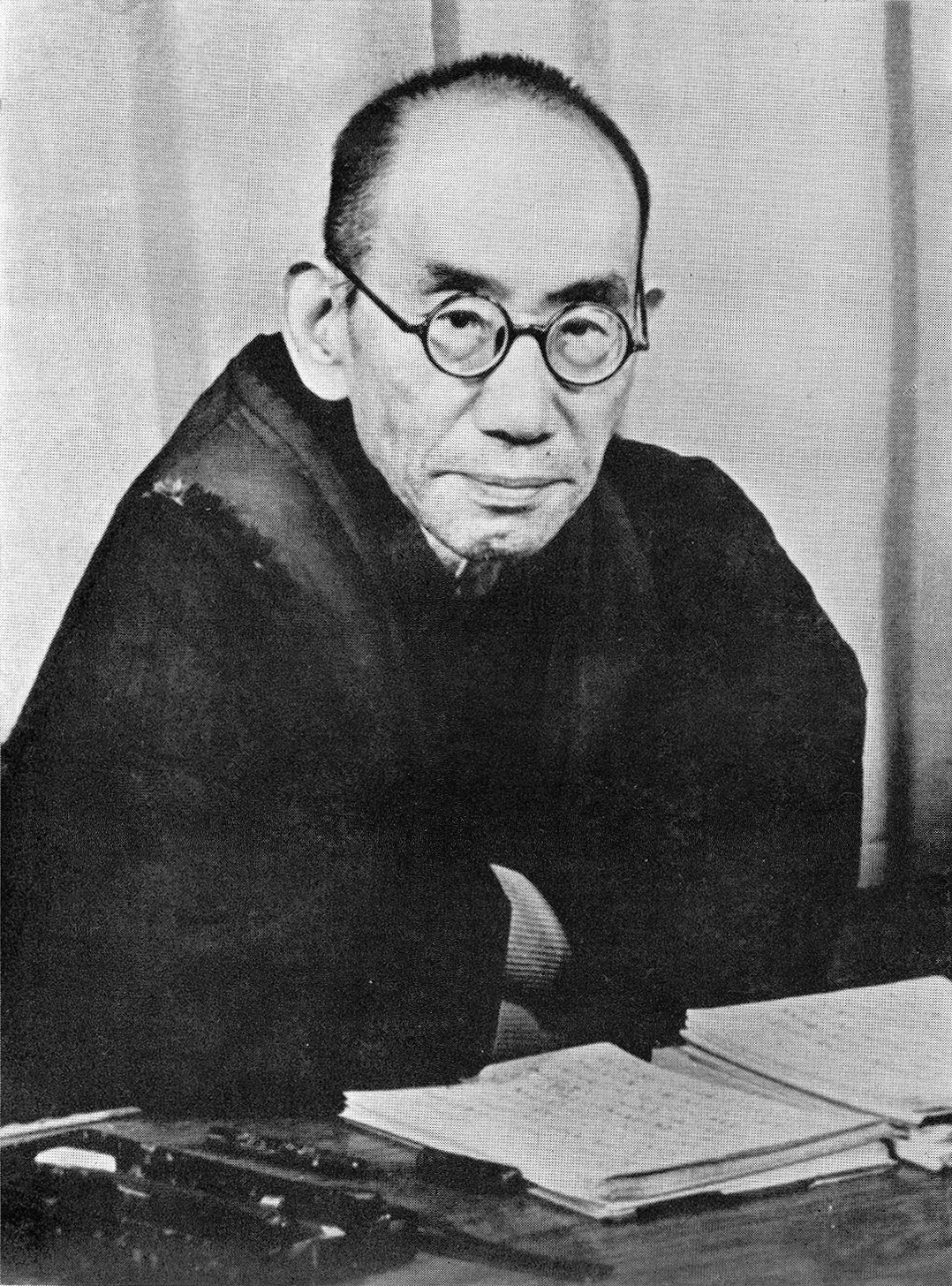
19 May 1870 to 7 June 1945 · Born at Unoke, Ishikawa; taught at Kyoto Imperial University; died at Kamakura
Life
Kitaro Nishida was born in 1870 near Kanazawa. He studied philosophy in Tokyo, taught school, and for about ten years practised Zen seriously, alongside his friend D. T. Suzuki. His first book, An Inquiry into the Good (1911), made his name. He taught at Kyoto Imperial University from 1910 to 1928 and founded what came to be called the Kyoto School. The canal path he walked each day in Kyoto is now the Philosopher's Path. He died at Kamakura in 1945.
What they saw
Nishida's first idea is pure experience: experience before it is divided into a knower and a known. Seeing a colour or hearing a sound, before you judge “I see red”, is the first and only reality. Subject and object are cut out later.
In later work he spoke of place (basho): everything is situated in something wider, and the final place is absolute nothingness, which holds all things and is no thing itself.
He wrote in the language of Western philosophy, about Zen-trained insights. His pure experience is close to the Upanishads' awareness before the knower-known split, and his absolute nothingness is the Buddhist word for what Advaita calls fullness.
In their words
In paraphrase: at the moment of pure experience there is not yet a subject or an object; knowing and its object are completely one.
After Kitaro Nishida, An Inquiry into the Good (1911), chapter 1; paraphrase, not a quotation.
Where this path meets the others
Nishida built a bridge between Zen and Western philosophy, as Schopenhauer and Emerson built one toward India. See The philosophers and Zen and Advaita.
Before “I hear”, there was the hearing.
Works
- An Inquiry into the Good (Zen no kenkyu)1911
Further reading
- Kitaro Nishida, An Inquiry into the Good, tr. Masao Abe and Christopher Ives (1990; in copyright)
- James W. Heisig, Philosophers of Nothingness (2001; in copyright)
Next on your path
Sources
- Heisig, Philosophers of Nothingness (2001), for the life and the ideas, paraphrased.
- An Inquiry into the Good (Zen no kenkyu, 1911), chapter 1, paraphrased.