Immanuel Kant
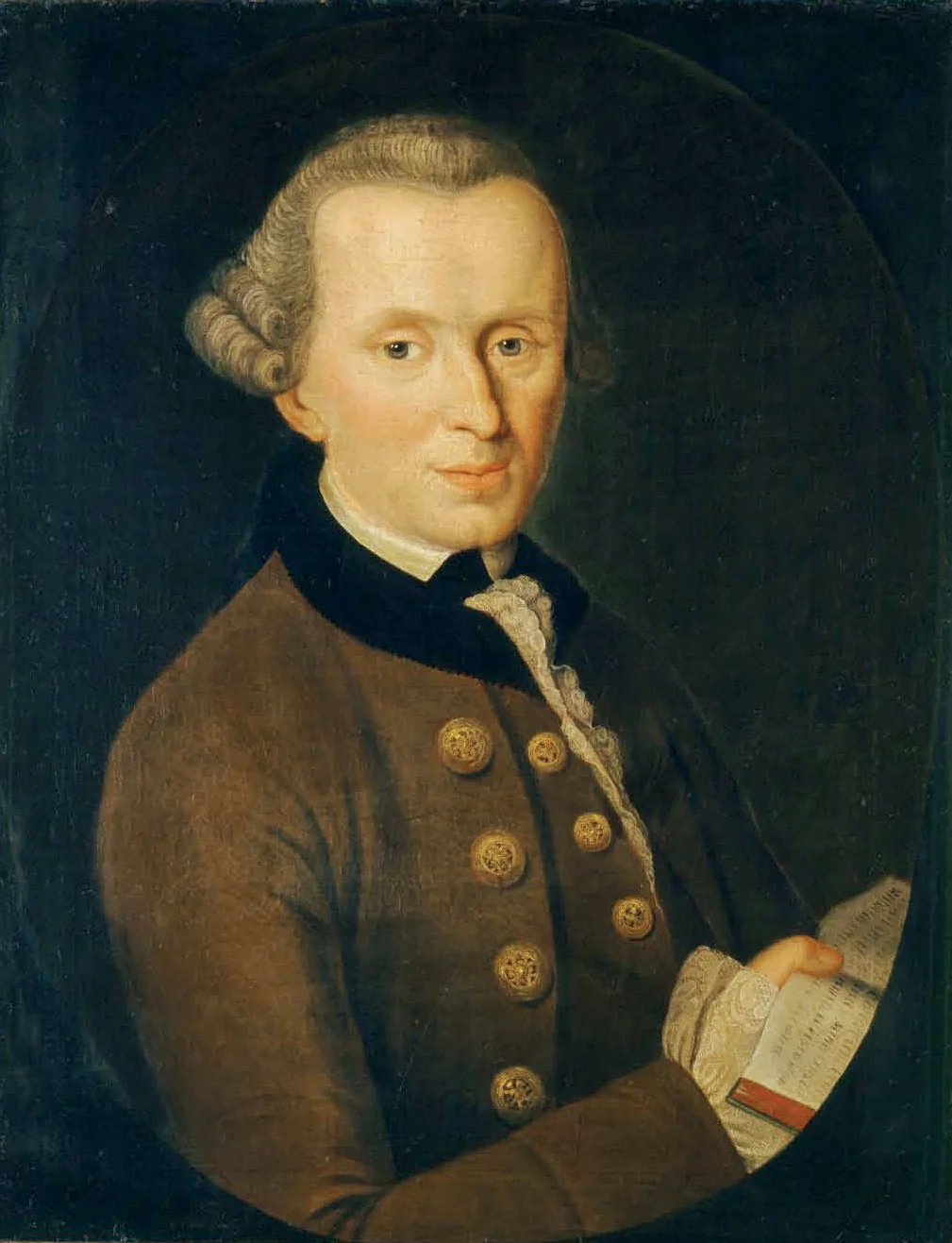
22 April 1724 to 12 February 1804 · Königsberg, Prussia (today Kaliningrad, Russia), where he lived all his life
Life
Immanuel Kant was born in Königsberg in 1724, the son of a harness maker, and hardly ever left the region. He taught at the university there for over forty years, lecturing on everything from logic to geography. At fifty-seven he published the Critique of Pure Reason (1781), followed by the Groundwork of the Metaphysics of Morals (1785), the Critique of Practical Reason (1788) and the Critique of Judgment (1790). He never married. He died in Königsberg in 1804.
What they saw
Kant said that space, time and the rules of cause and effect are not facts we find out there. They are the forms in which anything can appear to a mind like ours. We know only appearances (phenomena). What a thing is in itself, apart from how it appears, we cannot know.
He also saw that all experience hangs together because one “I think” can go with every perception. He took care to say this “I” is not an object we can know.
The site's reading. Kant's appearance is close to Maya named as appearance. He leaves the thing in itself unknown. Advaita says the Self is not known as an object, yet it is never unknown: it is the knowing. Schopenhauer took Kant's door and walked through it toward the Upanishads.
In their words
“Das: Ich denke, muß alle meine Vorstellungen begleiten können.” Plain rendering: The “I think” must be able to go with every one of my perceptions.
Immanuel Kant, Kritik der reinen Vernunft, 2nd edition (1787), B 131 to 132; German original with a rendering made for notdual.org (draft)
Where this path meets the others
Berkeley, Kant and appearance sets him beside Berkeley and the Upanishads; Schopenhauer and the Upanishads shows where his road led. See Appearance and Knowing.
You see the sky through yourself. Who is seeing?
Works
- Critique of Pure Reason1781; 2nd edition 1787
- Prolegomena to Any Future Metaphysics1783
- Groundwork of the Metaphysics of Morals1785
- Critique of Practical Reason1788
- Critique of Judgment1790
Further reading
- Immanuel Kant, Prolegomena to Any Future Metaphysics (1783), tr. Paul Carus (1902)
- Manfred Kuehn, Kant: A Biography (2001; in copyright)
Next on your path
Sources
- Kant, Kritik der reinen Vernunft, 2nd edition (1787), B 131 to 132 (public domain); rendering by notdual.org.
- Manfred Kuehn, Kant: A Biography (2001; in copyright), for the life, paraphrased.