Heraclitus
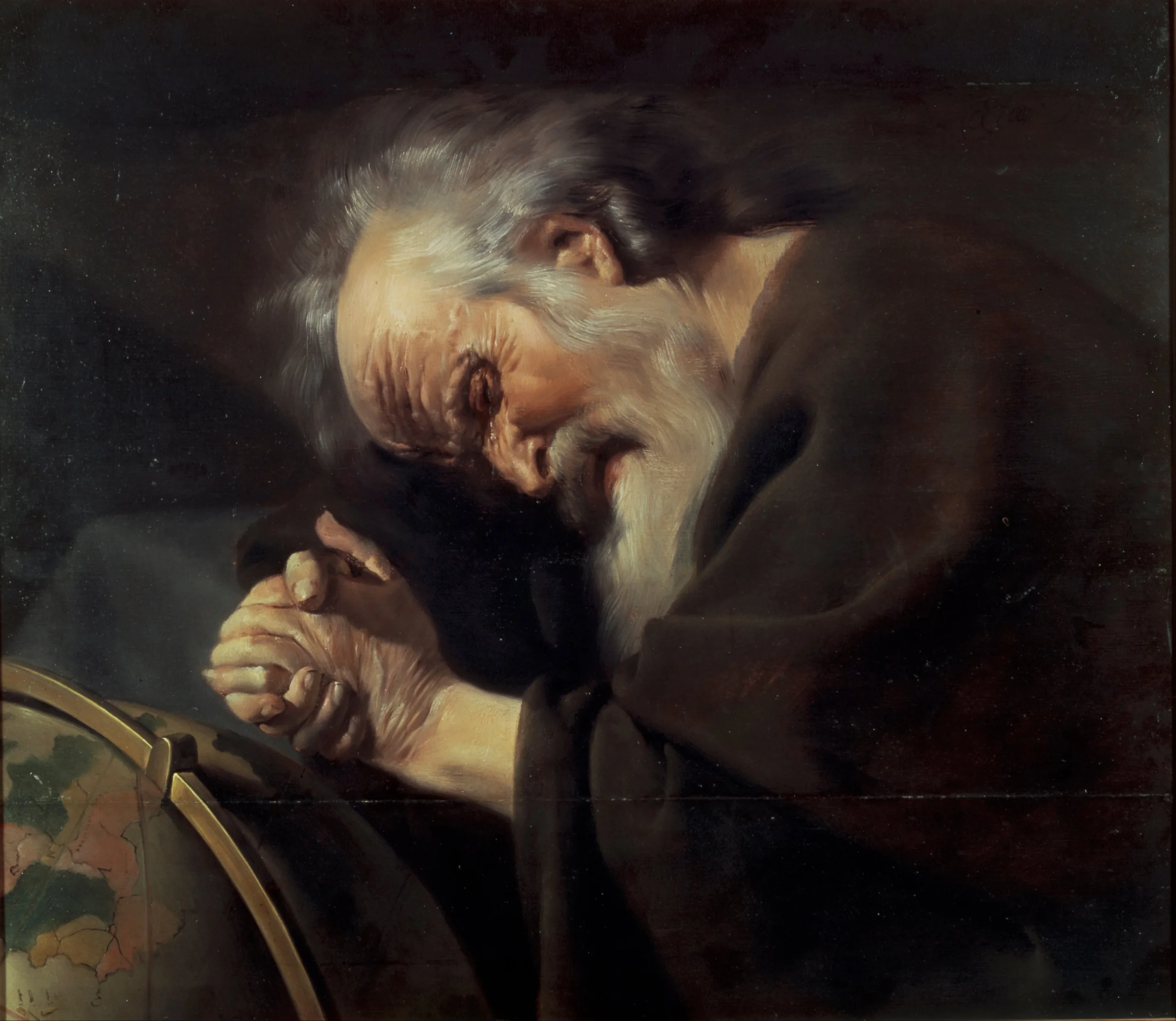
c. 535 to c. 475 BCE · Ephesus, on the coast of present-day Turkey
Life
Heraclitus came from an aristocratic family in Ephesus and, by later report, gave up his inherited role to his brother. He wrote one book, now lost; about a hundred and thirty short sayings survive, quoted by later writers. Even in antiquity he was called “the obscure” for his riddling style. Stories about him are late, mostly unreliable.
What they saw
Everything flows; nothing stays. But Heraclitus did not see chaos. Through all the change runs one Word, or order (Logos), which most people do not notice even though it is common to all. Opposites belong together: the way up and the way down are one; what is at odds agrees with itself.
He turned the same look inward. He said he had searched himself, and that the soul has no boundary you could reach by travelling in any direction. The one who seeks and the order that is sought are not far apart.
In their words
“It is wise to hearken, not to me, but to my Word, and to confess that all things are one.”
Heraclitus, fragment 1 (Burnet's numbering), tr. John Burnet, Early Greek Philosophy (2nd ed., 1908)
“You will not find the boundaries of soul by travelling in any direction, so deep is the measure of it.”
Heraclitus, fragment 71 (Burnet's numbering), tr. John Burnet
Where this path meets the others
His one Word through all change is close to the order (Ishvara) as Advaita describes it: the intelligence of the whole, holding the endless stream. His boundless soul is near the Self. He gives no account of a changeless awareness, and that is where he and Advaita part.
The water never stays. The river does.
Works
- Fragmentsc. 500 BCE
Further reading
- John Burnet, Early Greek Philosophy (1892; 2nd ed. 1908)
- Charles H. Kahn, The Art and Thought of Heraclitus (1979; in copyright)
Next on your path
Sources
- John Burnet, Early Greek Philosophy (London: A. and C. Black, 1892; 2nd ed. 1908), Heraclitus fragments as numbered by Burnet (after Bywater): 1, 41 to 42, 45, 69, 71, 80. Public domain. Checked against the Fordham Internet History Sourcebook copy of the 2nd edition.
- Diogenes Laertius, Lives 9.1 to 6, for the late biographical reports (not relied on).