Govinda Bhagavatpada
c. 7th to 8th century CE (uncertain) · On the Narmada river, central India (by tradition)
Life
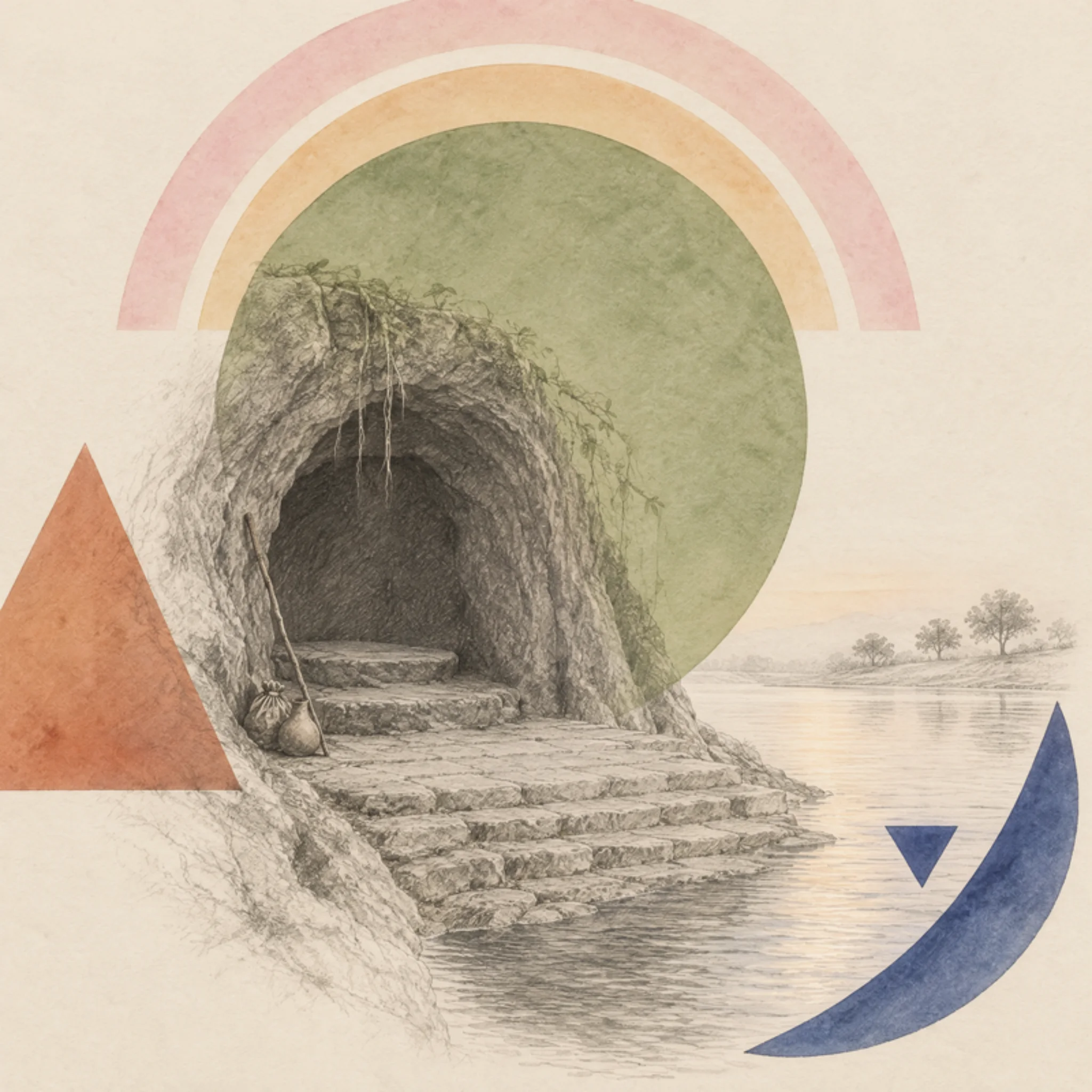
Govinda Bhagavatpada is named in the tradition as the student of Gaudapada and the teacher of Shankara. No writing of his survives. The later lives of Shankara tell that the boy from Kerala walked north and found Govinda living in a cave on the banks of the Narmada, and that Govinda accepted him as a student and gave him the vows of a renunciate. These lives were written centuries later, and their details cannot be checked.
What they saw
What we can say is what Govinda passed on: the teaching of Gaudapada, that the Self is the whole and that the many are appearance, and the method of teaching it through the Upanishads, the Gita and the Brahma Sutras. Shankara's own works open with praise of his teacher, and the Advaita tradition still names Govinda in the line of teachers it recites.
Govinda stands for something the tradition takes seriously: that this knowledge usually passes from person to person. A book can state it. A teacher can see where the student is stuck.
In their words
“Let him, in order to understand this, take fuel in his hand and approach a Guru who is learned and dwells entirely in Brahman.”
Mundaka Upanishad 1.2.12, tr. Max Müller (1884)
Where this path meets the others
Every path on this site has its Govinda: the teacher who left nothing in writing but whose student changed everything. The Zen line from teacher to student and the Sufi chain of masters make the same point in their own ways.
A teaching lives in the meeting, not only in the book.
Further reading
- Any traditional life of Shankara, read as story rather than history
Next on your path
Sources
- The meeting on the Narmada is told in later hagiographies of Shankara (the Shankara-digvijaya texts, composed centuries after his death); their historical value is uncertain.
- The teacher line Gaudapada, Govinda, Shankara is part of the Advaita guru-parampara recited in the tradition.
- Mundaka Upanishad 1.2.12, in The Upanishads, Part II, tr. F. Max Müller, Sacred Books of the East vol. 15 (Oxford, 1884). Public domain.