George Berkeley
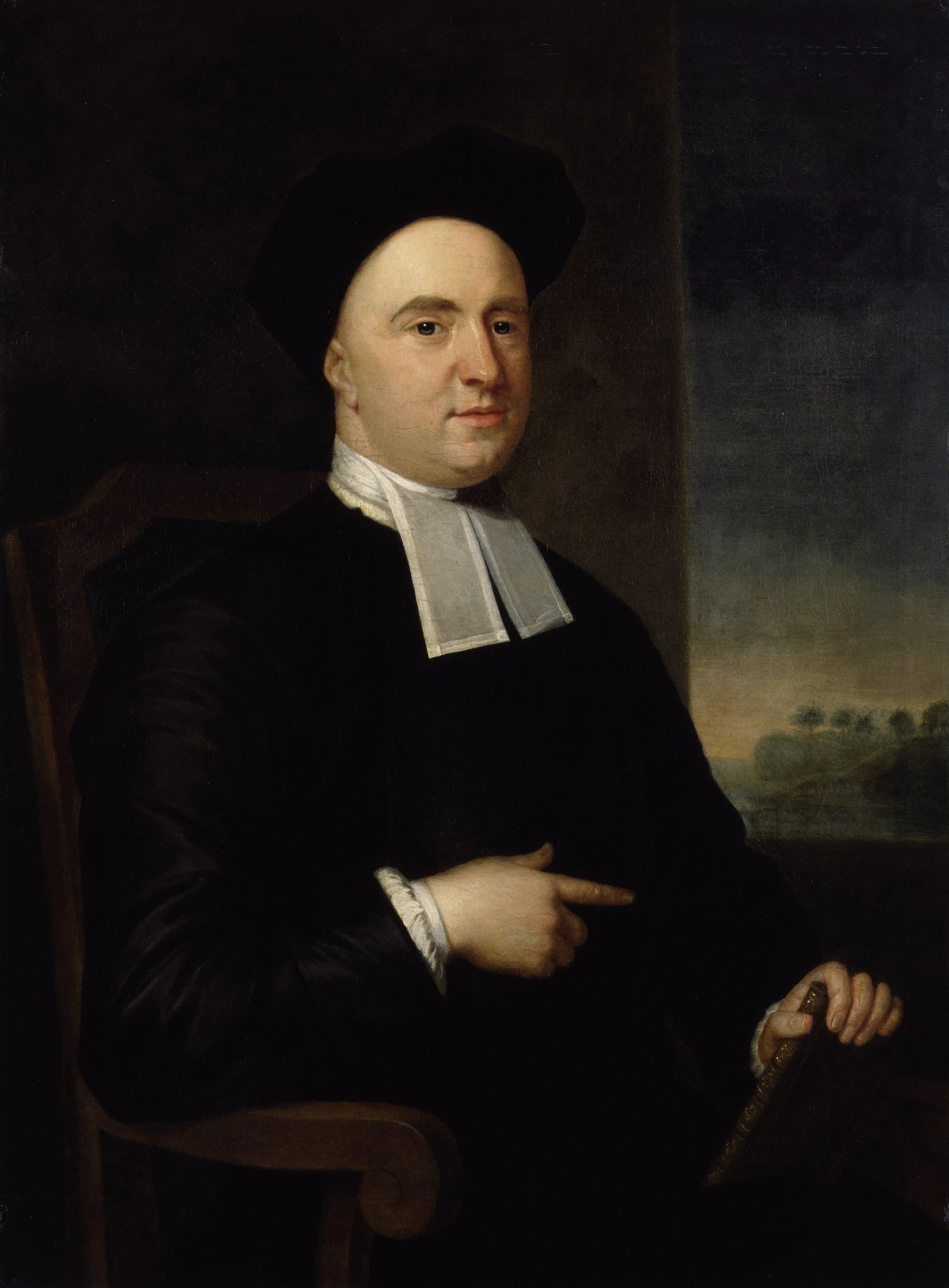
12 March 1685 to 14 January 1753 · Born near Thomastown, County Kilkenny, Ireland; Trinity College Dublin; Newport, Rhode Island; Bishop of Cloyne; died at Oxford
Life
George Berkeley was born in County Kilkenny in 1685 and entered Trinity College Dublin at fifteen. Before he was thirty he had published his three main books: a theory of vision (1709), the Principles of Human Knowledge (1710) and the Three Dialogues between Hylas and Philonous (1713). He spent the years 1729 to 1731 in Rhode Island, waiting for money for a college in Bermuda that never came. From 1734 he was Bishop of Cloyne in County Cork. He died in Oxford in 1753.
What they saw
Berkeley asked what we mean when we say a table exists. We mean it is seen, touched, felt. Or could be. Take away every perception and he could find nothing left over, no stuff behind the colours. So he said of sensible things that their being is to be perceived: esse est percipi.
The world stays when we look away. Things go on being perceived by God, the infinite mind, in whom they hold together. Johnson's stone hurt his foot, and Berkeley would have agreed: the hardness is a perception too.
The site's reading. Berkeley is close to the point that nothing is found apart from awareness. Advaita goes one step on: it does not make the world ideas in many minds and one great mind, but appearance in awareness, which is not a mind at all.
In their words
“Their esse is percipi, nor is it possible they should have any existence out of the minds or thinking things which perceive them.”
George Berkeley, A Treatise Concerning the Principles of Human Knowledge (1710), part 1, section 3
Where this path meets the others
Berkeley, Kant and appearance sets his idealism beside Kant and the Upanishads. Schopenhauer opens The World as Will and Representation from much the same place. See Appearance.
Try to find the stone apart from seeing it.
Works
- An Essay towards a New Theory of Vision1709
- A Treatise Concerning the Principles of Human Knowledge1710
- Three Dialogues between Hylas and Philonous1713
- Siris1744
Further reading
- George Berkeley, Three Dialogues between Hylas and Philonous (1713)
- A. A. Luce, The Life of George Berkeley, Bishop of Cloyne (1949; in copyright)
Next on your path
Sources
- Berkeley, Principles of Human Knowledge (1710), quoted from the 1710 text (public domain).
- James Boswell, The Life of Samuel Johnson (1791), entry for 6 August 1763, for the stone.
- A. A. Luce, The Life of George Berkeley (1949; in copyright), for the life, paraphrased.