Bankei Yotaku
1622 to 1693 · Born at Hamada, Harima province (near Himeji), Japan
Life
Bankei was born in 1622 in western Japan. As a boy he was troubled by a line from a Confucian classic about bright virtue, and spent years looking for its meaning. He meditated so hard, alone in a hut, that he fell gravely ill. The insight came, by his own account, in that illness. He went on to become abbot of several Rinzai temples and gave large public talks to farmers, merchants and women as well as monks, in everyday speech. He died in 1693.
What they saw
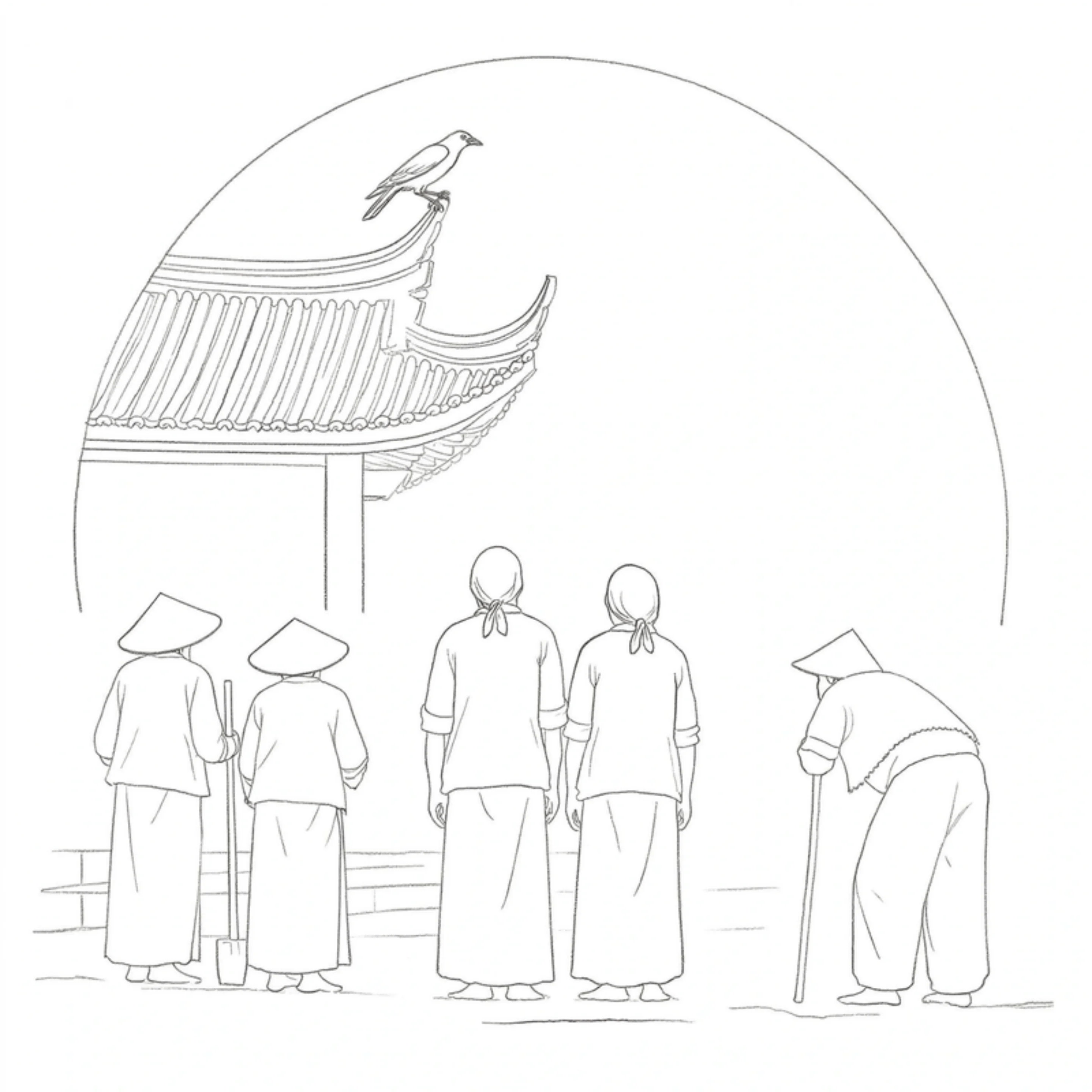
Bankei taught one thing: the Unborn. You were not born with anything that needs fixing, he said. When a crow caws you hear it as a crow without deciding to; when someone speaks behind you, you know their voice. That instant knowing, before any effort, is the Unborn mind, and it was never born and cannot die.
He warned against making practice a struggle. If you grow angry, he said, you were not born angry; you made it from a passing thing by holding on to it. Just do not trade the Unborn for thoughts.
He distrusted koans and long methods. This is close to Ramana's teaching, two centuries later in another country.
In their words
In paraphrase: when you hear a crow, you know it is a crow without trying. That knowing is the Unborn. Stay with it.
After Bankei's sermons; paraphrase. Modern translations, such as Norman Waddell's (1984), are in copyright.
Where this path meets the others
Bankei's Unborn meets the Katha's “not born, it dies not” and Ramana's plainness. See What happens at death? and Ramana Maharshi.
You heard the crow before you tried.
Works
- Sermons (recorded by students)late 17th century
Further reading
- The Unborn: The Life and Teachings of Zen Master Bankei, tr. Norman Waddell (1984; in copyright)
- Peter Haskel, Bankei Zen (1984; in copyright)
Next on your path
Sources
- Waddell (1984) and Haskel (1984), for the life and sermons, paraphrased (in copyright).