Allama Prabhu
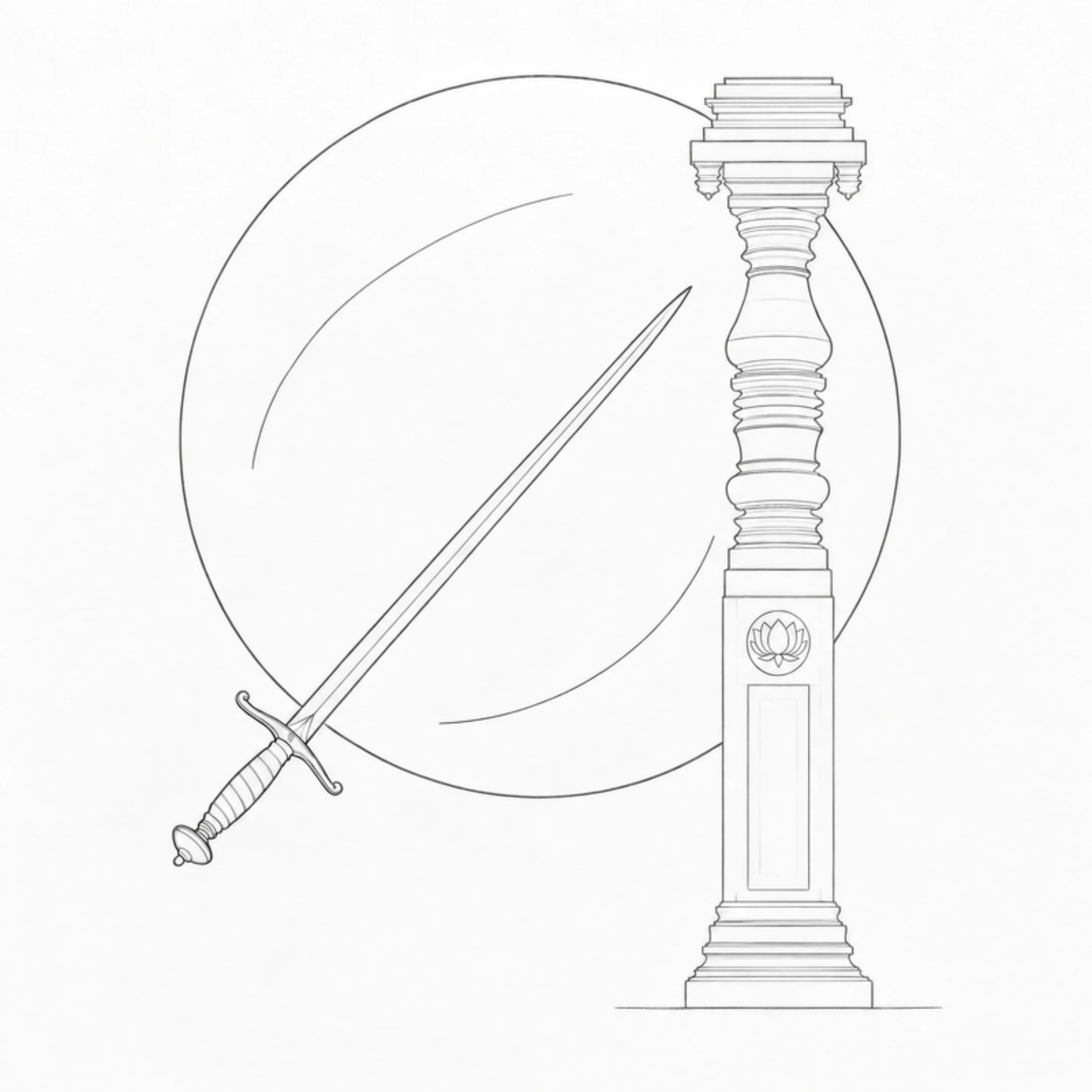
12th century CE · Karnataka; Kalyana (today Basavakalyan)
Life
Allama Prabhu was one of the great vachana poets of 12th-century Karnataka, in the movement around Basavanna at Kalyana that became the Virashaiva or Lingayat tradition. The vachanas are short prose-poems in Kannada, spoken to Shiva by a personal name; Allama's is Guheshvara, lord of caves. Later tradition makes him the presiding voice of the gathering hall (Anubhava Mantapa) where these poets met. Little else about his life is certain.
What they saw
Allama is the most uncompromising of the vachana poets. He strips away temple worship, ritual, even the poet's own devotion when it turns into display. Many vachanas are riddles. A fire in the water; a blind man catching a parrot. They are built to stop the mind in its tracks.
What is left, again and again, is emptiness that is also full: Shiva as the ground no one can stand on, the light that has no source. He tests the others in the Kalyana hall, including Akka Mahadevi, and his questions are always about what is left when every claim is dropped.
The sword story, from a 15th-century work, makes the same point as a picture. A body of diamond is still something to strike.
In their words
In paraphrase: when you look, the looked-at vanishes; when you look again, the looker vanishes too. What remains, Guheshvara, has no name.
After a vachana of Allama Prabhu; paraphrase, not a quotation.
Where this path meets the others
Allama's riddles closely resemble Zen koans, and his stripping away is the old not this, not this. See Zen and Advaita and Not this, not this.
What is left when the sword passes through?
Works
- Vachanas12th century
Further reading
- A. K. Ramanujan, Speaking of Siva (1973; in copyright)
- Chamarasa, Prabhulingalile (15th century), the legendary life
Next on your path
Sources
- A. K. Ramanujan, Speaking of Siva (Penguin, 1973), introduction, for the vachana movement; in copyright, paraphrased.
- The sword story: Chamarasa, Prabhulingalile (15th century), legend.