Akka Mahadevi
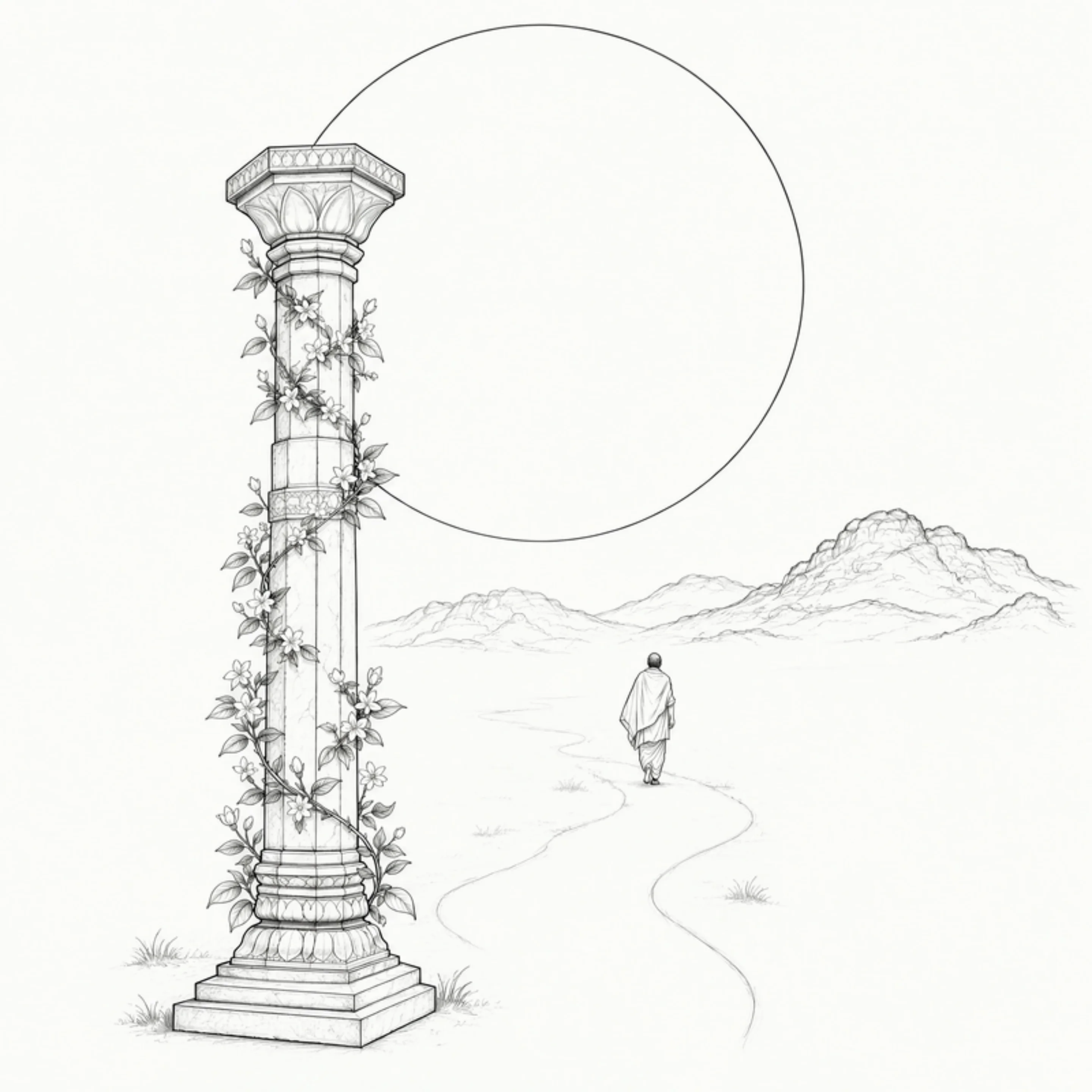
12th century CE · Born at Udutadi, Karnataka; Kalyana; by tradition died at Srisailam
Life
Mahadevi was born at Udutadi in Karnataka in the 12th century. From childhood she was devoted to Shiva in the form she called Chennamallikarjuna, lord white as jasmine. Legend says a local ruler wanted her, and that she left him, and with him every possession and custom. She walked to Kalyana, where the vachana poets around Basavanna called her Akka, elder sister. She is said to have died young in the hills of Srisailam. About 430 vachanas are credited to her.
What they saw
Akka's vachanas are love poems. The lover is Shiva, and the language is a woman's, frank about the body, about longing and about the scandal she was. She treats the world's opinion as weather.
The love moves. At first it is two: a woman and the jasmine lord who will not come. Later the poems speak of a love where there is nothing left to divide, and of a body that is already his. Allama's question in the hall, about why she covers herself, is answered in her poems: modesty and immodesty both belong to someone who still thinks the body is the issue.
She is one of the clearest women's voices in Indian thought, and she wrote in her own language, not Sanskrit.
In their words
In paraphrase: men and women alike go red when their clothes slip. But if the lord fills the whole world, every eye is his. What is left to hide, and from whom?
After a vachana of Akka Mahadevi; paraphrase, not a quotation.
Where this path meets the others
Akka's love that ends in no lover meets Rabia of Basra and the Sufi poets, and her freedom from custom is Dattatreya's. See Devotion and Rabia and the love that leaves no lover.
White as jasmine, and nowhere to hide.
Works
- Vachanas12th century
Further reading
- A. K. Ramanujan, Speaking of Siva (1973; in copyright)
- Vinaya Chaitanya, Songs for Siva: Vacanas of Akka Mahadevi (2017; in copyright)
Next on your path
Sources
- Ramanujan, Speaking of Siva (1973), for the life and the vachanas, paraphrased (in copyright).
- The number of vachanas (about 430) and the details of her life are from tradition and general reference works.