Yoga Vasishtha: twenty passages
In the words of Pranav Ashar
How we renderThe heart of the Yoga Vasishtha: twenty passages
In brief
The Yoga Vasishtha is a Sanskrit work of some 28,000 verses in which the sage Vasishtha answers the young Rama, home from pilgrimage and unable to see the point of anything. Vasishtha replies with stories: a queen whose dead husband's kingdom fits inside a hut, a demoness who asks riddles, a king who wakes up on his throne, a queen who teaches her husband in disguise. One argument runs under them: the world is the mind's long dream, awareness is what is real, and the free go on as before. Twenty passages follow, with Mitra's translation beside them.
Rama's questions
क उपायो गतिः का वा का चिन्ता कः समाश्रयः । केनेयमशुभोदर्का न भवेज्जीविताटवी ॥ ६ ॥ अपमृष्टमलोदेति क्षालनेनामृतद्युतिः । मनश्चन्द्रमसः केन तेन कामकलङ्कितात् ॥ १० ॥ दृष्टसंसारगतिना दृष्टादृष्टविनाशिना । केनेव व्यवहर्तव्यं संसारवनवीथिषु ॥ ११ ॥ मनोमननशालिन्याः सत्ताया भुवनत्रये । क्षयो युक्तिं विना नास्ति ब्रूत तामलमुत्तमाम् ॥ १६ ॥ व्यवहारवतो युक्त्या दुःखं नायाति मे यया । अथवा व्यवहारस्य ब्रूत तां युक्तिमुत्तमाम् ॥ १७ ॥ यथा जानासि भगवंस्तथा मोहनिवृत्तये । ब्रूहि मे साधवो येन नूनं निर्दुःखतां गताः ॥ १९ ॥
ka upāyo gatiḥ kā vā kā cintā kaḥ samāśrayaḥ | keneyamaśubhodarkā na bhavejjīvitāṭavī || 6 || apamṛṣṭamalodeti kṣālanenāmṛtadyutiḥ | manaścandramasaḥ kena tena kāmakalaṅkitāt || 10 || dṛṣṭasaṃsāragatinā dṛṣṭādṛṣṭavināśinā | keneva vyavahartavyaṃ saṃsāravanavīthiṣu || 11 || manomananaśālinyāḥ sattāyā bhuvanatraye | kṣayo yuktiṃ vinā nāsti brūta tāmalamuttamām || 16 || vyavahāravato yuktyā duḥkhaṃ nāyāti me yayā | athavā vyavahārasya brūta tāṃ yuktimuttamām || 17 || yathā jānāsi bhagavaṃstathā mohanivṛttaye | brūhi me sādhavo yena nūnaṃ nirduḥkhatāṃ gatāḥ || 19 ||
What is the way out, what road, what thought, what refuge? How does this forest of a life not end badly? The moon of the mind is stained with wanting. What washing wipes the stain away, so that it rises clean and shines like nectar? Someone has seen how the world goes, has seen that the seen and the unseen both break up. How should such a person act on the paths of the world's forest? In all three worlds, this existence made of the mind's thinking does not end without a method. Tell me that method, the best, in full. A method by which, while I act in the world, sorrow does not reach me; or else the best way of acting: tell me that. As you know it, sir, tell me, so that my confusion ends, how the good have surely come out of sorrow.
Note //
Rama's questions close Book I (Vairagya, 'turning away'), and the rest of the work answers them. He is not asking to leave the world: verses 11 and 17 ask how to act in it without sorrow, and the site reads the whole text as answering that, since the knower lives the same life without confinement. 'The mind's thinking' renders manana, here the restless mind at work, not the reflecting of hearing, reflecting and abiding.
Shuka already knew
जनक उवाच । नातः परतरः कश्चिन्निश्चयोऽस्त्यपरो मुने । स्वयमेव त्वया ज्ञातं गुरुतश्च पुनः श्रुतम् ॥ ३५ ॥ अविच्छिन्नचिदात्मैकः पुमानस्तीह नेतरत् । स्वसंकल्पवशाद्बद्धो निःसंकल्पश्च मुच्यते ॥ ३६ ॥ तेन त्वया स्फुटं ज्ञातं ज्ञेयं यस्य महात्मनः । भोगेभ्यो विरतिर्जाता दृश्यात्प्राक्सकलादिह ॥ ३७ ॥ प्राप्तं प्राप्तव्यमखिलं भवता पूर्णचेतसा । न दृश्ये पतसि ब्रह्मन्मुक्तस्त्वं भ्रान्तिमुत्सृज ॥ ४१ ॥ अनुशिष्टः स इत्येवं जनकेन महात्मना । अतिष्ठत्स शुकस्तूष्णीं स्वच्छे परमवस्तुनि ॥ ४२ ॥
janaka uvāca | nātaḥ parataraḥ kaścinniścayo'styaparo mune | svayameva tvayā jñātaṃ gurutaśca punaḥ śrutam || 35 || avicchinnacidātmaikaḥ pumānastīha netarat | svasaṃkalpavaśādbaddho niḥsaṃkalpaśca mucyate || 36 || tena tvayā sphuṭaṃ jñātaṃ jñeyaṃ yasya mahātmanaḥ | bhogebhyo viratirjātā dṛśyātprāksakalādiha || 37 || prāptaṃ prāptavyamakhilaṃ bhavatā pūrṇacetasā | na dṛśye patasi brahmanmuktastvaṃ bhrāntimutsṛja || 41 || anuśiṣṭaḥ sa ityevaṃ janakena mahātmanā | atiṣṭhatsa śukastūṣṇīṃ svacche paramavastuni || 42 ||
Janaka said: There is nothing more certain than this, sage. You found it yourself, and heard it again from your teacher. There is one person here, awareness, unbroken, and nothing else. It is bound by its own imagining and free when the imagining stops. So you have plainly known what there is to know: in you the pull of pleasures, of everything that can be seen, has already let go. You have reached all there is to reach; your mind is full. You no longer fall into what is seen. You are free. Drop the last doubt. Taught in this way by the great Janaka, Shuka stayed silent, resting in the clear, highest reality.
Note //
Vishvamitra tells this story to Rama before the teaching begins: Vyasa's son Shuka had already found the truth by his own inquiry and lacked only the confidence to rest in it, so Janaka adds nothing new. 'Imagining' renders samkalpa, the mind's forming of intentions and pictures; in the site's reading what binds is the I-claim's imagining, never awareness, which stays unbroken throughout.
Fate is your own past effort
प्राक्तनः पुरुषार्थोऽसौ मां नियोजयतीति धीः । बलादधस्पदीकार्या प्रत्यक्षादधिका न सा ॥ १० ॥ तावत्तावत्प्रयत्नेन यतितव्यं सुपौरुषम् । प्राक्तनं पौरुषं यावदशुभं शाम्यति स्वयम् ॥ ११ ॥ दोषः शाम्यत्यसंदेहं प्राक्तनोऽद्यतनैर्गुणैः । दृष्टान्तोऽत्र ह्यस्तनस्य दोषस्याद्य गुणैः क्षयः ॥ १२ ॥ शुभेन पौरुषेणाशु शुभमासाद्यते फलम् । अशुभेनाशुभं नित्यं दैवं नाम न किंचन ॥ १८ ॥
prāktanaḥ puruṣārtho'sau māṃ niyojayatīti dhīḥ | balādadhaspadīkāryā pratyakṣādadhikā na sā || 10 || tāvattāvatprayatnena yatitavyaṃ supauruṣam | prāktanaṃ pauruṣaṃ yāvadaśubhaṃ śāmyati svayam || 11 || doṣaḥ śāmyatyasaṃdehaṃ prāktano'dyatanairguṇaiḥ | dṛṣṭānto'tra hyastanasya doṣasyādya guṇaiḥ kṣayaḥ || 12 || śubhena pauruṣeṇāśu śubhamāsādyate phalam | aśubhenāśubhaṃ nityaṃ daivaṃ nāma na kiṃcana || 18 ||
The thought 'my past effort is driving me' has to be put down, firmly: it is no stronger than what is right in front of you. Make good effort, and keep making it, for as long as it takes for the bad effort of the past to quiet down by itself. The faults of the past are surely calmed by the good done now. You can see it every day: yesterday's mistake is undone by today's care. Good effort soon brings a good result, bad effort a bad one, always. There is no such thing as 'fate'.
Note //
Vasishtha is unusually firm here: what people call fate (daiva) is only their own past effort still at work, and present effort can outweigh it. This is teaching for the person, at the level of action; the later books add that the Self, being full, does nothing at all, and the two do not clash, since effort belongs to the mind and it is through the mind's effort that the I-claim is seen through.
The four gatekeepers
नित्यं सज्जनसंपर्काद्विवेक उपजायते । विवेकपादपस्यैव भोगमोक्षौ फले स्मृतौ ॥ ५८ ॥ मोक्षद्वारे द्वारपालाश्चत्वारः परिकीर्तिताः । शमो विचारः संतोषश्चतुर्थः साधुसंगमः ॥ ५९ ॥ एते सेव्याः प्रयत्नेन चत्वारो द्वौ त्रयोऽथवा । द्वारमुद्घाटयन्त्येते मोक्षराजगृहे तथा ॥ ६० ॥ एकं वा सर्वयत्नेन प्राणांस्त्यक्त्वा समाश्रयेत् । एकस्मिन्वशगे यान्ति चत्वारोऽपि वशं यतः ॥ ६१ ॥
nityaṃ sajjanasaṃparkādviveka upajāyate | vivekapādapasyaiva bhogamokṣau phale smṛtau || 58 || mokṣadvāre dvārapālāścatvāraḥ parikīrtitāḥ | śamo vicāraḥ saṃtoṣaścaturthaḥ sādhusaṃgamaḥ || 59 || ete sevyāḥ prayatnena catvāro dvau trayo'thavā | dvāramudghāṭayantyete mokṣarājagṛhe tathā || 60 || ekaṃ vā sarvayatnena prāṇāṃstyaktvā samāśrayet | ekasminvaśage yānti catvāro'pi vaśaṃ yataḥ || 61 ||
From keeping company with good people discernment is born, and the tree of discernment bears two fruits: a good life, and freedom. Four gatekeepers stand at the door of freedom: calm, inquiry, contentment, and fourth, the company of the wise. Serve them with care, all four, or three, or two: they are the ones who open the door to freedom's royal house. Or hold on to just one with all your strength, even if it costs your life: when one is won, the other three come with it.
Note //
The four are shama (calm), vichara (inquiry), santosha (contentment) and sadhu-sanga (the company of the wise), and the next chapters of Book II take each in turn. Vichara is the same word the site uses for looking into 'who am I?'; verse 61 makes the four one movement, so whichever a reader can take up opens the rest.
Gold and the bracelet
यदिदं दृश्यते सर्वं जगत्स्थावरजंगमम् । तत्सुषुप्ताविव स्वप्नः कल्पान्ते प्रविनश्यति ॥ १० ॥ ततः स्तिमितगम्भीरं न तेजो न तमस्ततम् । अनाख्यमनभिव्यक्तं सत्किंचिदवशिष्यते ॥ ११ ॥ ऋतमात्मा परं ब्रह्म सत्यमित्यादिका बुधैः । कल्पिता व्यवहारार्थं तस्य संज्ञा महात्मनः ॥ १२ ॥ मनः संपद्यते तेन महतः परमात्मनः । सुस्थिरादस्थिराकारस्तरङ्ग इव वारिधेः ॥ १५ ॥ तत्स्वयं स्वैरमेवाशु संकल्पयति नित्यशः । तेनेत्थमिन्द्रजालश्रीर्विततेयं वितन्यते ॥ १६ ॥ यथा कटकशब्दार्थः पृथक्त्वार्हो न काञ्चनात् । न हेम कटकात्तद्वज्जगच्छब्दार्थता परे ॥ १७ ॥ ब्रह्मण्येवास्त्यनन्तात्म यथास्थितमिदं जगत् । न जगच्छब्दकार्थेऽस्ति हेम्नीव कटकात्मता ॥ १८ ॥
yadidaṃ dṛśyate sarvaṃ jagatsthāvarajaṃgamam | tatsuṣuptāviva svapnaḥ kalpānte pravinaśyati || 10 || tataḥ stimitagambhīraṃ na tejo na tamastatam | anākhyamanabhivyaktaṃ satkiṃcidavaśiṣyate || 11 || ṛtamātmā paraṃ brahma satyamityādikā budhaiḥ | kalpitā vyavahārārthaṃ tasya saṃjñā mahātmanaḥ || 12 || manaḥ saṃpadyate tena mahataḥ paramātmanaḥ | susthirādasthirākārastaraṅga iva vāridheḥ || 15 || tatsvayaṃ svairamevāśu saṃkalpayati nityaśaḥ | tenetthamindrajālaśrīrvitateyaṃ vitanyate || 16 || yathā kaṭakaśabdārthaḥ pṛthaktvārho na kāñcanāt | na hema kaṭakāttadvajjagacchabdārthatā pare || 17 || brahmaṇyevāstyanantātma yathāsthitamidaṃ jagat | na jagacchabdakārthe'sti hemnīva kaṭakātmatā || 18 ||
All this that is seen, the moving and the still, folds away at the end of an age like a dream in deep sleep. Then something real remains: still and deep, not light and not darkness, without a name, not yet shown. For everyday speech the wise have given it names: Right Order, the Self, the highest, the whole, the True. So the mind arises from the great, highest Self, unsteady out of the steady, as a wave rises out of the sea. Then, by itself, freely and fast, it keeps on imagining, and by its imagining this wide, conjured show is spread out. cannot be set apart from gold, nor the gold from the bracelet; so what 'world' means is not apart from the highest. This world, just as it stands, is in the whole alone, and is the endless; yet the whole is not what 'world' names, just as being a bracelet is not in gold.
Note //
The opening of Book III (Utpatti, 'Arising') gives the whole book in brief: the world arises through the mind's imagining and folds back like a dream. The gold and the bracelet carry the site's reading of appearance: the bracelet is real as a bracelet and never apart from gold, while gold does not depend on any bracelet. The verses left out (13-14) describe the Self 'as if' becoming the living person and then the mind.
Worlds inside worlds
इदं त्वदीयं सदनं तद्गेहाकाशकोशगम् । विद्धि मां त्वां च सर्वं च तच्चिद्व्योमैव केवलम् ॥ २१ ॥ स्वप्नसंभ्रमसंकल्पस्वानुभूतिपरम्पराः । प्रमाणान्यत्र मुख्यानि संबोधाय प्रदीपवत् ॥ २२ ॥ स्थितो ब्राह्मणगेहान्तर्द्विजजीवस्तदम्बरे । ससमुद्रवना पृथ्वी स्थिताब्ज इव षट्पदः ॥ २३ ॥ तस्याः कस्मिंश्चिदेकस्मिन्पेलवे कोणकोटरे । इदं पत्तनदेहादि केशोण्ड्रक इवाम्बरे ॥ २४ ॥ तस्मिन्नस्मिन्पुरे तन्वि तदेव सदनं स्थितम् । तस्मात्किं त्रसरेण्वन्तर्जगद्वृन्दमिव स्थितम् ॥ २५ ॥ परमाणौ परमाणौ सन्ति वत्से चिदात्मनि । अन्तरन्तर्जगन्तीति किंत्वेतन्नाम शङ्क्यते ॥ २६ ॥
idaṃ tvadīyaṃ sadanaṃ tadgehākāśakośagam | viddhi māṃ tvāṃ ca sarvaṃ ca taccidvyomaiva kevalam || 21 || svapnasaṃbhramasaṃkalpasvānubhūtiparamparāḥ | pramāṇānyatra mukhyāni saṃbodhāya pradīpavat || 22 || sthito brāhmaṇagehāntardvijajīvastadambare | sasamudravanā pṛthvī sthitābja iva ṣaṭpadaḥ || 23 || tasyāḥ kasmiṃścidekasminpelave koṇakoṭare | idaṃ pattanadehādi keśoṇḍraka ivāmbare || 24 || tasminnasminpure tanvi tadeva sadanaṃ sthitam | tasmātkiṃ trasareṇvantarjagadvṛndamiva sthitam || 25 || paramāṇau paramāṇau santi vatse cidātmani | antarantarjagantīti kiṃtvetannāma śaṅkyate || 26 ||
This house of yours stands inside the space of that house. Know me, and you, and all of it, as that one space of awareness, nothing else. Dreams, confusions, imaginings, and the long chain of your own experience: these are the chief proofs here, lamps to understand it by. The brahmin's person stayed inside the brahmin's house, in its space, and the earth with its seas and forests stayed there too, like a bee in a lotus. In one small corner of that earth stands this city, this body and the rest, like the floating threads one sees in an empty sky. And in this city, slender one, that same house stands. So what if a crowd of worlds stands inside a mote of dust? In every atom of the Self that is awareness, child, there are worlds inside worlds. What is there to doubt?
Note //
Sarasvati is explaining to Queen Lila that her whole kingdom arose, at a village brahmin's death, inside the space of his hut, and that the hut now stands in a corner of her own city. Worlds can nest like this because they are not made of extended stuff; each is awareness appearing, and 'space' here is chid-vyoma, the space of awareness. In the site's reading this is appearance at the level of manifestation: real as what appears, never on its own.
A long dream, real to each other
दीर्घस्वप्नमिदं विश्वं विद्ध्यहन्तादिसंयुतम् । अत्रान्ये स्वप्नपुरुषा यथा सत्यास्तथा शृणु ॥ ८ ॥ अस्ति सर्वगतं शान्तं परमार्थघनं शुचि । अचेत्यचिन्मात्रवपुः परमाकाशमाततम् ॥ ९ ॥ तत्सर्वगं सर्वशक्ति सर्वं सर्वात्मकं स्वयम् । यत्र यत्र यथोदेति तथास्ते तत्र तत्र वै ॥ १० ॥ एवं विश्वमिदं स्वप्नस्तत्र सत्यं भवान्मम । यथैव त्वं तथैवान्ये स्वप्ने स्वप्नवरा नृणाम् ॥ १७ ॥ स्वप्ने नगरवास्तव्याः सत्या न स्युरिमे यदि । तदिहापि तदाकारे न सत्यं मे मनागपि ॥ १८ ॥ संसारे विपुले स्वप्ने यथा सत्यमहं तव । यथा त्वमपि मे सत्यं सर्वं स्वप्नेष्विति क्रमः ॥ २० ॥
dīrghasvapnamidaṃ viśvaṃ viddhyahantādisaṃyutam | atrānye svapnapuruṣā yathā satyāstathā śṛṇu || 8 || asti sarvagataṃ śāntaṃ paramārthaghanaṃ śuci | acetyacinmātravapuḥ paramākāśamātatam || 9 || tatsarvagaṃ sarvaśakti sarvaṃ sarvātmakaṃ svayam | yatra yatra yathodeti tathāste tatra tatra vai || 10 || evaṃ viśvamidaṃ svapnastatra satyaṃ bhavānmama | yathaiva tvaṃ tathaivānye svapne svapnavarā nṛṇām || 17 || svapne nagaravāstavyāḥ satyā na syurime yadi | tadihāpi tadākāre na satyaṃ me manāgapi || 18 || saṃsāre vipule svapne yathā satyamahaṃ tava | yathā tvamapi me satyaṃ sarvaṃ svapneṣviti kramaḥ || 20 ||
Know this world, with its 'I' and all the rest, as a long dream. Now hear how the other people in it, dream-people, are real. There is something that goes everywhere, still, dense with what is highest, clean: its body is awareness alone, with nothing known in it, the highest space, spread wide. It goes everywhere, has every power, is everything, is itself the self of everything. Wherever it rises, and however, that is how it stands there. So this world is a dream, and in it you are real to me; and as you are, so are the others, the best of dream-people, to the people in the dream. If the people living in a dreamed city are not real, then here too, in a world of the same shape, nothing is real to me, not even a little. In the wide dream of the world, as I am real to you and you are real to me, so it is with everything in dreams. That is the order of it.
Note //
Sarasvati is teaching King Viduratha inside Lila's story, and Rama breaks in to ask whether dream-people are real; Vasishtha answers him in verses 17 to 20. 'Dream' here does not mean that nothing is there: the text says plainly that the people in the dream are real to one another and to the dreamer, which is what the site means by appearance, real as what appears, never on its own. What is real on its own is the dreamer, awareness, described in verses 9 and 10.
Karkati's riddles: the atom that holds the worlds
अनाख्यत्वादगम्यत्वान्मनः षष्ठेन्द्रियस्थितेः । चिन्मात्रमेवमात्माणुराकाशादपि सूक्ष्मकः ॥ ४ ॥ चिदणोः परमस्यान्तः सदिवासदिवापि वा । बीजेऽन्तर्द्रुमसत्तेव स्फुरतीदं जगत्स्थितम् ॥ ५ ॥ सोऽहं भवानेव भवान्संपन्नोऽद्वैतवेदनात् । स भवान्न भवेन्नाहं जातो बोधबृहद्वपुः ॥ १६ ॥ त्वंताहंतात्मकं सर्वं विनिगीर्यावबोधतः । न त्वं नाहं न सर्वं च सर्वं वा भवति स्वयम् ॥ १७ ॥ गच्छन्न गच्छत्येषोऽणुर्योजनौघगतोऽपि सन् । संवित्त्या योजनौघत्वं तस्याणोरन्तरे स्थितम् ॥ १८ ॥ न गच्छत्येष यातोऽपि संप्राप्तोऽपि च नागतः । स्वसत्ताकाशकोशान्तर्वासित्वाद्देशकालयोः ॥ १९ ॥
anākhyatvādagamyatvānmanaḥ ṣaṣṭhendriyasthiteḥ | cinmātramevamātmāṇurākāśādapi sūkṣmakaḥ || 4 || cidaṇoḥ paramasyāntaḥ sadivāsadivāpi vā | bīje'ntardrumasatteva sphuratīdaṃ jagatsthitam || 5 || so'haṃ bhavāneva bhavānsaṃpanno'dvaitavedanāt | sa bhavānna bhavennāhaṃ jāto bodhabṛhadvapuḥ || 16 || tvaṃtāhaṃtātmakaṃ sarvaṃ vinigīryāvabodhataḥ | na tvaṃ nāhaṃ na sarvaṃ ca sarvaṃ vā bhavati svayam || 17 || gacchanna gacchatyeṣo'ṇuryojanaughagato'pi san | saṃvittyā yojanaughatvaṃ tasyāṇorantare sthitam || 18 || na gacchatyeṣa yāto'pi saṃprāpto'pi ca nāgataḥ | svasattākāśakośāntarvāsitvāddeśakālayoḥ || 19 ||
It has no name, nothing reaches it, it is out of range of the mind and the five senses: so the Self is awareness alone, an atom finer than space. Inside that highest atom of awareness this world stands and shines, as if it were, as if it were not, like the tree's being inside the seed. I am that, and you are that too, once not-two is known. When the wide body of knowing is born there is no 'you' there, and no 'I'. When all that is made of 'you' and 'I' is swallowed by understanding, there is no you, no I, no all; or else all of it is itself. This atom goes without going, though it has crossed a flood of leagues: by awareness, the flood of leagues stands inside the atom. Gone, it has not gone; arrived, it has not come; it lives inside the sheath of its own being, the space where place and time are.
Note //
Karkati, a demoness who has turned to inquiry, stops a king and his minister at night in the forest and sets them riddles about 'the atom' that holds all the worlds; the minister answers that the riddles describe the Self, awareness. 'I am that, and you are that' is the Upanishads' 'you are that' spoken by a minister to a demoness. In the site's reading the last line of verse 17 carries the point: when 'you' and 'I' go, nothing is lost, and all of it stands as itself, the whole.
The seven grounds of knowing
ज्ञानभूमिः शुभेच्छाख्या प्रथमा समुदाहृता । विचारणा द्वितीया तु तृतीया तनुमानसा ॥ ५ ॥ सत्त्वापत्तिश्चतुर्थी स्यात्ततोऽसंसक्तिनामिका । पदार्थाभावनी षष्ठी सप्तमी तुर्यगा स्मृता ॥ ६ ॥ स्थितः किं मूढ एवास्मि प्रेक्ष्येऽहं शास्त्रसज्जनैः । वैराग्यपूर्वमिच्छेति शुभेच्छेत्युच्यते बुधैः ॥ ८ ॥ शास्त्रसज्जनसंपर्कवैराग्याभ्यासपूर्वकम् । सदाचारप्रवृत्तिर्या प्रोच्यते सा विचारणा ॥ ९ ॥ विचारणाशुभेच्छाभ्यामिन्द्रियार्थेष्वसक्तता । यत्र सा तनुता भावात्प्रोच्यते तनुमानसा ॥ १० ॥ भूमिकात्रितयाभ्यासाच्चित्तेऽर्थे विरतेर्वशात् । सत्यात्मनि स्थितिः शुद्धे सत्त्वापत्तिरुदाहृता ॥ ११ ॥ दशाचतुष्टयाभ्यासादसंसङ्गफलेन च । रूढसत्त्वचमत्कारात्प्रोक्ताऽसंसक्तिनामिका ॥ १२ ॥ भूमिकापञ्चकाभ्यासात्स्वात्मारामतया दृढम् । आभ्यन्तराणां बाह्यानां पदार्थानामभावनात् ॥ १३ ॥ परप्रयुक्तेन चिरं प्रयत्नेनार्थभावनात् । पदार्थाभावनानाम्नी षष्ठी संजायते गतिः ॥ १४ ॥ भूमिषट्रुचिराभ्यासाद्भेदस्यानुपलम्भतः । यत्स्वभावैकनिष्ठत्वं सा ज्ञेया तुर्यगा गतिः ॥ १५ ॥ एषा हि जीवन्मुक्तेषु तुर्यावस्थेह विद्यते । विदेहमुक्तिविषयस्तुर्यातीतमतः परम् ॥ १६ ॥ ये हि राम महाभागाः सप्तमीं भूमिकां गताः । आत्मारामा महात्मानस्ते महत्पदमागताः ॥ १७ ॥ जीवन्मुक्ता न सज्जन्ति सुखदुःखरसस्थितौ । प्रकृतेनार्थकार्याणि किंचित्कुर्वन्ति वा न वा ॥ १८ ॥
jñānabhūmiḥ śubhecchākhyā prathamā samudāhṛtā | vicāraṇā dvitīyā tu tṛtīyā tanumānasā || 5 || sattvāpattiścaturthī syāttato'saṃsaktināmikā | padārthābhāvanī ṣaṣṭhī saptamī turyagā smṛtā || 6 || sthitaḥ kiṃ mūḍha evāsmi prekṣye'haṃ śāstrasajjanaiḥ | vairāgyapūrvamiccheti śubhecchetyucyate budhaiḥ || 8 || śāstrasajjanasaṃparkavairāgyābhyāsapūrvakam | sadācārapravṛttiryā procyate sā vicāraṇā || 9 || vicāraṇāśubhecchābhyāmindriyārtheṣvasaktatā | yatra sā tanutā bhāvātprocyate tanumānasā || 10 || bhūmikātritayābhyāsāccitte'rthe viratervaśāt | satyātmani sthitiḥ śuddhe sattvāpattirudāhṛtā || 11 || daśācatuṣṭayābhyāsādasaṃsaṅgaphalena ca | rūḍhasattvacamatkārātproktā'saṃsaktināmikā || 12 || bhūmikāpañcakābhyāsātsvātmārāmatayā dṛḍham | ābhyantarāṇāṃ bāhyānāṃ padārthānāmabhāvanāt || 13 || paraprayuktena ciraṃ prayatnenārthabhāvanāt | padārthābhāvanānāmnī ṣaṣṭhī saṃjāyate gatiḥ || 14 || bhūmiṣaṭrucirābhyāsādbhedasyānupalambhataḥ | yatsvabhāvaikaniṣṭhatvaṃ sā jñeyā turyagā gatiḥ || 15 || eṣā hi jīvanmukteṣu turyāvastheha vidyate | videhamuktiviṣayasturyātītamataḥ param || 16 || ye hi rāma mahābhāgāḥ saptamīṃ bhūmikāṃ gatāḥ | ātmārāmā mahātmānaste mahatpadamāgatāḥ || 17 || jīvanmuktā na sajjanti sukhaduḥkharasasthitau | prakṛtenārthakāryāṇi kiṃcitkurvanti vā na vā || 18 ||
The first ground of knowing is called good wish, the second, inquiry, the third, ; the fourth, reaching clarity; then the one called not clinging; the sixth, things no longer pictured; the seventh, going into the fourth. 'Why do I just sit here, dull as I am? I will look into this, with the scriptures and the wise': that wish, born of turning from the world, the wise call good wish. A turn toward living rightly, which comes from the scriptures, good company, letting go and steady practice: that is called inquiry. When good wish and inquiry loosen the hold of the things of the senses, and the mind grows thin, that is called . From practising these three, as the mind turns away from its objects, one rests in the Self, true and pure: that is called reaching clarity. From practising these four, with the fruit of not clinging, and the wonder of clarity grown firm, comes the stage called not clinging. From practising the five, delighting steadily in one's own Self, nothing inner or outer is pictured any more; things are pictured only when others prompt it, slowly and with effort, and the sixth way opens, called 'things no longer pictured'. From long practice of the six, when difference is nowhere found, one stands only in one's own nature: know that as going into the fourth. This is the fourth state, found here in those . What lies beyond it, for those freed at the body's end, is beyond the fourth. Rama, the great ones who have reached the seventh ground delight in the Self. They have come to the great place. The do not cling where pleasure and pain are tasted. The work that comes with their life, they do it, or they don't.
Note //
The seven grounds (bhumikas) are among the Yoga Vasishtha's best-known teachings: good wish, inquiry, thinning of the mind, clarity (sattvapatti), not clinging, things no longer pictured (padarthabhavana) and going into the fourth (turyaga). The first three are practice; with the fourth the Self is known. In the site's reading the later grounds measure how settled that knowledge is, not a new knowing, and 'the fourth' (turiya) is awareness present through waking, dream and sleep, not a higher state among them.
Free while living
अनागतानां भोगानामवाञ्छनमकृत्रिमम् । आगतानां च संभोग इति पण्डितलक्षणम् ॥ ८ ॥ अत्यन्तविरतः स्वस्थः सर्ववासविवर्जितः । व्योमवत्तिष्ठ नीरागो राम कार्यपरोऽपि सन् ॥ १५ ॥ यस्य नेच्छा न वानिच्छा ज्ञस्य कर्मणि तिष्ठतः । न तस्य लिप्यते प्रज्ञा पद्मपत्रमिवाम्बुभिः ॥ १६ ॥ दर्शनस्पर्शनादीनि मा करोतु करोतु च । तवेन्द्रियमनो गौणं त्वमनिच्छो भवात्मवान् ॥ १७ ॥ जीवन्मुक्ता महात्मानो नित्यतृप्ता महाधियः । आचारैरनुगन्तव्या न भोगकृपणाः शठाः ॥ २५ ॥ न त्यजन्ति न वाञ्छन्ति व्यवहारं जगद्गतम् । सर्वमेवानुवर्तन्ते पारावारविदो जनाः ॥ २६ ॥
anāgatānāṃ bhogānāmavāñchanamakṛtrimam | āgatānāṃ ca saṃbhoga iti paṇḍitalakṣaṇam || 8 || atyantavirataḥ svasthaḥ sarvavāsavivarjitaḥ | vyomavattiṣṭha nīrāgo rāma kāryaparo'pi san || 15 || yasya necchā na vānicchā jñasya karmaṇi tiṣṭhataḥ | na tasya lipyate prajñā padmapatramivāmbubhiḥ || 16 || darśanasparśanādīni mā karotu karotu ca | tavendriyamano gauṇaṃ tvamaniccho bhavātmavān || 17 || jīvanmuktā mahātmāno nityatṛptā mahādhiyaḥ | ācārairanugantavyā na bhogakṛpaṇāḥ śaṭhāḥ || 25 || na tyajanti na vāñchanti vyavahāraṃ jagadgatam | sarvamevānuvartante pārāvāravido janāḥ || 26 ||
Not wanting pleasures that have not come, and not pretending otherwise; enjoying the ones that have: that is the mark of the wise. Fully at rest, in yourself, not settled on anything, stay like space, Rama, without craving, even while hard at work. The knower who keeps on acting neither wants nor refuses. His understanding is not smeared by it, as a lotus leaf is not smeared by water. Let your senses and mind, the servants, see and touch, or not. You yourself stay without wanting, resting in the Self. Those , the great ones, always content, wide in understanding: follow their way of life, not the way of sly men greedy for pleasure. They neither give up the dealings of the world nor crave them. Those who know this shore and the far one go along with all of it.
Note //
The text describes the free-while-living (jivanmukta) by how they act, not by what they feel: they take what comes and let go what goes, and nothing is given up except the wanting. Verse 17 puts the senses and the mind in their place as instruments, 'secondary' (gauna), while you rest in the Self. The site holds this as the daily practice: attention to the task; awareness is what I am and goes nowhere.
Kacha's song
किं करोमि क्व गच्छामि किं गृह्णामि त्यजामि किम्। आत्मना पूरितं विश्वं महाकल्पाम्बुना यथा ॥ ५ ॥ दुःखमात्मा सुखं चैव खमाशासुमहत्तया । सर्वमात्ममयं ज्ञातं नष्टकष्टोऽहमात्मना ॥ ६ ॥ सबाह्याभ्यन्तरे देहे अधश्चोर्ध्वं च दिक्षु च । इत आत्मा ततश्चात्मा नास्त्यनात्ममयं क्वचित् ॥ ७ ॥ सर्वत्रैव स्थितो ह्यात्मा सर्वमात्ममयं स्थितम् । सर्वमेवेदमात्मैवमात्मन्येव भवाम्यहम् ॥ ८ ॥ यन्नाम नाम तत्किंचित्सर्वमेवाहमान्तरः । आपूरितापारनभाः सर्वत्र सन्मयः स्थितः ॥ ९ ॥ पूर्णस्तिष्ठामि मोदात्मा सुखमेकार्णवोपमः । इत्येवं भावयंस्तत्र कनकाचलकुञ्जके ॥ १० ॥
kiṃ karomi kva gacchāmi kiṃ gṛhṇāmi tyajāmi kim| ātmanā pūritaṃ viśvaṃ mahākalpāmbunā yathā || 5 || duḥkhamātmā sukhaṃ caiva khamāśāsumahattayā | sarvamātmamayaṃ jñātaṃ naṣṭakaṣṭo'hamātmanā || 6 || sabāhyābhyantare dehe adhaścordhvaṃ ca dikṣu ca | ita ātmā tataścātmā nāstyanātmamayaṃ kvacit || 7 || sarvatraiva sthito hyātmā sarvamātmamayaṃ sthitam | sarvamevedamātmaivamātmanyeva bhavāmyaham || 8 || yannāma nāma tatkiṃcitsarvamevāhamāntaraḥ | āpūritāpāranabhāḥ sarvatra sanmayaḥ sthitaḥ || 9 || pūrṇastiṣṭhāmi modātmā sukhamekārṇavopamaḥ | ityevaṃ bhāvayaṃstatra kanakācalakuñjake || 10 ||
What shall I do, where shall I go, what shall I take up, what put down? The whole world is filled with the Self as with the waters at the end of an age. Pain is the Self, and joy is the Self, and the sky, in the Self's vastness. All of it is known to be made of the Self: through the Self, my trouble is gone. Inside the body and outside, below, above, in every direction, the Self here, the Self there: nowhere is there anything not the Self. The Self stands everywhere; everything stands as the Self. All this is the Self alone, so I live in the Self alone. Whatever is called by any name, all of it is I, within. The endless sky is filled; made of being, I stand everywhere. Full I stay, made of gladness, at ease, like the one ocean. So he dwelt on this, in a grove on the golden mountain.
Note //
Kacha, son of Brihaspati, the teacher of the gods, sings this alone on Mount Meru. His opening question is the one Rama asked in Book I, 'what shall I do, where shall I go', but asked from fullness, where it needs no answer. The site's line 'I am its being, and the being of all' is close to verse 9; 'made of being' renders sanmaya.
The song of the Siddhas
सिद्धा ऊचुः । द्रष्टृदृश्यसमायोगात्प्रत्ययानन्दनिश्चयः । यस्तं स्वमात्मतत्त्वोत्थं निःस्पन्दं समुपास्महे ॥ ९ ॥ अन्ये ऊचुः । द्रष्टृदर्शनदृश्यानि त्यक्त्वा वासनया सह । दर्शनप्रथमाभासमात्मानं समुपास्महे ॥ १० ॥ अन्ये ऊचुः । द्वयोर्मध्यगतं नित्यमस्तिनास्तीति पक्षयोः । प्रकाशनं प्रकाश्यानामात्मानं समुपास्महे ॥ ११ ॥ अन्ये ऊचुः । यस्मिन्सर्वं यस्य सर्वं यतः सर्वं यस्मायिदम् । येन सर्वं यद्धि सर्वं तत्सत्यं समुपास्महे ॥ १२ ॥ अन्ये ऊचुः । अशिरस्कं हकारान्तमशेषाकारसंस्थितम् । अजस्रमुच्चरन्तं स्वं तमात्मानमुपास्महे ॥ १३ ॥ अन्ये ऊचुः । संत्यज्य हृद्गुहेशानं देवमन्यं प्रयान्ति ये । ते रत्नमभिवाञ्छन्ति त्यक्तहस्तस्थकौस्तुभाः ॥ १४ ॥ अन्ये ऊचुः । सर्वाशाः किल संत्यज्य फलमेतदवाप्यते । येनाशाविषवल्लीनां मूलमाला विलूयते ॥ १५ ॥ अन्ये ऊचुः । बुद्ध्वाप्यत्यन्तवैरस्यं यः पदार्थेषु दुर्मतिः । बध्नाति भावनां भूयो नरो नासौ स गर्दभः ॥ १६ ॥ अन्ये ऊचुः । उत्थितानुत्थितानेतानिन्द्रियाहीन्पुनः पुनः । हन्याद्विवेकदण्डेन वज्रेणेव हरिर्गिरीन् ॥ १७ ॥ अन्ये ऊचुः । उपशमसुखमाहरेत्पवित्रं सुशमवतः शममेति साधुचेतः । प्रशमितमनसः स्वके स्वरूपे भवति सुखे स्थितिरुत्तमा चिराय ॥ १८ ॥
siddhā ūcuḥ | draṣṭṛdṛśyasamāyogātpratyayānandaniścayaḥ | yastaṃ svamātmatattvotthaṃ niḥspandaṃ samupāsmahe || 9 || anye ūcuḥ | draṣṭṛdarśanadṛśyāni tyaktvā vāsanayā saha | darśanaprathamābhāsamātmānaṃ samupāsmahe || 10 || anye ūcuḥ | dvayormadhyagataṃ nityamastināstīti pakṣayoḥ | prakāśanaṃ prakāśyānāmātmānaṃ samupāsmahe || 11 || anye ūcuḥ | yasminsarvaṃ yasya sarvaṃ yataḥ sarvaṃ yasmāyidam | yena sarvaṃ yaddhi sarvaṃ tatsatyaṃ samupāsmahe || 12 || anye ūcuḥ | aśiraskaṃ hakārāntamaśeṣākārasaṃsthitam | ajasramuccarantaṃ svaṃ tamātmānamupāsmahe || 13 || anye ūcuḥ | saṃtyajya hṛdguheśānaṃ devamanyaṃ prayānti ye | te ratnamabhivāñchanti tyaktahastasthakaustubhāḥ || 14 || anye ūcuḥ | sarvāśāḥ kila saṃtyajya phalametadavāpyate | yenāśāviṣavallīnāṃ mūlamālā vilūyate || 15 || anye ūcuḥ | buddhvāpyatyantavairasyaṃ yaḥ padārtheṣu durmatiḥ | badhnāti bhāvanāṃ bhūyo naro nāsau sa gardabhaḥ || 16 || anye ūcuḥ | utthitānutthitānetānindriyāhīnpunaḥ punaḥ | hanyādvivekadaṇḍena vajreṇeva harirgirīn || 17 || anye ūcuḥ | upaśamasukhamāharetpavitraṃ suśamavataḥ śamameti sādhucetaḥ | praśamitamanasaḥ svake svarūpe bhavati sukhe sthitiruttamā cirāya || 18 ||
The Siddhas sang: When seer meets seen, a sure joy is felt. That joy rises from our own Self, and it does not stir. To that we hold. Others sang: Setting aside seer, seeing and seen, and the old pull of habit with them, we hold to the Self, the light that shines first, before any seeing. Others sang: It stands between the two sides, 'it is' and 'it is not'; it lights whatever is lit. To that Self we hold. Others sang: That in which all is, whose all is, from which all comes, for which all this is, by which all is, which all is: that real one we hold to. Others sang: The word that begins with a and ends in ha, aham, 'I', present in every form, sounding itself without a pause: that Self we hold to. Others sang: Those who leave in the cave of the heart and go off after some other god have let the jewel in their own hand drop to go looking for jewels. Others sang: Only by giving up every hope is this fruit gained, and by it the roots of hope, that poison vine, are cut. Others sang: Whoever has seen how tasteless things are and still ties the mind to them again is not a man: he is a donkey. Others sang: The senses rise like snakes, again and again, now lifting their heads, now lying low: strike them with the staff of discernment, as Indra struck the mountains with his thunderbolt. Others sang: Take the pure ease of quiet. The good mind of one who has quieted down comes to rest. A mind at peace in its own nature stays in that ease, and stays long.
Note //
King Janaka overhears these songs of the Siddhas, perfected sages, while walking alone in a palace garden, and in the next chapters he turns inward. 'We hold to' renders upāsmahe, literally 'we worship' or 'we sit near': the Siddhas move from seer and seen (9-10) to the light that lights everything (11) to the bare word 'I' (13), so the worship ends as abiding. In the site's reading the light that lights whatever is lit is awareness, the witness in which seer, seeing and seen all appear.
Janaka wakes up
आशापाशशतप्रोताः पातोत्पातोपतापदाः । संसारवृत्तयो भुक्ता इदानीं विश्रमाम्यहम् ॥ ५८ ॥ हा हतोऽस्मि विनष्टोऽस्मि मृतोऽस्मीति पुनःपुनः । शोचितं गतमेवाहमिदानीं नानुरोदिमि ॥ ५९ ॥ प्रबुद्धोऽस्मि प्रहृष्टोऽस्मि दृष्टश्चोरोऽयमात्मनः । मनो नाम निहन्म्येनं मनसास्मि चिरं हतः ॥ ६० ॥ विविधैः साधुभिः सिद्धैरहं साधु प्रबोधितः । आत्मानमनुगच्छामि परमानन्दसाधनम् ॥ ६३ ॥ आत्मानं मणिमेकान्ते लब्ध्वैवालोकयन्सुखम् । तिष्ठाम्यस्तमितान्येहः शारदीवाचलेऽम्बुदः ॥ ६४ ॥ अयमहमिदमाततं ममेति स्फुरितमपास्य बलादसत्यमन्तः । रिपुमतिबलिनं मनो निहत्य प्रशममुपैमि नमोऽस्तु ते विवेक ॥ ६५ ॥
āśāpāśaśataprotāḥ pātotpātopatāpadāḥ | saṃsāravṛttayo bhuktā idānīṃ viśramāmyaham || 58 || hā hato'smi vinaṣṭo'smi mṛto'smīti punaḥpunaḥ | śocitaṃ gatamevāhamidānīṃ nānurodimi || 59 || prabuddho'smi prahṛṣṭo'smi dṛṣṭaścoro'yamātmanaḥ | mano nāma nihanmyenaṃ manasāsmi ciraṃ hataḥ || 60 || vividhaiḥ sādhubhiḥ siddhairahaṃ sādhu prabodhitaḥ | ātmānamanugacchāmi paramānandasādhanam || 63 || ātmānaṃ maṇimekānte labdhvaivālokayansukham | tiṣṭhāmyastamitānyehaḥ śāradīvācale'mbudaḥ || 64 || ayamahamidamātataṃ mameti sphuritamapāsya balādasatyamantaḥ | ripumatibalinaṃ mano nihatya praśamamupaimi namo'stu te viveka || 65 ||
Threaded on a hundred nooses of hope, bringing the pain of rising and falling, the ways of the world: I have tasted them. Now I rest. 'I am hurt, I am ruined, I am dead': again and again I grieved like that. That is over. I do not cry after it now. I am awake, I am glad: I have seen the thief who took my Self. Its name is mind. I will strike it down; by the mind I have long been struck. Well woken by the good Siddhas, each in their way, I go after the Self, the way to the highest fullness. I have found the jewel, the Self, alone and apart, and I look at it at ease. All other wishes have set. I stay like an autumn cloud on a mountain. 'This is I; this wide world is mine': that flash inside is untrue. I throw it off by force. I strike down the mind, that too-strong enemy, and come to quiet. Discernment, I bow to you.
Note //
After overhearing the Siddhas' songs (selection above), Janaka goes up alone to the roof of his palace and talks himself awake; the next chapters show him back at his court, ruling as before. He speaks as a king, with an enemy to strike. In the site's reading what falls is the flash 'this is I, this is mine' in verse 65, the I-claim's imagining; the mind is not destroyed, it goes on, now in its place, and Janaka keeps his kingdom.
Prahlada asks who he is
विचारवानेव भवान्भवत्विति भवारिणा । देवेनोक्तोऽस्मि तेनान्तः करोम्यात्मविचारणम् ॥ ७ ॥ किमहं नाम तावत्स्यां योऽस्मिन्भुवनडम्बरे । वच्मि गच्छामि तिष्ठामि प्रयत्नेनाहरामि च ॥ ८ ॥ जगत्तावदिदं नाहं सवृक्षतृणपर्वतम् । यद्बाह्यमलमत्यन्तं तत्स्यां कथमहं किल ॥ ९ ॥ असन्नभ्युदितो मूकः पवनैः स्फुरितः क्षणम् । कालेनाल्पेन विलयी देहो नाहमचेतनः ॥ १० ॥ निर्ममोऽमननः शान्तो गतपञ्चेन्द्रियभ्रमः । शुद्धचेतन एवाहं कलाकलनवर्जितः ॥ १६ ॥ चेत्यवर्जितचिन्मात्रमहमेषोऽवभासकः । सबाह्याभ्यन्तरव्यापी निष्कलामलसन्मयः ॥ १७ ॥ अनेन चेतनेनेमे सर्वे घटपटादयः । सूर्यान्ता अवभास्यन्ते दीपेनोत्तमतेजसा ॥ १८ ॥ आ इदानीं स्मृतं सत्यमेतत्तदखिलं मया । निर्विकल्पचिदाभास एष आत्मास्मि सर्वगः ॥ १९ ॥
vicāravāneva bhavānbhavatviti bhavāriṇā | devenokto'smi tenāntaḥ karomyātmavicāraṇam || 7 || kimahaṃ nāma tāvatsyāṃ yo'sminbhuvanaḍambare | vacmi gacchāmi tiṣṭhāmi prayatnenāharāmi ca || 8 || jagattāvadidaṃ nāhaṃ savṛkṣatṛṇaparvatam | yadbāhyamalamatyantaṃ tatsyāṃ kathamahaṃ kila || 9 || asannabhyudito mūkaḥ pavanaiḥ sphuritaḥ kṣaṇam | kālenālpena vilayī deho nāhamacetanaḥ || 10 || nirmamo'mananaḥ śānto gatapañcendriyabhramaḥ | śuddhacetana evāhaṃ kalākalanavarjitaḥ || 16 || cetyavarjitacinmātramahameṣo'vabhāsakaḥ | sabāhyābhyantaravyāpī niṣkalāmalasanmayaḥ || 17 || anena cetaneneme sarve ghaṭapaṭādayaḥ | sūryāntā avabhāsyante dīpenottamatejasā || 18 || ā idānīṃ smṛtaṃ satyametattadakhilaṃ mayā | nirvikalpacidābhāsa eṣa ātmāsmi sarvagaḥ || 19 ||
'Be one who inquires': so said the god who ends the round of births. So now, within, I take up inquiry into the Self. What might I be, then, this one who, in all the show of the world, speaks, goes, stays, and works to get things? This world, with its trees and grass and mountains, is not I, to begin with. What is wholly outside, how could that be me? Risen out of nothing, dumb, stirred by the breath for a moment, dissolved in a little while: the body is not aware. I am not it. Nothing mine, no thinking, quiet, the confusion of the five senses gone: I am pure awareness alone, without parts, without reckoning. Awareness alone, with nothing known in it: that is what I am, the one who lights things up, filling outside and inside, partless, stainless, made of being. By this awareness all of these, pot, cloth and the rest, up to the sun, are lit, as by a lamp of the highest light. Ah. Now I remember: all of this is true. I am this Self, the shining of awareness without division, everywhere.
Note //
Prahlada, the demon prince devoted to Vishnu, is told by Vishnu to inquire, and then does the whole inquiry himself, sitting alone: in the verses left out (11-15) he sets aside sound, touch, taste, sight and smell one by one, 'not this, not this'. The text has him arrive without a teacher, and the site reads verse 19 with it: the knowing is a remembering, a recognition, not a new experience that happens to someone.
Uddalaka comes to rest
तस्माद्देहादतीतोऽहं नित्योऽनस्तमितद्युतिः । यः सङ्गं भास्वता प्राप्य वेद्मि व्योमनि भास्करम् ॥ ७२ ॥ नाज्ञोऽहं न च मे दुःखं नानर्थो न च दुःखिता । शरीरमस्तु मावास्तु स्थितोस्मि विगतज्वरः ॥ ७३ ॥ पदं तदनुयातोऽस्मि केवलोस्मि जयाम्यहम् । निर्वाणोस्मि निरंशोस्मि निरीहोस्मि निरीप्सितः ॥ ७५ ॥ इदानीमस्म्यसंबद्धो मनोदेहेन्द्रियादिभिः । पृथक्कृतस्य तैलस्य तिलैर्विगलनैरिव ॥ ७६ ॥ सर्वथा सर्वदा सर्वं सर्वस्मिन्संभवत्यतः । सर्वं प्रति मम क्षीणे वाञ्छावाञ्छे सुखासुखे ॥ ८१ ॥ विगतमोहतया विमनस्तया गतविकल्पनचित्ततया स्फुटम् । उपरमाम्यहमात्मनि शीतले घनलवः शरदीव नभस्तले ॥ ८२ ॥
tasmāddehādatīto'haṃ nityo'nastamitadyutiḥ | yaḥ saṅgaṃ bhāsvatā prāpya vedmi vyomani bhāskaram || 72 || nājño'haṃ na ca me duḥkhaṃ nānartho na ca duḥkhitā | śarīramastu māvāstu sthitosmi vigatajvaraḥ || 73 || padaṃ tadanuyāto'smi kevalosmi jayāmyaham | nirvāṇosmi niraṃśosmi nirīhosmi nirīpsitaḥ || 75 || idānīmasmyasaṃbaddho manodehendriyādibhiḥ | pṛthakkṛtasya tailasya tilairvigalanairiva || 76 || sarvathā sarvadā sarvaṃ sarvasminsaṃbhavatyataḥ | sarvaṃ prati mama kṣīṇe vāñchāvāñche sukhāsukhe || 81 || vigatamohatayā vimanastayā gatavikalpanacittatayā sphuṭam | uparamāmyahamātmani śītale ghanalavaḥ śaradīva nabhastale || 82 ||
So I am beyond the body, everlasting, a light that never sets. It is by that light that I know the sun in the sky. I am not unknowing; sorrow is not mine, nor harm, nor misery. Let the body stay or go: I stand here, the fever gone. I have come to that place. I am alone. I prevail. I have gone out like a flame, without parts, without effort, with nothing left to wish for. Now I am unattached to mind, body, senses and the rest, like oil pressed out and set apart from the sesame seeds. In every way, at every time, everything arises in everything. So, toward everything, my wanting and not wanting, my liking and disliking, have worn away. Confusion gone, no mind, the mind's picturing gone, plainly, I come to rest in the Self, cool, like a scrap of cloud in the autumn sky.
Note //
Uddalaka is a young ascetic whose mind will not settle; in chapters 51 to 53 he reasons his way through, alone in a cave, and these verses close the argument. 'Gone out like a flame' renders nirvana, which the Yoga Vasishtha uses freely for freedom. The site reads 'no mind' (vimanasta) as the mind without its claim, not the mind abolished: the story goes on to show Uddalaka living and teaching for many years afterwards.
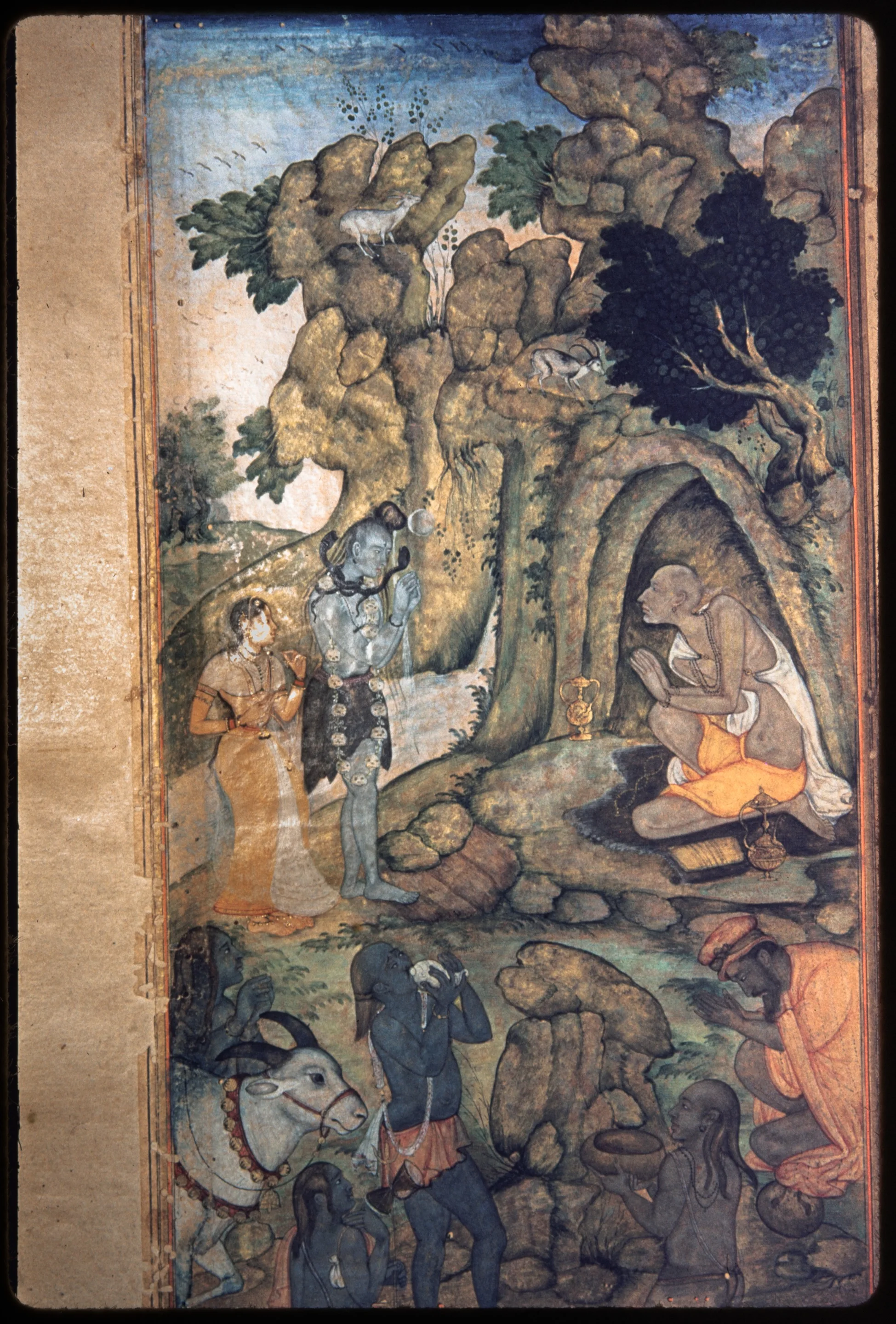
Shiva: the worship that needs no temple
यथाप्राप्तेन सर्वेण तमर्चयति वस्तुना । समया सर्वया बुद्ध्या चिन्मात्रं देवचित्परम् ॥ ३० ॥ नष्टं नष्टमुपेक्षेत प्राप्तं प्राप्तमुपाहरेत् । निर्विकारतयैतद्धि परमार्चनमात्मनः ॥ ४४ ॥ अयं सोहमयं नाहं विभागमिति संत्यजेत् । सर्वं ब्रह्मेति निश्चित्य नित्यात्मार्चाव्रतं चरेत् ॥ ४८ ॥ न वाञ्छता न त्यजता दैवप्राप्ताः स्वभावतः । सरितः सागरेणेव भोक्तव्या भोगभूमयः ॥ ५१ ॥ आत्मार्चनविधानेऽस्मिन्प्रोक्ता द्रव्यश्रियस्तु याः । एकेनैव समेनैता रसेन परिभाविताः ॥ ५४ ॥ समता मधुरा रस्या रसशक्तिरतीन्द्रिया । तया यद्भावितं चेत्यममृतं तत्क्षणाद्भवेत् ॥ ५६ ॥
yathāprāptena sarveṇa tamarcayati vastunā | samayā sarvayā buddhyā cinmātraṃ devacitparam || 30 || naṣṭaṃ naṣṭamupekṣeta prāptaṃ prāptamupāharet | nirvikāratayaitaddhi paramārcanamātmanaḥ || 44 || ayaṃ sohamayaṃ nāhaṃ vibhāgamiti saṃtyajet | sarvaṃ brahmeti niścitya nityātmārcāvrataṃ caret || 48 || na vāñchatā na tyajatā daivaprāptāḥ svabhāvataḥ | saritaḥ sāgareṇeva bhoktavyā bhogabhūmayaḥ || 51 || ātmārcanavidhāne'sminproktā dravyaśriyastu yāḥ | ekenaiva samenaitā rasena paribhāvitāḥ || 54 || samatā madhurā rasyā rasaśaktiratīndriyā | tayā yadbhāvitaṃ cetyamamṛtaṃ tatkṣaṇādbhavet || 56 ||
He worships it with everything, as it comes, with an understanding even all the way through: awareness alone, the god, the highest awareness. What is lost, let it go; what comes, take it up. Doing this without being changed by it is the highest worship of the Self. 'This is I, this is not I': let that dividing go. Settled that all of it is the whole, keep the constant vow of worshipping the Self. Not wishing, not refusing, take what comes by itself, as fate brings it, the way the sea takes the rivers that come to it on their own. In this rite of worshipping the Self all the rich offerings that were named are flavoured with one taste: evenness. Evenness is sweet, full of flavour, a power of taste beyond the senses. Whatever thought is steeped in it turns to nectar at once.
Note //
Vasishtha tells Rama how Shiva, met in a Himalayan cave, taught him that the gods of temples are forms made up for the time being, and that the real worship is of awareness, the god in every body, with whatever comes as the offering. The speaker's name in the text is Ishvara, a title of Shiva as the one who governs. In the site's reading 'the god' here is the order (Ishvara) recognised as awareness itself, and the worship is the daily practice: attention to what is in front of you, results taken as given.
Krishna to Arjuna: work without the doer
यस्य नाहंकृतो भावो बुद्धिर्यस्य न लिप्यते । हत्वापि स इमाँल्लोकान्न हन्ति न निबध्यते ॥ २ ॥ स्वात्मांशैः क्रियमाणानि गुणैः कर्माणि भागशः । अहंकारविमूढात्मा कर्ताहमिति मन्यते ॥ ५ ॥ चक्षुः पश्यतु कर्णश्च शृणोतु त्वक्स्पृशत्विदम् । रसना च रसं यातु कात्र कोऽहमिति स्थितिः ॥ ६ ॥ कायेन मनसा बुद्ध्या केवलैरिन्द्रियैरपि । योगिनः कर्म कुर्वन्ति सङ्गं त्यक्त्वात्मशुद्धये ॥ ९ ॥ निर्ममो निरहंकारः समदुःखसुखः क्षमी । यः स कार्यमकार्यं वा कुर्वन्नपि न लिप्यते ॥ १२ ॥ योगस्थः कुरु कर्माणि सङ्गं त्यक्त्वा धनंजय । निःसङ्गस्त्वं यथाप्राप्तकर्मवान्न निबध्यसे ॥ १६ ॥ शान्तब्रह्मवपुर्भूत्वा कर्म ब्रह्ममयं कुरु । ब्रह्मार्पणसमाचारो ब्रह्मैव भवसि क्षणात् ॥ १७ ॥
yasya nāhaṃkṛto bhāvo buddhiryasya na lipyate | hatvāpi sa imām̐llokānna hanti na nibadhyate || 2 || svātmāṃśaiḥ kriyamāṇāni guṇaiḥ karmāṇi bhāgaśaḥ | ahaṃkāravimūḍhātmā kartāhamiti manyate || 5 || cakṣuḥ paśyatu karṇaśca śṛṇotu tvakspṛśatvidam | rasanā ca rasaṃ yātu kātra ko'hamiti sthitiḥ || 6 || kāyena manasā buddhyā kevalairindriyairapi | yoginaḥ karma kurvanti saṅgaṃ tyaktvātmaśuddhaye || 9 || nirmamo nirahaṃkāraḥ samaduḥkhasukhaḥ kṣamī | yaḥ sa kāryamakāryaṃ vā kurvannapi na lipyate || 12 || yogasthaḥ kuru karmāṇi saṅgaṃ tyaktvā dhanaṃjaya | niḥsaṅgastvaṃ yathāprāptakarmavānna nibadhyase || 16 || śāntabrahmavapurbhūtvā karma brahmamayaṃ kuru | brahmārpaṇasamācāro brahmaiva bhavasi kṣaṇāt || 17 ||
One in whom there is no sense of 'I did this', whose understanding is not smeared by it: even if he kills these worlds he does not kill, and is not bound. Actions are done, part by part, by the qualities of nature, out of portions of one's own self. The one fooled by thinks, 'I am the doer.' Let the eye see, let the ear hear, let the skin touch this, let the tongue taste. Where, in all of that, is there an 'I' standing? With body, mind and understanding, or with the senses alone, yogis do their work, clinging let go, to clear themselves. Nothing mine, no I-claim, the same in pain and pleasure, patient: such a person, doing what is to be done or not, is not smeared by it. Standing in yoga, do your work, Dhananjaya, with clinging let go. Unattached, doing the work that comes to you, you are not bound. Be the quiet body of the whole and do work made of the whole. One whose every act is an offering to the whole becomes the whole in a moment.
Note //
In Book VI Vasishtha tells Rama of an age to come, when Vishnu, born as Krishna, will teach Arjuna on the battlefield; these chapters give that teaching in advance, and several verses are the Gita's own: 2 is Gita 18.17, 5 is close to 3.27, 9 is 5.11, 16 is 2.48 with one word changed. The site draws its daily practice from this teaching: full attention to one's dharma, offering the I-claim, taking results as given. Dhananjaya is a name of Arjuna.
Chudala: what giving up everything means
कुम्भ उवाच । साधो न देहत्यागेन न राज्यत्यजनेन च । न चोटजादिशोषेण सर्वत्यागो भवेन्नृप ॥ २९ ॥ चित्तमेव भ्रमं विद्धि विद्धि चेतो नरं नृप । चित्तं विद्धि जगज्जालं चित्तं सर्वमिति स्मृतम् ॥ ३३ ॥ राज्यादेरथ देहादेराश्रमादेर्महीपते । सर्वस्यैव मनो बीजं तरुबीजं तरोरिव ॥ ३४ ॥ सर्वस्य बीजे संत्यक्ते सर्वं त्यक्तं भवत्यलम् । संभवासंभवाद्भूप सर्वत्यागो भवेदिति ॥ ३५ ॥ समस्तवस्तुनिष्कासे यथा त्वमवशिष्यसे । सर्वत्यागे कृते तादृग्विज्ञानमवशिष्यते ॥ ५३ ॥ समस्तवस्तुदाहेऽपि यथा त्वं नेतरो नृप । सर्वत्यागत एवाङ्ग तथा निर्वाणमुच्यते ॥ ५४ ॥
kumbha uvāca | sādho na dehatyāgena na rājyatyajanena ca | na coṭajādiśoṣeṇa sarvatyāgo bhavennṛpa || 29 || cittameva bhramaṃ viddhi viddhi ceto naraṃ nṛpa | cittaṃ viddhi jagajjālaṃ cittaṃ sarvamiti smṛtam || 33 || rājyāderatha dehāderāśramādermahīpate | sarvasyaiva mano bījaṃ tarubījaṃ taroriva || 34 || sarvasya bīje saṃtyakte sarvaṃ tyaktaṃ bhavatyalam | saṃbhavāsaṃbhavādbhūpa sarvatyāgo bhavediti || 35 || samastavastuniṣkāse yathā tvamavaśiṣyase | sarvatyāge kṛte tādṛgvijñānamavaśiṣyate || 53 || samastavastudāhe'pi yathā tvaṃ netaro nṛpa | sarvatyāgata evāṅga tathā nirvāṇamucyate || 54 ||
Good man, not by giving up the body, not by giving up the kingdom, not by burning the hut and the rest, does giving up everything come about, king. Know the mind to be the confusion; know the mind to be the man, king; know the mind to be the net of the world. 'The mind is everything', it is said. Of the kingdom and the rest, the body and the rest, the hermitage and the rest, king, the mind is the seed of all, as a tree's seed is of the tree. When the seed of all is given up, all is given up, fully. Whether that can be done or not, king, that is what giving up everything is. When every thing has been cleared out, you are what is left over. So when giving up everything is done, that kind of knowing is what remains. When all your things were burnt, you were no one other than you, king. In the same way, from giving up everything comes what is called going out, .
Note //
Queen Chudala, who has found freedom while ruling at home, teaches her husband Sikhidhvaja disguised as a young brahmin, Kumbha. He has left his kingdom for the forest, and in this chapter he burns his hut and all he owns and is about to throw himself from a cliff when Kumbha stops him. The site reads verse 53 as the centre: what is left when everything is removed is you, awareness, which cannot be given up; and 'giving up the mind' is letting its claim go, not getting rid of the mind, since the king goes home afterwards and rules.
Not the forest, not the home
श्रीवसिष्ठ उवाच । हेयोपादेयदृष्टी द्वे यस्य क्षीणे हि तस्य वै । क्रियात्यागेन कोऽर्थः स्यात्क्रियासंश्रयणेन वा ॥ २ ॥ न तदस्तीह यत्त्याज्यं ज्ञस्योद्वेगकरं भवेत् । न वास्ति यदुपादेयं तज्ज्ञसंश्रेयतां गतम् ॥ ३ ॥ ज्ञस्य नार्थः कर्मत्यागैर्नार्थः कर्मसमाश्रयैः । तेन स्थितं यथा यद्यत्तत्तथैव करोत्यसौ ॥ ४ ॥ समया स्वच्छया बुद्ध्या सततं निर्विकारया । यथा यत्क्रियते राम तददोषाय सर्वदा ॥ ७ ॥ संसारोत्तरणे तत्र न हेतुर्वनवासिता । नापि स्वदेशवासित्वं न च कष्टतपःक्रियाः ॥ ३० ॥ स्वभावः कारणं नाम संसारोत्तरणं प्रति । असंसक्तं मनो यस्य स तीर्णो भवसागरात् ॥ ३२ ॥ शुभाशुभाः क्रिया नित्यं कुर्वन्परिहरन्नपि । पुनरेति न संसारमसंसक्तमना मुनिः ॥ ३३ ॥
śrīvasiṣṭha uvāca | heyopādeyadṛṣṭī dve yasya kṣīṇe hi tasya vai | kriyātyāgena ko'rthaḥ syātkriyāsaṃśrayaṇena vā || 2 || na tadastīha yattyājyaṃ jñasyodvegakaraṃ bhavet | na vāsti yadupādeyaṃ tajjñasaṃśreyatāṃ gatam || 3 || jñasya nārthaḥ karmatyāgairnārthaḥ karmasamāśrayaiḥ | tena sthitaṃ yathā yadyattattathaiva karotyasau || 4 || samayā svacchayā buddhyā satataṃ nirvikārayā | yathā yatkriyate rāma tadadoṣāya sarvadā || 7 || saṃsārottaraṇe tatra na heturvanavāsitā | nāpi svadeśavāsitvaṃ na ca kaṣṭatapaḥkriyāḥ || 30 || svabhāvaḥ kāraṇaṃ nāma saṃsārottaraṇaṃ prati | asaṃsaktaṃ mano yasya sa tīrṇo bhavasāgarāt || 32 || śubhāśubhāḥ kriyā nityaṃ kurvanpariharannapi | punareti na saṃsāramasaṃsaktamanā muniḥ || 33 ||
For one in whom the two views, 'to be dropped' and 'to be taken up', have worn out, what use is giving up action, what use is leaning on it? There is nothing here to be dropped that would trouble the knower, and nothing to be taken up that would be the knower's good. The knower has no need to give up actions and no need to lean on them. So whatever stands as it stands, he does just that, as it is. Whatever is done, Rama, with an understanding that is even and clear and never altered by it, is always without fault. For crossing over the world, living in the forest is not the cause, nor living in one's own country, nor hard austerities. What counts, for crossing over the world, is one's own disposition. The one whose mind is has crossed the ocean of becoming. Doing good and bad acts, always, or leaving them aside, the sage whose mind is does not come back to the round.
Note //
Rama's last question in the work: if the free have no more to gain, why do they still keep the rules of conduct? Vasishtha answers that for them acting and not acting weigh the same, so they do what is in front of them, and that neither the forest nor the house decides anything. That answer is the site's position that knowledge ends the covering, not the appearing: the knower lives the same life without confinement. Verse 32 is often quoted; svabhava here is one's settled disposition, not 'nature' in general.
The last word: I stay with what comes
कारुण्य उवाच । स्मृतिर्वाग्दृष्टिसत्ता च स्वप्ने वन्ध्यासुतेऽजले । मरीचिका यथा तद्वज्ज्ञानात्सांसारिकी स्थितिः ॥ १३ ॥ मम नास्ति कृतेनार्थो नाकृतेनेह कश्चन । यथाप्राप्तेन तिष्ठामि ह्यकर्मणि क आग्रहः ॥ १४ ॥ सुतीक्ष्ण उवाच । नष्टमज्ञानतत्कार्यं प्राप्तं ज्ञानमनुत्तमम् । साक्षिणि स्फुरिताभासे ध्रुवे दीप इव क्रियाः ॥ १८ ॥ पयसीव तरङ्गाली यस्मात्स्फुरति दृश्यभूः । तदेवेदं जगत्सर्वं पूर्णे पूर्णं व्यवस्थितम् ॥ २० ॥ यथाप्राप्तोऽनुवर्तामि को लङ्घयति सद्वचः । भगवंस्त्वत्प्रसादेन ज्ञातज्ञेयोऽस्मि संस्थितः ॥ २१ ॥ स्वामिंस्तव प्रसादेन उत्तीर्णोऽहं भवाम्बुधेः । आपूरितजगज्जालं स्थितोस्मि गतसंशयः ॥ २४ ॥
kāruṇya uvāca | smṛtirvāgdṛṣṭisattā ca svapne vandhyāsute'jale | marīcikā yathā tadvajjñānātsāṃsārikī sthitiḥ || 13 || mama nāsti kṛtenārtho nākṛteneha kaścana | yathāprāptena tiṣṭhāmi hyakarmaṇi ka āgrahaḥ || 14 || sutīkṣṇa uvāca | naṣṭamajñānatatkāryaṃ prāptaṃ jñānamanuttamam | sākṣiṇi sphuritābhāse dhruve dīpa iva kriyāḥ || 18 || payasīva taraṅgālī yasmātsphurati dṛśyabhūḥ | tadevedaṃ jagatsarvaṃ pūrṇe pūrṇaṃ vyavasthitam || 20 || yathāprāpto'nuvartāmi ko laṅghayati sadvacaḥ | bhagavaṃstvatprasādena jñātajñeyo'smi saṃsthitaḥ || 21 || svāmiṃstava prasādena uttīrṇo'haṃ bhavāmbudheḥ | āpūritajagajjālaṃ sthitosmi gatasaṃśayaḥ || 24 ||
Karunya said: Memory, speech, seeing and being, in a dream; a barren woman's son; a mirage where there is no water: once there is knowing, the world's standing is like these. I have no need of what is done, and none of what is left undone. I stay with what comes. Why insist on not acting? Sutikshna said: Not-knowing and what it made are gone; the highest knowing is reached. Actions appear in the witness, the steady light that shines, the way things appear by a lamp. That from which the seen world flashes out, as a line of waves from water: this whole world is that. The full stands in the full. I go along with what comes; who would step over good words? Sir, by your kindness what was to be known is known, and here I stand. Master, by your kindness I have crossed the ocean of becoming. The whole net of the world is filled full. I stand here, doubt gone.
Note //
The Yoga Vasishtha ends inside its own frame of tellings: Vasishtha's teaching to Rama was repeated by Valmiki, carried by a celestial messenger to the nymph Suruchi, told by Agasti to his pupil Sutikshna and, within that, by Karunya to his father. Each hearer closes the same way, 'I stay with what comes', and goes on with his work. Verse 20 is the site's reading of the whole text: the world keeps appearing to the knower, and it is the full standing in the full.
Touch an underlined word to see the Sanskrit behind it. The lighter lines are how the tradition read the verse; the rest is the verse.
The renderings on this page are shared under CC BY-NC 4.0, in the words of Pranav Ashar.