Kundika Upanishad
In the words of Pranav Ashar
How we renderThe heart of the Kundika
In brief
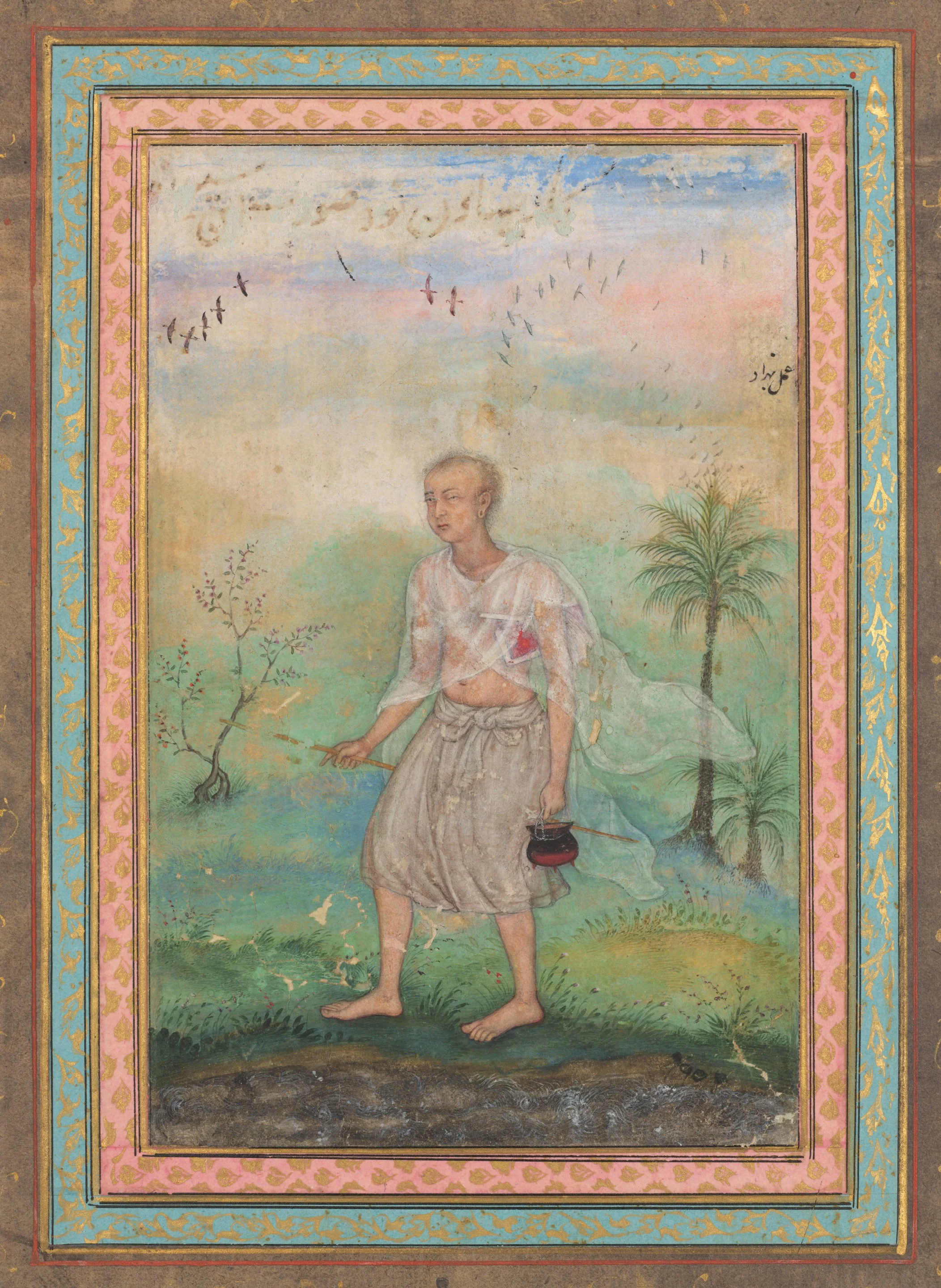
A man marries; then he divides his wealth among his sons and goes to the forest; when the body is spent he renounces, takes the ochre robe, and wanders without a home, keeping only a water-pot, a patched cloak, a loincloth and a strainer. Then he meditates: 'I have no connection with the body, as the sky has none with a cloud. I am the witness, untouched by what is witnessed, as a lamp is untouched by what happens in the house.' Walking, standing, sitting or lying down, the wise one lives as he wills, delighting in the Self.
- The renunciant's few things
- Waves in the ocean of bliss
- The sky and the cloud
- The lamp in the house
- Delighting in the Self
ब्रह्मचर्याश्रमे क्षीणे गुरुशुश्रूषणे रतः । वेदानधीत्यानुज्ञात उच्यते गुरुणाश्रमी ॥ १॥
brahmacaryāśrame kṣīṇe guruśuśrūṣaṇe rataḥ | vedānadhītyānujñāta ucyate guruṇāśramī || 1||
When his time as a student is done, having served his teacher gladly and learned the Vedas, he is given leave by the teacher and called one ready for the next stage of life.
Note //
The text begins with the ordinary course of a twice-born life. 'One ready for the next stage' (āśramī): the teacher releases him into the householder's life. Editions agree.
दारमाहृत्य सदृशमग्निमाधाय शक्तितः । ब्राह्मीमिष्टिं यजेत्तासामहोरात्रेण निर्वपेत् ॥ २॥
dāramāhṛtya sadṛśamagnimādhāya śaktitaḥ | brāhmīmiṣṭiṃ yajettāsāmahorātreṇa nirvapet || 2||
He brings home a fitting wife, sets up the sacred fires as far as he is able, performs the offering to Brahma, and keeps up the offerings to the fires day and night.
Note //
'Keeps up the offerings to the fires day and night' reads 'tāsām ahorātreṇa nirvapet' loosely ('of them', the fires, 'by day and night let him offer'); the phrase is compressed. Editions agree.
संविभज्य सुतानर्थे ग्राम्यकामान्विसृज्य च । संचरन्वनमार्गेण शुचौ देशे परिभ्रमन् ॥ ३॥ वायुभक्षोऽम्बुभक्षो वा विहितैः कन्दमूलकैः । स्वशरीरे समाप्याथ पृथिव्यां नाश्रु पातयेत् ॥ ४॥
saṃvibhajya sutānarthe grāmyakāmānvisṛjya ca | saṃcaranvanamārgeṇa śucau deśe paribhraman || 3|| vāyubhakṣo'mbubhakṣo vā vihitaiḥ kandamūlakaiḥ | svaśarīre samāpyātha pṛthivyāṃ nāśru pātayet || 4||
He divides his wealth among his sons, lets go of the pleasures of the village, and sets out on the forest path, moving about in some clean place, living on air, or water, or the roots and bulbs that are allowed. Then, bringing it all to an end in his own body, let him shed no tear upon the ground.
Note //
The forest-dweller's stage. 'Bringing it all to an end in his own body' (svaśarīre samāpya): probably taking the sacred fires into himself, so that his own body becomes the place of offering, as in the rites of renunciation; interpretive. 'Shed no tear': he leaves home without grief. Editions agree.
सह तेनैव पुरुषः कथं संन्यस्त उच्यते । सनामधेयो यस्मिंस्तु कथं संन्यस्त उच्यते ॥ ५॥
saha tenaiva puruṣaḥ kathaṃ saṃnyasta ucyate | sanāmadheyo yasmiṃstu kathaṃ saṃnyasta ucyate || 5||
But a man who still keeps that with him: how can he be called one who has renounced? One in whom a name still clings: how can he be called one who has renounced?
Note //
Verses 5-8 are difficult in both editions; the renderings are tentative. 'That' (tena) is perhaps the fire, or the wife who may go with a forest-dweller (see 7); 'a name' (nāmadheya): the identity he still holds. Renunciation is measured by what one still claims. Editions agree. Pending review.
तस्मात्फलविशुद्धाङ्गी संन्यासं संहितात्मनाम् । अग्निवर्णं विनिष्क्रम्य वानप्रस्थं प्रपद्यते ॥ ६॥
tasmātphalaviśuddhāṅgī saṃnyāsaṃ saṃhitātmanām | agnivarṇaṃ viniṣkramya vānaprasthaṃ prapadyate || 6||
So, his body made pure by what it has borne, he turns to the renunciation of those whose mind is gathered in; going out from the life of the fire, he passes through the forest life.
Note //
Obscure in both editions. 'By what it has borne' takes 'phala' (fruit) as the fruit of his austerities; 'the life of the fire' (agnivarṇa, literally 'fire-coloured') is read as the householder's life tended around the fire. The sense seems to be that the forest life is a passage to renunciation, not an end. Interpretive; editions agree. Pending review.
लोकवद्भार्ययासक्तो वनं गच्छति संयतः । संत्यक्त्वा संसृतिसुखमनुतिष्ठति किं मुधा ॥ ७॥
lokavadbhāryayāsakto vanaṃ gacchati saṃyataḥ | saṃtyaktvā saṃsṛtisukhamanutiṣṭhati kiṃ mudhā || 7||
If, like worldly people, he goes to the forest still bound to his wife, though restrained: having given up the pleasures of the world, why does he practise in vain?
Note //
Read as a question: outward leaving without inner leaving is wasted effort. Editions agree (the Adyar collection writes 'bhāryayā''sakto', the same reading). Pending review.
किंवा दुःखमनुस्मृत्य भोगांस्त्यजति चोच्छ्रितान् । गर्भवासभयाद्भीतः शीतोष्णाभ्यां तथैव च ॥ ८॥ गुह्यं प्रवेष्टुमिच्छामि परं पदमनामयमिति । संन्यस्याग्निमपुनरावर्तनं यन्मृत्युर्जायमावहमिति ॥ अथाध्यात्ममन्त्राञ्जपेत् । दीक्षामुपेयात्काषायवासाः । कक्षोपस्थलोमानि वर्जयेत् । ऊर्ध्वबाहुर्विमुक्तमार्गो भवति । अनिकेतश्चरेद्भिक्षाशी । निदिध्यासनं दध्यात् । पवित्रं धारयेज्जन्तुसंरक्षणार्थम् । तदपि श्लोका भवन्ति ।
kiṃvā duḥkhamanusmṛtya bhogāṃstyajati cocchritān | garbhavāsabhayādbhītaḥ śītoṣṇābhyāṃ tathaiva ca || 8|| guhyaṃ praveṣṭumicchāmi paraṃ padamanāmayamiti | saṃnyasyāgnimapunarāvartanaṃ yanmṛtyurjāyamāvahamiti || athādhyātmamantrāñjapet | dīkṣāmupeyātkāṣāyavāsāḥ | kakṣopasthalomāni varjayet | ūrdhvabāhurvimuktamārgo bhavati | aniketaścaredbhikṣāśī | nididhyāsanaṃ dadhyāt | pavitraṃ dhārayejjantusaṃrakṣaṇārtham | tadapi ślokā bhavanti |
Or else, remembering sorrow, he gives up even the greatest pleasures, afraid of living again in a womb, afraid of cold and heat: 'I want to enter the secret, the highest state, where nothing ails.' He renounces the fire, never to return, saying: 'What I took on was death.' Then let him repeat the mantras of the Self. Let him take the vow, in ochre robes, and shave the hair of the body. Arms raised, his way is free. Without a home, let him wander, living on alms. Let him give himself to contemplation. Let him carry a strainer, to keep small creatures from harm. On this there are these verses:
Note //
The true reason for renunciation: tired of birth and death, he wants the highest state. 'What I took on was death' is a guess at the obscure 'yan mṛtyur jāyam āvaham'; it may refer to the household life now left behind. 'Arms raised' (ūrdhvabāhu): the gesture of one who has let go of everything. 'Contemplation' (nididhyāsana): dwelling on the truth of the Self. Editions: 'carec' (Adyar collection) corrects 'carebh' in sanskritdocuments.org; otherwise they agree. Pending review.
कुण्डिकां चमसं शिक्यं त्रिविष्टपमुपानहौ । शीतोपघातिनीं कन्थां कौपीनाच्छादनं तथा ॥ ९॥ पवित्रं स्नानशाटीं च उत्तरासङ्गमेव च । अतोऽतिरिक्तं यत्किंचित्सर्वं तद्वर्जयेद्यतिः ॥ १०॥
kuṇḍikāṃ camasaṃ śikyaṃ triviṣṭapamupānahau | śītopaghātinīṃ kanthāṃ kaupīnācchādanaṃ tathā || 9|| pavitraṃ snānaśāṭīṃ ca uttarāsaṅgameva ca | ato'tiriktaṃ yatkiṃcitsarvaṃ tadvarjayedyatiḥ || 10||
A water-pot, a cup, a sling to hang them, a three-legged stand, sandals, a patched cloak against the cold, a loincloth to cover himself, a strainer, a bathing cloth, and an upper cloth: whatever is more than this, the renunciant gives up.
Note //
The water-pot (kuṇḍikā) gives the Upanishad its name. 'A three-legged stand' (triviṣṭapa): for the pot; the word is uncertain. Editions: 'camasaṃ' (Adyar collection) corrects 'camakaṃ' in sanskritdocuments.org.
नदीपुलिनशायी स्याद्देवागारेषु बाह्यतः । नात्यर्थं सुखदुःखाभ्यां शरीरमुपतापयेत् ॥ ११॥
nadīpulinaśāyī syāddevāgāreṣu bāhyataḥ | nātyarthaṃ sukhaduḥkhābhyāṃ śarīramupatāpayet || 11||
Let him sleep on a river bank, or outside a temple. Let him not wear the body down too much with comfort or with hardship.
Note //
Neither indulgence nor self-torment: the body is simply looked after. Editions agree.
स्नानं पानं तथा शौचमद्भिः पूताभिराचरेत् । स्तूयमानो न तुष्येत निन्दितो न शपेत्परान् ॥ १२॥
snānaṃ pānaṃ tathā śaucamadbhiḥ pūtābhirācaret | stūyamāno na tuṣyeta nindito na śapetparān || 12||
Bathing, drinking and washing he does with strained water. Praised, he is not pleased; blamed, he does not curse others.
Note //
Editions: 'ācaret' (Adyar collection) corrects 'āciret' in sanskritdocuments.org.
भिक्षादिवैदलं पात्रं स्नानद्रव्यमवारितम् । एवं वृत्तिमुपासीनो यतेन्द्रियो जपेत्सदा ॥ १३॥ विश्वायमनुसंयोगं मनसा भावयेत्सुधीः । आकाशाद्वायुर्वायोर्ज्योतिर्ज्योतिष आपोऽद्भ्यः पृथिवी । एषां भूतानां ब्रह्म प्रपद्ये । अजरममरमक्षरमव्ययं प्रपद्ये ।
bhikṣādivaidalaṃ pātraṃ snānadravyamavāritam | evaṃ vṛttimupāsīno yatendriyo japetsadā || 13|| viśvāyamanusaṃyogaṃ manasā bhāvayetsudhīḥ | ākāśādvāyurvāyorjyotirjyotiṣa āpo'dbhyaḥ pṛthivī | eṣāṃ bhūtānāṃ brahma prapadye | ajaramamaramakṣaramavyayaṃ prapadye |
A bowl of split cane for alms and the like, whatever he needs to bathe, not refused: living in this way, his senses held in check, let him repeat the sacred words always. Let the wise one hold in mind the joining of all this back into its source: from space, air; from air, fire; from fire, water; from water, earth. I take refuge in the Brahman of these elements. I take refuge in what is ageless, deathless, imperishable, unchanging.
Note //
'The joining of all this back into its source' is a tentative reading of the obscure 'viśvāyam anusaṃyogam' (sanskritdocuments.org; 'viśvāya manusaṃyogam', Adyar collection): the renunciant traces the elements back, earth into water and so on, to the Brahman from which they came. This prose leads into the meditation of 14. Interpretive; pending review.
मय्यखण्डसुखाम्भोधौ बहुधा विश्ववीचयः । उत्पद्यन्ते विलीयन्ते मायामारुतविभ्रमात् ॥ १४॥
mayyakhaṇḍasukhāmbhodhau bahudhā viśvavīcayaḥ | utpadyante vilīyante māyāmārutavibhramāt || 14||
In me, the ocean of undivided bliss, the many waves of the world rise and dissolve, tossed by .
न मे देहेन संबन्धो मेघेनेव विहायसः । अतः कुतो मे तद्धर्मा जाग्रत्स्वप्नसुषुप्तिषु ॥ १५॥
na me dehena saṃbandho megheneva vihāyasaḥ | ataḥ kuto me taddharmā jāgratsvapnasuṣuptiṣu || 15||
I have no connection with the body, as the sky has none with a cloud. So how could be mine, in waking, dream or deep sleep?
Note //
The cloud is in the sky and seems to colour it, but the sky is not wet or grey. So the body's birth, change and death, and the mind's states, are not the Self's. Editions agree.
आकाशवत्कल्पविदूरगोऽहमादित्यवद्भास्यविलक्षणोऽहम् । अहार्यवन्नित्यविनिश्चलोऽहमम्भोधिवत्पारविवर्जितोऽहम् ॥ १६॥
ākāśavatkalpavidūrago'hamādityavadbhāsyavilakṣaṇo'ham | ahāryavannityaviniścalo'hamambhodhivatpāravivarjito'ham || 16||
Like space, I am far beyond all imagining. Like the sun, I am unlike what I light. Like a mountain, I am ever unmoving. Like the ocean, I have no further shore.
Note //
Four images of the Self: space (untouched), the sun (other than what it shows), a mountain (unmoving), the ocean (without limit). Editions: 'ahāryavan' (sanskritdocuments.org) corrects 'ahāryaban' in the Adyar collection.
नारायणोऽहं नरकान्तकोऽहं पुरान्तकोऽहं पुरुषोऽहमीशः । अखण्डबोधोऽहमशेषसाक्षी निरीश्वरोऽहं निरहं च निर्ममः ॥ १७॥
nārāyaṇo'haṃ narakāntako'haṃ purāntako'haṃ puruṣo'hamīśaḥ | akhaṇḍabodho'hamaśeṣasākṣī nirīśvaro'haṃ nirahaṃ ca nirmamaḥ || 17||
I am Narayana, I am the slayer of Naraka, I am the destroyer of the three cities; I am the Person, the Lord. I am undivided , of all. I have no lord over me; I am without 'I' and without 'mine'.
Note //
The renunciant names himself with the names of Vishnu and Shiva and then goes beyond names: 'without "I"' (niraham) is not a contradiction of 'I am Narayana' but its meaning: the I that is all is not the I-claim. Editions agree.
तदभ्यासेन प्राणापानौ संयम्य तत्र श्लोका भवन्ति ॥ वृषणापानयोर्मध्ये पाणी आस्थाय संश्रयेत् । संदश्य शनकैर्जिह्वां यवमात्रे विनिर्गताम् ॥ १८॥ माषमात्रां तथा दृष्टिं श्रोत्रे स्थाप्य तथा भुवि । श्रवणे नासिके गन्धा यतः स्वं न च संश्रयेत् ॥ १९॥
tadabhyāsena prāṇāpānau saṃyamya tatra ślokā bhavanti || vṛṣaṇāpānayormadhye pāṇī āsthāya saṃśrayet | saṃdaśya śanakairjihvāṃ yavamātre vinirgatām || 18|| māṣamātrāṃ tathā dṛṣṭiṃ śrotre sthāpya tathā bhuvi | śravaṇe nāsike gandhā yataḥ svaṃ na ca saṃśrayet || 19||
By practising this, he holds in the in-breath and the out-breath. On this there are verses: Placing the hands at the base of the body, let him sit firm, gently holding the tongue between the teeth, put out a barley-grain's length, the gaze held still, a bean's breadth, the hearing held, and so on the ground; in hearing and in smell, let him not lean on the senses for himself.
Note //
A yogic posture and breath restraint. The second verse is obscure in both editions ('śravaṇe nāsike gandhā yataḥ svaṃ na ca saṃśrayet'); the rendering is tentative. Editions agree. Pending review.
अथ शैवपदं यत्र तद्ब्रह्म ब्रह्म तत्परम् । तदभ्यासेन लभ्येत पूर्वजन्मार्जितात्मनाम् ॥ २०॥
atha śaivapadaṃ yatra tadbrahma brahma tatparam | tadabhyāsena labhyeta pūrvajanmārjitātmanām || 20||
Then the state of Shiva, the good, where that Brahman is, the Brahman that is highest: it is reached by this practice by those whose selves have earned it in earlier lives.
Note //
'The state of Shiva' (śaivapada): the auspicious, here simply Brahman. Editions agree.
संभूतैर्वायुसंश्रावैर्हृदयं तप उच्यते । ऊर्ध्वं प्रपद्यते देहाद्भित्त्वा मूर्धानमव्ययम् ॥ २१॥ स्वदेहस्य तु मूर्धानं ये प्राप्य परमां गतिम् । भूयस्ते न निवर्तन्ते परावरविदो जनाः ॥ २२॥
saṃbhūtairvāyusaṃśrāvairhṛdayaṃ tapa ucyate | ūrdhvaṃ prapadyate dehādbhittvā mūrdhānamavyayam || 21|| svadehasya tu mūrdhānaṃ ye prāpya paramāṃ gatim | bhūyaste na nivartante parāvaravido janāḥ || 22||
With the gathered breaths flowing, the heart, they say, is heat. He goes up out of the body, piercing the unchanging crown of the head. Those who reach the crown of their own head and so the highest goal do not come back again: people who know the higher and the lower.
Note //
The yogi's departure through the crown of the head, as in Katha 2.3.16 (Hume 6.16). 'The heart is heat' (hṛdayaṃ tapa ucyate) is obscure; the rendering is tentative. In the text's own Advaitic sense this path is a step: the verses that follow (23-27) say what the knower is, and there nothing goes anywhere. Interpretive. Editions agree. Pending review.
न साक्षिणं साक्ष्यधर्माः संस्पृशन्ति विलक्षणम् । अविकारमुदासीनं गृहधर्माः प्रदीपवत् ॥ २३॥
na sākṣiṇaṃ sākṣyadharmāḥ saṃspṛśanti vilakṣaṇam | avikāramudāsīnaṃ gṛhadharmāḥ pradīpavat || 23||
The traits of what is witnessed do not touch , which is of another kind, unchanging, uninvolved, as what happens in a house does not touch the lamp.
Note //
The lamp shows everything in the room, quarrels and feasts alike, and is changed by none of it. Editions agree.
जले वापि स्थले वापि लुठत्वेष जडात्मकः । नाहं विलिप्ये तद्धर्मैर्घटधर्मैर्नभो यथा ॥ २४॥
jale vāpi sthale vāpi luṭhatveṣa jaḍātmakaḥ | nāhaṃ vilipye taddharmairghaṭadharmairnabho yathā || 24||
In water or on land, let this inert thing, the body, roll where it will. I am not stained by , as space is not stained by the traits of a pot.
Note //
The space in a pot is not broken when the pot breaks or moved when it is carried. Editions agree.
निष्क्रियोऽस्म्यविकारोऽस्मि निष्कलोऽस्मि निराकृतिः । निर्विकल्पोऽस्मि नित्योऽस्मि निरालम्बोऽस्मि निर्द्वयः ॥ २५॥
niṣkriyo'smyavikāro'smi niṣkalo'smi nirākṛtiḥ | nirvikalpo'smi nityo'smi nirālambo'smi nirdvayaḥ || 25||
I do nothing, I do not change, I have no parts, no form. I am free of every idea, I am always, I rest on nothing, I have no second.
Note //
'Free of every idea' (nirvikalpa): no division of knower and known applies. Editions agree.
सर्वात्मकोऽहं सर्वोऽहं सर्वातीतोऽहमद्वयः । केवलाखण्डबोधोऽहं स्वानन्दोऽहं निरन्तरः ॥ २६॥
sarvātmako'haṃ sarvo'haṃ sarvātīto'hamadvayaḥ | kevalākhaṇḍabodho'haṃ svānando'haṃ nirantaraḥ || 26||
I am the Self of all, I am all, I am beyond all, without a second. I am alone, undivided; I am my own bliss, with no gap in it.
Note //
'I am all' and 'I am beyond all' together: the world is not outside the Self, and the Self is not limited by the world. Editions agree.
स्वमेव सर्वतः पश्यन्मन्यमानः स्वमद्वयम् । स्वानन्दमनुभुञ्जानो निर्विकल्पो भवाम्यहम् ॥ २७॥
svameva sarvataḥ paśyanmanyamānaḥ svamadvayam | svānandamanubhuñjāno nirvikalpo bhavāmyaham || 27||
Seeing only myself everywhere, myself as without a second, enjoying my own bliss, I am free of every idea.
Note //
'I am' (bhavāmi, literally 'I become'): not a new state reached but what is found when nothing else is taken for the Self. Editions agree.
गच्छंस्तिष्ठन्नुपविशञ्छयानो वान्यथापि वा । यथेच्छया वसेद्विद्वानात्मारामः सदा मुनिः ॥ २८॥ इत्युपनिषत् ॥
gacchaṃstiṣṭhannupaviśañchayāno vānyathāpi vā | yathecchayā vasedvidvānātmārāmaḥ sadā muniḥ || 28|| ityupaniṣat ||
Walking, standing, sitting, lying down, or in any other way, the wise one lives as he wills, the sage always delighting in the Self. This is the Upanishad.
Note //
The last verse. 'As he wills' (yathecchayā): no posture or practice is required of one who knows; every state is the same to him. Editions agree.
No public-domain English translation exists for this text; the Sanskrit is shown.
The renderings on this page are shared under CC BY-NC 4.0, in the words of Pranav Ashar.