Saundarya Lahari, with the Ananda Lahari
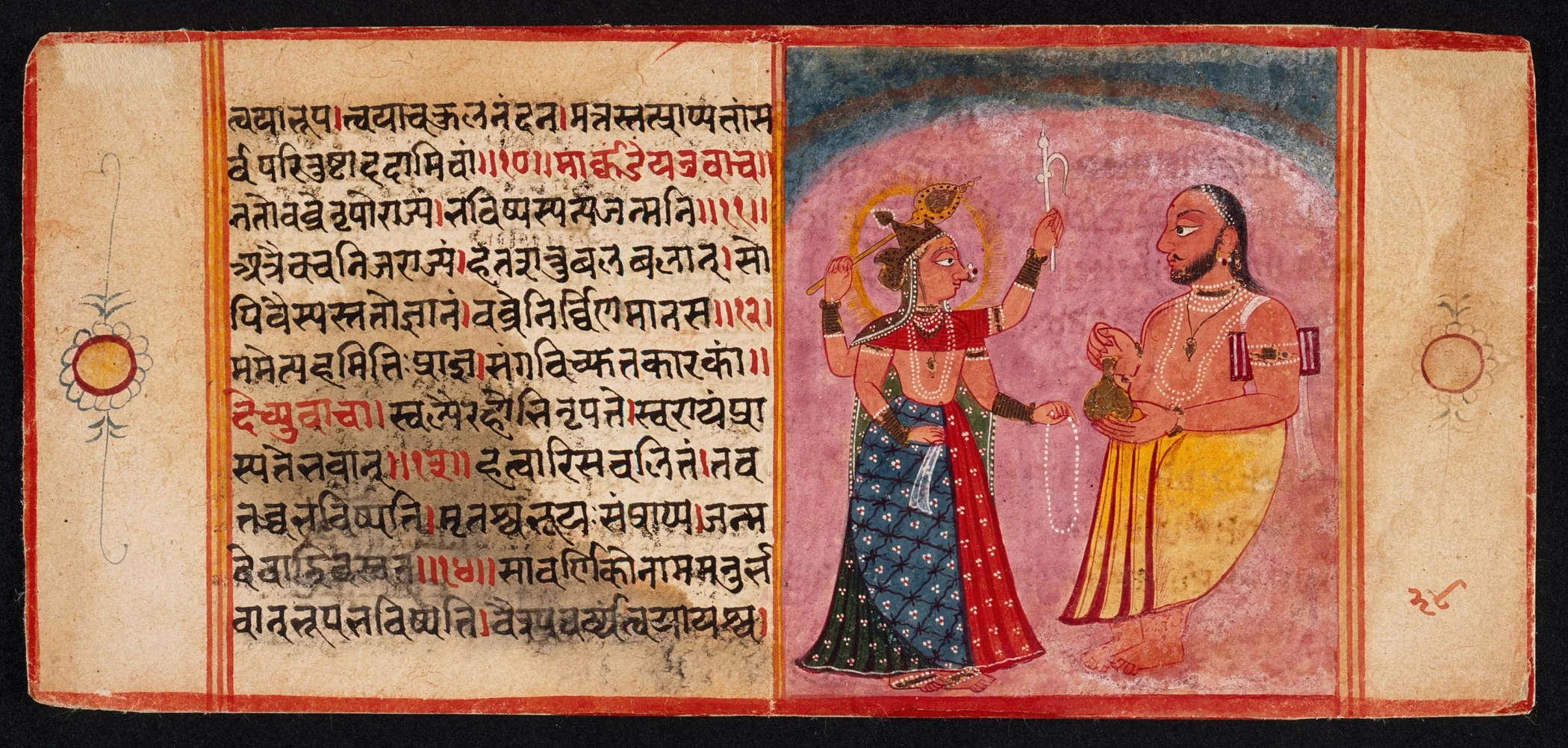
In the words of Pranav Ashar
How we renderThe heart of the Saundarya Lahari, with the Ananda Lahari
In brief
A hymn of a hundred verses to the Goddess, Shiva's power, traditionally ascribed to Shankara. The first forty-one, the Ananda Lahari or 'wave of joy', give the teaching: Shiva without Shakti cannot stir, she has become mind, space and the elements, and she is worshipped in the six centres of the body. The rest, the Saundarya Lahari or 'wave of beauty', praise her form from crown to feet. All hundred are given here in Sanskrit with the site's rendering.
Contents
शिवः शक्त्या युक्तो यदि भवति शक्तः प्रभवितुं न चेदेवं देवो न खलु कुशलः स्पन्दितुमपि । अतस्त्वामाराध्यां हरिहरविरिञ्चादिभिरपि प्रणन्तुं स्तोतुं वा कथमकृतपुण्यः प्रभवति ॥ १ ॥
śivaḥ śaktyā yukto yadi bhavati śaktaḥ prabhavituṃ na cedevaṃ devo na khalu kuśalaḥ spanditumapi | atastvāmārādhyāṃ hariharaviriñcādibhirapi praṇantuṃ stotuṃ vā kathamakṛtapuṇyaḥ prabhavati || 1 ||
Joined with Shakti, Shiva to act. Without her, the god cannot even stir. So how can anyone without merit bow to you or praise you, you whom Vishnu, Shiva, Brahma and the rest adore?
Note //
The hymn's first claim, and its frame: Shiva is awareness, Shakti its power, and neither acts alone. The site reads them as one (not two), awareness and its power to appear.
तनीयांसं पांसुं तव चरणपङ्केरुहभवं विरिञ्चिः संचिन्वन्विरचयति लोकानविकलम् । वहत्येनं शौरिः कथमपि सहस्रेण शिरसां हरः संक्षुभ्यैनं भजति भसितोद्धूलनविधिम् ॥ २ ॥
tanīyāṃsaṃ pāṃsuṃ tava caraṇapaṅkeruhabhavaṃ viriñciḥ saṃcinvanviracayati lokānavikalam | vahatyenaṃ śauriḥ kathamapi sahasreṇa śirasāṃ haraḥ saṃkṣubhyainaṃ bhajati bhasitoddhūlanavidhim || 2 ||
Brahma gathers one speck of dust from your lotus feet and makes the worlds with it, flawless. Vishnu, as the thousand-headed serpent, barely carries it. Shiva grinds it to powder and smears himself with it as ash.
Note //
The three gods of making, keeping and dissolving all live on a speck of her dust.
अविद्यानामन्तस्तिमिरमिहिरद्वीपनगरी जडानां चैतन्यस्तबकमकरन्दस्रुतिझरी । दरिद्राणां चिन्तामणिगुणनिका जन्मजलधौ निमग्नानां दंष्ट्रा मुररिपुवराहस्य भवति ॥ ३ ॥
avidyānāmantastimiramihiradvīpanagarī jaḍānāṃ caitanyastabakamakarandasrutijharī | daridrāṇāṃ cintāmaṇiguṇanikā janmajaladhau nimagnānāṃ daṃṣṭrā muraripuvarāhasya bhavati || 3 ||
For those who do not know, you are a city of suns that ends the darkness within; for the dull, a stream of honey from the flowers of awareness; for the poor, a string of wishing-jewels; for those drowning in the sea of birth, the tusk of the boar who lifted the earth.
Note //
Four needs, four gifts. The boar is Vishnu's avatar who raised the earth from the flood on his tusk.
त्वदन्यः पाणिभ्यामभयवरदो दैवतगणस्त्वमेका नैवासि प्रकटितवराभीत्यभिनया । भयात्त्रातुं दातुं फलमपि च वाञ्छासमधिकं शरण्ये लोकानां तव हि चरणावेव निपुणौ ॥ ४ ॥
tvadanyaḥ pāṇibhyāmabhayavarado daivatagaṇastvamekā naivāsi prakaṭitavarābhītyabhinayā | bhayāttrātuṃ dātuṃ phalamapi ca vāñchāsamadhikaṃ śaraṇye lokānāṃ tava hi caraṇāveva nipuṇau || 4 ||
Other gods show with their hands the gestures that grant safety and gifts. You alone do not, for your feet alone are enough to save from fear and to give more than is asked.
Note //
In images she often holds no gesture of protection: her feet are refuge enough.
हरिस्त्वामाराध्य प्रणतजनसौभाग्यजननीं पुरा नारी भूत्वा पुररिपुमपि क्षोभमनयत् । स्मरोऽपि त्वां नत्वा रतिनयनलेह्येन वपुषा मुनीनामप्यन्तः प्रभवति हि मोहाय महताम् ॥ ५ ॥
haristvāmārādhya praṇatajanasaubhāgyajananīṃ purā nārī bhūtvā puraripumapi kṣobhamanayat | smaro'pi tvāṃ natvā ratinayanalehyena vapuṣā munīnāmapyantaḥ prabhavati hi mohāya mahatām || 5 ||
Vishnu worshipped you, became a woman, and stirred even Shiva. Kama bowed to you, and with a body that delights the eyes of Rati, he troubles even the minds of sages.
Note //
Vishnu's form as Mohini; Kama, desire, whose wife is Rati. Even desire's power is hers.
धनुः पौष्पं मौर्वी मधुकरमयी पञ्च विशिखा वसन्तः सामन्तो मलयमरुदायोधनरथः । तथाप्येकः सर्वं हिमगिरिसुते कामपि कृपामपाङ्गात्ते लब्ध्वा जगदिदमनङ्गो विजयते ॥ ६ ॥
dhanuḥ pauṣpaṃ maurvī madhukaramayī pañca viśikhā vasantaḥ sāmanto malayamarudāyodhanarathaḥ | tathāpyekaḥ sarvaṃ himagirisute kāmapi kṛpāmapāṅgātte labdhvā jagadidamanaṅgo vijayate || 6 ||
A bow of flowers, a string of bees, five arrows, spring for his general, the southern breeze for his chariot: with these the bodiless Kama conquers the whole world alone, having won one side-glance of your compassion, daughter of the snow mountain.
Note //
Kama lost his body to Shiva's fire; he wins anyway, by her glance.
क्वणत्काञ्चीदामा करिकलभकुम्भस्तननता परिक्षीणा मध्ये परिणतशरच्चन्द्रवदना । धनुर्बाणान्पाशं सृणिमपि दधाना करतलैः पुरस्तादास्तां नः पुरमथितुराहोपुरुषिका ॥ ७ ॥
kvaṇatkāñcīdāmā karikalabhakumbhastananatā parikṣīṇā madhye pariṇataśaraccandravadanā | dhanurbāṇānpāśaṃ sṛṇimapi dadhānā karatalaiḥ purastādāstāṃ naḥ puramathiturāhopuruṣikā || 7 ||
Her girdle ringing with small bells, bent a little by the weight of her breasts, slender at the waist, her face like the autumn moon, holding bow and arrows, noose and goad: may she, the pride of Shiva, stand before us.
Note //
The first full picture of her form, as the tradition meditates on her: bow and arrows of desire, the noose of attachment, the goad that restrains it.
सुधासिन्धोर्मध्ये सुरविटपिवाटीपरिवृते मणिद्वीपे नीपोपवनवति चिन्तामणिगृहे । शिवाकारे मञ्चे परमशिवपर्यङ्कनिलयां भजन्ति त्वां धन्याः कतिचन चिदानन्दलहरीम् ॥ ८ ॥
sudhāsindhormadhye suraviṭapivāṭīparivṛte maṇidvīpe nīpopavanavati cintāmaṇigṛhe | śivākāre mañce paramaśivaparyaṅkanilayāṃ bhajanti tvāṃ dhanyāḥ katicana cidānandalaharīm || 8 ||
In the middle of an ocean of nectar, on an island of jewels ringed with wishing trees, in a grove of kadamba, in a house of wishing-stones, on a couch that is Shiva's form, resting on Paramashiva as on a bed: few are fortunate enough to worship you there, a wave of awareness and .
Note //
Chidananda-lahari, 'the wave of awareness and joy', gives the first part its name, the Ananda Lahari.
महीं मूलाधारे कमपि मणिपूरे हुतवहं स्थितं स्वाधिष्ठाने हृदि मरुतमाकाशमुपरि । मनोऽपि भ्रूमध्ये सकलमपि भित्त्वा कुलपथं सहस्रारे पद्मे सह रहसि पत्या विहरसे ॥ ९ ॥
mahīṃ mūlādhāre kamapi maṇipūre hutavahaṃ sthitaṃ svādhiṣṭhāne hṛdi marutamākāśamupari | mano'pi bhrūmadhye sakalamapi bhittvā kulapathaṃ sahasrāre padme saha rahasi patyā viharase || 9 ||
Earth in the root centre, water in the navel, fire in the centre of the self, air in the heart, space above it, and mind between the brows: you pierce the whole path, and in the thousand-petalled lotus you play in secret with your husband.
Note //
The six centres of the body and their elements; the rising of Kundalini to the crown, where Shakti joins Shiva.
सुधाधारासारैश्चरणयुगलान्तर्विगलितैः प्रपञ्चं सिञ्चन्ती पुनरपि रसाम्नायमहसः । अवाप्य स्वां भूमिं भुजगनिभमध्युष्टवलयं स्वमात्मानं कृत्वा स्वपिषि कुलकुण्डे कुहरिणि ॥ १० ॥
sudhādhārāsāraiścaraṇayugalāntarvigalitaiḥ prapañcaṃ siñcantī punarapi rasāmnāyamahasaḥ | avāpya svāṃ bhūmiṃ bhujaganibhamadhyuṣṭavalayaṃ svamātmānaṃ kṛtvā svapiṣi kulakuṇḍe kuhariṇi || 10 ||
You flood the world of the body with streams of nectar flowing from between your feet; then you return to your own place, make yourself into a coiled serpent, and sleep in the hollow of the root centre.
Note //
The descent after the ascent of verse 9: the power returns to rest, coiled.
चतुर्भिः श्रीकण्ठैः शिवयुवतिभिः पञ्चभिरपि प्रभिन्नाभिः शम्भोर्नवभिरपि मूलप्रकृतिभिः । चतुश्चत्वारिंशद्वसुदलकलाश्रत्रिवलयत्रिरेखाभिः सार्धं तव शरणकोणाः परिणताः ॥ ११ ॥
caturbhiḥ śrīkaṇṭhaiḥ śivayuvatibhiḥ pañcabhirapi prabhinnābhiḥ śambhornavabhirapi mūlaprakṛtibhiḥ | catuścatvāriṃśadvasudalakalāśratrivalayatrirekhābhiḥ sārdhaṃ tava śaraṇakoṇāḥ pariṇatāḥ || 11 ||
Four triangles of Shiva, five of Shakti, different from Shiva, nine roots of the world; with the eight-petalled and sixteen-petalled lotuses, the three circles and three lines, the angles of your dwelling come to forty-four.
Note //
The Shri Chakra, the diagram in which she is worshipped, described in numbers.
त्वदीयं सौन्दर्यं तुहिनगिरिकन्ये तुलयितुं कवीन्द्राः कल्पन्ते कथमपि विरिञ्चिप्रभृतयः । यदालोक्यौत्सुक्यादमरललना यान्ति मनसा तपोभिर्दुष्प्रापामपि गिरिशसायुज्यपदवीम् ॥ १२ ॥
tvadīyaṃ saundaryaṃ tuhinagirikanye tulayituṃ kavīndrāḥ kalpante kathamapi viriñciprabhṛtayaḥ | yadālokyautsukyādamaralalanā yānti manasā tapobhirduṣprāpāmapi giriśasāyujyapadavīm || 12 ||
To match your beauty, daughter of the snow mountain, even the best poets, Brahma and the rest, can barely find words. The women of heaven, longing to see it, reach in their minds the union with Shiva that is hard to win even by austerity.
Note //
To see her beauty is to become one with Shiva.
नरं वर्षीयांसं नयनविरसं नर्मसु जडं तवापाङ्गालोके पतितमनुधावन्ति शतशः । गलद्वेणीबन्धाः कुचकलशविस्रस्तसिचया हठात्त्रुट्यत्काञ्च्यो विगलितदुकूला युवतयः ॥ १३ ॥
naraṃ varṣīyāṃsaṃ nayanavirasaṃ narmasu jaḍaṃ tavāpāṅgāloke patitamanudhāvanti śataśaḥ | galadveṇībandhāḥ kucakalaśavisrastasicayā haṭhāttruṭyatkāñcyo vigalitadukūlā yuvatayaḥ || 13 ||
An old man, ugly to look at, clumsy at love: once your side-glance falls on him, young women run after him by the hundred, their hair loosened, their clothes slipping.
Note //
Her favour overturns every measure of worth. The tradition reads such verses as about the power of her glance, not as a promise.
क्षितौ षट्पञ्चाशद्विसमधिकपञ्चाशदुदके हुताशे द्वाषष्टिश्चतुरधिकपञ्चाशदनिले । दिवि द्विःषट्त्रिंशन्मनसि च चतुःषष्टिरिति ये मयूखास्तेषामप्युपरि तव पादाम्बुजयुगम् ॥ १४ ॥
kṣitau ṣaṭpañcāśadvisamadhikapañcāśadudake hutāśe dvāṣaṣṭiścaturadhikapañcāśadanile | divi dviḥṣaṭtriṃśanmanasi ca catuḥṣaṣṭiriti ye mayūkhāsteṣāmapyupari tava pādāmbujayugam || 14 ||
Fifty-six rays of earth, fifty-two of water, sixty-two of fire, fifty-four of air, seventy-two of space, sixty-four of mind: above all these rays your two feet shine.
Note //
The 360 rays, a year's days, are the measure of time in the body's centres; her feet are beyond them.
शरज्ज्योत्स्नाशुद्धां शशियुतजटाजूटमकुटां वरत्रासत्राणस्फटिकघटिकापुस्तककराम् । सकृन्न त्वा नत्वा कथमिव सतां संनिदधते मधुक्षीरद्राक्षामधुरिमधुरीणाः फणितयः ॥ १५ ॥
śarajjyotsnāśuddhāṃ śaśiyutajaṭājūṭamakuṭāṃ varatrāsatrāṇasphaṭikaghaṭikāpustakakarām | sakṛnna tvā natvā kathamiva satāṃ saṃnidadhate madhukṣīradrākṣāmadhurimadhurīṇāḥ phaṇitayaḥ || 15 ||
White as autumn moonlight, your hair crowned with the crescent, your hands giving gifts and safety, holding crystal beads and a book: how could those who bow to you once not have words sweet as honey, milk and grapes?
Note //
Her form as the giver of speech.
कवीन्द्राणां चेतःकमलवनबालातपरुचिं भजन्ते ये सन्तः कतिचिदरुणामेव भवतीम् । विरिञ्चिप्रेयस्यास्तरुणतरशृङ्गारलहरीगभीराभिर्वाग्भिर्विदधति सतां रञ्जनममी ॥ १६ ॥
kavīndrāṇāṃ cetaḥkamalavanabālātaparuciṃ bhajante ye santaḥ katicidaruṇāmeva bhavatīm | viriñcipreyasyāstaruṇataraśṛṅgāralaharīgabhīrābhirvāgbhirvidadhati satāṃ rañjanamamī || 16 ||
Good poets who worship you as Aruna, the red dawn that wakes the lotus-forest of poets' minds, delight the assembly with waves of poetry, fresh and full of feeling.
Note //
Aruna, 'the red one', is one of her names; red is her colour throughout.
सवित्रीभिर्वाचां शशिमणिशिलाभङ्गरुचिभिर्वशिन्याद्याभिस्त्वां सह जननि संचिन्तयति यः । स कर्ता काव्यानां भवति महतां भङ्गिरुचिभिर्वचोभिर्वाग्देवीवदनकमलामोदमधुरैः ॥ १७ ॥
savitrībhirvācāṃ śaśimaṇiśilābhaṅgarucibhirvaśinyādyābhistvāṃ saha janani saṃcintayati yaḥ | sa kartā kāvyānāṃ bhavati mahatāṃ bhaṅgirucibhirvacobhirvāgdevīvadanakamalāmodamadhuraiḥ || 17 ||
Whoever meditates on you with Vashini and the other goddesses of speech, who shine like broken moonstone, becomes a maker of great poems, with words as fragrant as the lotus face of the goddess of speech.
Note //
Vashini and the others are the eight goddesses of the letters.
तनुच्छायाभिस्ते तरुणतरणिश्रीसरणिभिर्दिवं सर्वामुर्वीमरुणिमनि मग्नां स्मरति यः । भवन्त्यस्य त्रस्यद्वनहरिणशालीननयनाः सहोर्वश्या वश्याः कति कति न गीर्वाणगणिकाः ॥ १८ ॥
tanucchāyābhiste taruṇataraṇiśrīsaraṇibhirdivaṃ sarvāmurvīmaruṇimani magnāṃ smarati yaḥ | bhavantyasya trasyadvanahariṇaśālīnanayanāḥ sahorvaśyā vaśyāḥ kati kati na gīrvāṇagaṇikāḥ || 18 ||
Whoever sees you bathing heaven and earth in the red light of your body, how many women of heaven, Urvashi and the rest, follow him like startled deer!
Note //
Another hymn to the power of her colour; the tradition reads it as meditation, not as a promise.
मुखं बिन्दुं कृत्वा कुचयुगमधस्तस्य तदधो हरार्धं ध्यायेद्यो हरमहिषि ते मन्मथकलाम् । स सद्यः संक्षोभं नयति वनिता इत्यतिलघु त्रिलोकीमप्याशु भ्रमयति रवीन्दुस्तनयुगाम् ॥ १९ ॥
mukhaṃ binduṃ kṛtvā kucayugamadhastasya tadadho harārdhaṃ dhyāyedyo haramahiṣi te manmathakalām | sa sadyaḥ saṃkṣobhaṃ nayati vanitā ityatilaghu trilokīmapyāśu bhramayati ravīndustanayugām || 19 ||
Whoever meditates on your face as a point of light, with your breasts below it and below them the half of Hara, soon stirs desire in women; and more, he moves the three worlds, which have the sun and moon as breasts.
Note //
A meditation on the syllable-form of the goddess (the Kamakala). Lakshmidhara reads it as practice for the few, and the site gives it as the text has it.
किरन्तीमङ्गेभ्यः किरणनिकुरुम्बामृतरसं हृदि त्वामाधत्ते हिमकरशिलामूर्तिमिव यः । स सर्पाणां दर्पं शमयति शकुन्ताधिप इव ज्वरप्लुष्टान्दृष्ट्या सुखयति सुधाधारसिरया ॥ २० ॥
kirantīmaṅgebhyaḥ kiraṇanikurumbāmṛtarasaṃ hṛdi tvāmādhatte himakaraśilāmūrtimiva yaḥ | sa sarpāṇāṃ darpaṃ śamayati śakuntādhipa iva jvarapluṣṭāndṛṣṭyā sukhayati sudhādhārasirayā || 20 ||
Whoever meditates on you as an image of moonstone, pouring nectar from every limb, breaks the pride of snakes like Garuda, and with a glance like a stream of nectar cures fever.
Note //
Her form as healer.
तटिल्लेखातन्वीं तपनशशिवैश्वानरमयीं निषण्णां षण्णामप्युपरि कमलानां तव कलाम् । महापद्माटव्यां मृदितमलमायेन मनसा महान्तः पश्यन्तो दधति परमाह्लादलहरीम् ॥ २१ ॥
taṭillekhātanvīṃ tapanaśaśivaiśvānaramayīṃ niṣaṇṇāṃ ṣaṇṇāmapyupari kamalānāṃ tava kalām | mahāpadmāṭavyāṃ mṛditamalamāyena manasā mahāntaḥ paśyanto dadhati paramāhlādalaharīm || 21 ||
With minds from which impurity and maya have been wiped away, great ones see your power in the forest of the great lotus: slender as a streak of lightning, made of sun, moon and fire, seated above the six lotuses. They hold waves of the highest .
Note //
Kala, 'the part', is Shakti at the crown, above the six centres of verse 9.
भवानि त्वं दासे मयि वितर दृष्टिं सकरुणामिति स्तोतुं वाञ्छन्कथयति भवानि त्वमिति यः । तदैव त्वं तस्मै दिशसि निजसायुज्यपदवीं मुकुन्दब्रह्मेन्द्रस्फुटमकुटनीराजितपदाम् ॥ २२ ॥
bhavāni tvaṃ dāse mayi vitara dṛṣṭiṃ sakaruṇāmiti stotuṃ vāñchankathayati bhavāni tvamiti yaḥ | tadaiva tvaṃ tasmai diśasi nijasāyujyapadavīṃ mukundabrahmendrasphuṭamakuṭanīrājitapadām || 22 ||
'Bhavani, you, cast a kind glance on me, your servant': one who begins to praise you so has only to say 'Bhavani, you' and at once you give him union with yourself, your feet lit by the crowns of Vishnu, Brahma and Indra.
Note //
A pun: 'bhavani tvam' is 'Bhavani, you', and also 'may I become you'. She grants the second before the first is finished.
त्वया हृत्वा वामं वपुरपरितृप्तेन मनसा शरीरार्धं शंभोरपरमपि शङ्के हृतमभूत् । यदेतत्त्वद्रूपं सकलमरुणाभं त्रिनयनं कुचाभ्यामानम्रं कुटिलशशिचूडालमकुटम् ॥ २३ ॥
tvayā hṛtvā vāmaṃ vapuraparitṛptena manasā śarīrārdhaṃ śaṃbhoraparamapi śaṅke hṛtamabhūt | yadetattvadrūpaṃ sakalamaruṇābhaṃ trinayanaṃ kucābhyāmānamraṃ kuṭilaśaśicūḍālamakuṭam || 23 ||
Having taken Shiva's left half and not being satisfied, I think you took the other half too: your form is all red, three-eyed, bent by your breasts, crowned with the crescent.
Note //
Shiva as half woman (Ardhanarishvara), playfully taken over entirely; Shakti and Shiva not two.
जगत्सूते धाता हरिरवति रुद्रः क्षपयते तिरस्कुर्वन्नेतत्स्वमपि वपुरीशस्तिरयति । सदापूर्वः सर्वं तदिदमनुगृह्णाति च शिवस्तवाज्ञामालम्ब्य क्षणचलितयोर्भ्रूलतिकयोः ॥ २४ ॥
jagatsūte dhātā hariravati rudraḥ kṣapayate tiraskurvannetatsvamapi vapurīśastirayati | sadāpūrvaḥ sarvaṃ tadidamanugṛhṇāti ca śivastavājñāmālambya kṣaṇacalitayorbhrūlatikayoḥ || 24 ||
Brahma makes the world, Vishnu keeps it, Rudra ends it; Isha takes them all back into himself and veils even his own body; and Sadashiva blesses all this, at the command of your creeper of a brow, moved for a moment.
Note //
The five acts of the five gods, all at her bidding. Compare the Pratyabhijnahridayam's five acts.
त्रयाणां देवानां त्रिगुणजनितानां तव शिवे भवेत्पूजा पूजा तव चरणयोर्या विरचिता । तथाहि त्वत्पादोद्वहनमणिपीठस्य निकटे स्थिता ह्येते शश्वन्मुकुलितकरोत्तंसमकुटाः ॥ २५ ॥
trayāṇāṃ devānāṃ triguṇajanitānāṃ tava śive bhavetpūjā pūjā tava caraṇayoryā viracitā | tathāhi tvatpādodvahanamaṇipīṭhasya nikaṭe sthitā hyete śaśvanmukulitakarottaṃsamakuṭāḥ || 25 ||
Worship of your feet is worship of the three gods born of your three qualities: they stand always by your jewelled footstool, hands joined above their crowns.
Note //
The three qualities (gunas) give rise to Brahma, Vishnu and Rudra; to worship her is to worship all three.
विरिञ्चिः पञ्चत्वं व्रजति हरिराप्नोति विरतिं विनाशं कीनाशो भजति धनदो याति निधनम् । वितन्द्री माहेन्द्री विततिरपि संमीलितदृशा महासंहारेऽस्मिन्विहरति सति त्वत्पतिरसौ ॥ २६ ॥
viriñciḥ pañcatvaṃ vrajati harirāpnoti viratiṃ vināśaṃ kīnāśo bhajati dhanado yāti nidhanam | vitandrī māhendrī vitatirapi saṃmīlitadṛśā mahāsaṃhāre'sminviharati sati tvatpatirasau || 26 ||
Brahma meets his end, Vishnu ceases, Yama dies, Kubera perishes, the Indras close their eyes; in that great dissolution, chaste one, your husband plays.
Note //
At the end of all, only she and Shiva remain.
जपो जल्पः शिल्पं सकलमपि मुद्राविरचना गतिः प्रादक्षिण्यक्रमणमशनाद्याहुतिविधिः । प्रणामः संवेशः सुखमखिलमात्मार्पणदृशा सपर्यापर्यायस्तव भवतु यन्मे विलसितम् ॥ २७ ॥
japo jalpaḥ śilpaṃ sakalamapi mudrāviracanā gatiḥ prādakṣiṇyakramaṇamaśanādyāhutividhiḥ | praṇāmaḥ saṃveśaḥ sukhamakhilamātmārpaṇadṛśā saparyāparyāyastava bhavatu yanme vilasitam || 27 ||
Let , every movement of my hands a ritual gesture, my walking a circling of you, my eating an offering, my lying down a bow to you, every pleasure of mine, seen as a giving of myself, worship of you: whatever I do.
Note //
The most-loved verse for practice: no act is outside worship. Compare the Shiva Sutras 3.26-27.
सुधामप्यास्वाद्य प्रतिभयजरामृत्युहरिणीं विपद्यन्ते विश्वे विधिशतमखाद्या दिविषदः । करालं यत्क्ष्वेलं कबलितवतः कालकलना न शंभोस्तन्मूलं तव जननि ताटङ्कमहिमा ॥ २८ ॥
sudhāmapyāsvādya pratibhayajarāmṛtyuhariṇīṃ vipadyante viśve vidhiśatamakhādyā diviṣadaḥ | karālaṃ yatkṣvelaṃ kabalitavataḥ kālakalanā na śaṃbhostanmūlaṃ tava janani tāṭaṅkamahimā || 28 ||
The gods, Brahma, Indra and the rest, drank the nectar that ends fear of age and death, and still they die. Shambhu swallowed the dreadful poison and time does not touch him. Mother, that is the power of your earrings.
Note //
Her earrings are the marks of a wife whose husband lives.
किरीटं वैरिञ्चं परिहर पुरः कैटभभिदः कठोरे कोटीरे स्खलसि जहि जम्भारिमकुटम् । प्रणम्रेष्वेतेषु प्रसभमुपयातस्य भवनं भवस्याभ्युत्थाने तव परिजनोक्तिर्विजयते ॥ २९ ॥
kirīṭaṃ vairiñcaṃ parihara puraḥ kaiṭabhabhidaḥ kaṭhore koṭīre skhalasi jahi jambhārimakuṭam | praṇamreṣveteṣu prasabhamupayātasya bhavanaṃ bhavasyābhyutthāne tava parijanoktirvijayate || 29 ||
'Keep away from Brahma's crown in front of you! You will trip on Vishnu's hard crown! Mind Indra's!' So your attendants cry as you rise in haste to greet Shiva coming home, while the gods are still bowed at your feet.
Note //
A small scene, affectionate and quick.
स्वदेहोद्भूताभिर्घृणिभिरणिमाद्याभिरभितो निषेव्ये नित्ये त्वामहमिति सदा भावयति यः । किमाश्चर्यं तस्य त्रिनयनसमृद्धिं तृणयतो महासंवर्ताग्निर्विरचयति नीराजनविधिम् ॥ ३० ॥
svadehodbhūtābhirghṛṇibhiraṇimādyābhirabhito niṣevye nitye tvāmahamiti sadā bhāvayati yaḥ | kimāścaryaṃ tasya trinayanasamṛddhiṃ tṛṇayato mahāsaṃvartāgnirviracayati nīrājanavidhim || 30 ||
Whoever meditates on you as 'I', eternal, surrounded on all sides by the powers like rays from your body: for him the fire at the end of the world does the waving of lamps. What wonder, then, if he thinks little of Shiva's wealth?
Note //
The 'I' meditation, ahamgraha: meditation on her as oneself. The site reads this as you-are-that.
चतुःषष्ट्या तन्त्रैः सकलमतिसन्धाय भुवनं स्थितस्तत्तत्सिद्धिप्रसवपरतन्त्रैः पशुपतिः । पुनस्त्वन्निर्बन्धादखिलपुरुषार्थैकघटनास्वतन्त्रं ते तन्त्रं क्षितितलमवातीतरदिदम् ॥ ३१ ॥
catuḥṣaṣṭyā tantraiḥ sakalamatisandhāya bhuvanaṃ sthitastattatsiddhiprasavaparatantraiḥ paśupatiḥ | punastvannirbandhādakhilapuruṣārthaikaghaṭanāsvatantraṃ te tantraṃ kṣititalamavātītaradidam || 31 ||
Pashupati deceived the world with sixty-four tantras, each giving one power; then, at your urging, he brought down to earth your own tantra, which gives every aim of life.
Note //
Your tantra is the Shri Vidya.
शिवः शक्तिः कामः क्षितिरथ रविः शीतकिरणः स्मरो हंसः शक्रस्तदनु च परामारहरयः । अमी हृल्लेखाभिस्तिसृभिरवसानेषु घटिता भजन्ते वर्णास्ते तव जननि नामावयवताम् ॥ ३२ ॥
śivaḥ śaktiḥ kāmaḥ kṣitiratha raviḥ śītakiraṇaḥ smaro haṃsaḥ śakrastadanu ca parāmāraharayaḥ | amī hṛllekhābhistisṛbhiravasāneṣu ghaṭitā bhajante varṇāste tava janani nāmāvayavatām || 32 ||
Shiva, Shakti, Kama, earth; then sun, moon, Smara, swan, Indra; then Para, Mara, Hari: these letters, joined at the ends by three hrim, become the parts of your name, Mother.
Note //
The fifteen-syllable mantra of Shri Vidya, written as a riddle.
स्मरं योनिं लक्ष्मीं त्रितयमिदमादौ तव मनोर्निधायैके नित्ये निरवधिमहाभोगरसिकाः । भजन्ति त्वां चिन्तामणिगुणनिबद्धाक्षवलयाः शिवाग्नौ जुह्वन्तः सुरभिघृतधाराहुतिशतैः ॥ ३३ ॥
smaraṃ yoniṃ lakṣmīṃ tritayamidamādau tava manornidhāyaike nitye niravadhimahābhogarasikāḥ | bhajanti tvāṃ cintāmaṇiguṇanibaddhākṣavalayāḥ śivāgnau juhvantaḥ surabhighṛtadhārāhutiśataiḥ || 33 ||
Placing the seeds of Kama, Yoni and Lakshmi before your mantra, those who love the eternal, at the circle of the wishing-jewel, offer into the fire your own limbs, with streams of fragrant ghee.
Note //
The inner fire offering of Shri Vidya; Lakshmidhara reads the 'limbs' as the syllables.
शरीरं त्वं शंभोः शशिमिहिरवक्षोरुहयुगं तवात्मानं मन्ये भगवति नवात्मानमनघम् । अतः शेषः शेषीत्ययमुभयसाधारणतया स्थितः संबन्धो वां समरसपरानन्दपरयोः ॥ ३४ ॥
śarīraṃ tvaṃ śaṃbhoḥ śaśimihiravakṣoruhayugaṃ tavātmānaṃ manye bhagavati navātmānamanagham | ataḥ śeṣaḥ śeṣītyayamubhayasādhāraṇatayā sthitaḥ saṃbandho vāṃ samarasaparānandaparayoḥ || 34 ||
Your body is Shambhu's, with sun and moon for breasts; your self, I think, is the ninefold Bhairava. So the relation of whole and part belongs to you both, equal in the taste of the highest .
Note //
Neither is above the other: each is the whole of which the other is the part.
मनस्त्वं व्योम त्वं मरुदसि मरुत्सारथिरसि त्वमापस्त्वं भूमिस्त्वयि परिणतायां न हि परम् । त्वमेव स्वात्मानं परिणमयितुं विश्ववपुषा चिदानन्दाकारं शिवयुवति भावेन बिभृषे ॥ ३५ ॥
manastvaṃ vyoma tvaṃ marudasi marutsārathirasi tvamāpastvaṃ bhūmistvayi pariṇatāyāṃ na hi param | tvameva svātmānaṃ pariṇamayituṃ viśvavapuṣā cidānandākāraṃ śivayuvati bhāvena bibhṛṣe || 35 ||
You are mind, you are space, you are air and fire, you are water and earth. When you have become all this, nothing is beyond you. the body of the world, you take on, as Shiva's young wife, the form of awareness and .
Note //
The plainest statement of the hymn's non-dual view: she has become everything and nothing is outside her. The site reads this as its positions 2 and 4.
तवाज्ञाचक्रस्थं तपनशशिकोटिद्युतिधरं परं शंभुं वन्दे परिमिलितपार्श्वं परचिता । यमाराध्यन्भक्त्या रविशशिशुचीनामविषये निरालोकेऽलोके निवसति हि भालोकभुवने ॥ ३६ ॥
tavājñācakrasthaṃ tapanaśaśikoṭidyutidharaṃ paraṃ śaṃbhuṃ vande parimilitapārśvaṃ paracitā | yamārādhyanbhaktyā raviśaśiśucīnāmaviṣaye nirāloke'loke nivasati hi bhālokabhuvane || 36 ||
I bow to the highest Shambhu in the centre between your brows, shining like millions of suns and moons, his sides embraced by the highest awareness. Worshipping him with devotion, one lives in a world beyond the reach of sun, moon and fire, where there is no seeing, yet all is light.
Note //
From here to 41, the six centres again, each with its Shiva and Shakti.
विशुद्धौ ते शुद्धस्फटिकविशदं व्योमजनकं शिवं सेवे देवीमपि शिवसमानव्यवसिताम् । ययोः कान्त्या यान्त्याः शशिकिरणसारूप्यसरणेर्विधूतान्तर्ध्वान्ता विलसति चकोरीव जगती ॥ ३७ ॥
viśuddhau te śuddhasphaṭikaviśadaṃ vyomajanakaṃ śivaṃ seve devīmapi śivasamānavyavasitām | yayoḥ kāntyā yāntyāḥ śaśikiraṇasārūpyasaraṇervidhūtāntardhvāntā vilasati cakorīva jagatī || 37 ||
I worship Shiva in your throat centre, clear as crystal, who makes space, and the goddess equal to him; by their light, like the moon's, the world, its inner darkness gone, delights like the chakora bird.
Note //
The chakora is said to live on moonlight.
समुन्मीलत्संवित्कमलमकरन्दैकरसिकं भजे हंसद्वन्द्वं किमपि महतां मानसचरम् । यदालापादष्टादशगुणितविद्यापरिणतिर्यदादत्ते दोषाद्गुणमखिलमद्भ्यः पय इव ॥ ३८ ॥
samunmīlatsaṃvitkamalamakarandaikarasikaṃ bhaje haṃsadvandvaṃ kimapi mahatāṃ mānasacaram | yadālāpādaṣṭādaśaguṇitavidyāpariṇatiryadādatte doṣādguṇamakhilamadbhyaḥ paya iva || 38 ||
I worship the pair of swans in the lotus of the heart, who swim only in the honey of knowledge, from whose talk the eighteen sciences arise, who take the good from the flawed as swans take milk from water.
Note //
The swans are Shiva and Shakti as discernment.
तव स्वाधिष्ठाने हुतवहमधिष्ठाय निरतं तमीडे संवर्तं जननि महतीं तां च समयाम् । यदालोके लोकान्दहति महति क्रोधकलिते दयार्द्रा या दृष्टिः शिशिरमुपचारं रचयति ॥ ३९ ॥
tava svādhiṣṭhāne hutavahamadhiṣṭhāya nirataṃ tamīḍe saṃvartaṃ janani mahatīṃ tāṃ ca samayām | yadāloke lokāndahati mahati krodhakalite dayārdrā yā dṛṣṭiḥ śiśiramupacāraṃ racayati || 39 ||
In your second centre I praise the fire of dissolution, and Samaya, the goddess; when his burning glance burns the worlds, your glance, wet with mercy, cools them.
Note //
Destruction and mercy as one pair.
तटित्त्वन्तं शक्त्या तिमिरपरिपन्थिस्फुरणया स्फुरन्नानारत्नाभरणपरिणद्धेन्द्रधनुषम् । तव श्यामं मेघं कमपि मणिपूरैकशरणं निषेवे वर्षन्तं हरमिहिरतप्तं त्रिभुवनम् ॥ ४० ॥
taṭittvantaṃ śaktyā timiraparipanthisphuraṇayā sphurannānāratnābharaṇapariṇaddhendradhanuṣam | tava śyāmaṃ meghaṃ kamapi maṇipūraikaśaraṇaṃ niṣeve varṣantaṃ haramihirataptaṃ tribhuvanam || 40 ||
I worship the cloud in your jewel centre, dark, with a rainbow of jewels and lightning, which ends the darkness, and rains on the three worlds scorched by the sun of Hara's fire.
Note //
The cloud is Shiva with Shakti as lightning.
तवाधारे मूले सह समयया लास्यपरया नवात्मानं मन्ये नवरसमहाताण्डवनटम् । उभाभ्यामेताभ्यामुदयविधिमुद्दिश्य दयया सनाथाभ्यां जज्ञे जनकजननीमज्जगदिदम् ॥ ४१ ॥
tavādhāre mūle saha samayayā lāsyaparayā navātmānaṃ manye navarasamahātāṇḍavanaṭam | ubhābhyāmetābhyāmudayavidhimuddiśya dayayā sanāthābhyāṃ jajñe janakajananīmajjagadidam || 41 ||
In your root centre I meditate on the dancer of the great dance of the nine feelings, with Samaya, absorbed in the gentle dance. From these two, moved by mercy for the rising of the world, this world has a father and a mother.
Note //
The Ananda Lahari ends where it began: the world is born of Shiva and Shakti together.
गतैर्माणिक्यत्वं गगनमणिभिः सान्द्रघटितं किरीटं ते हैमं हिमगिरिसुते कीर्तयति यः । स नीडेयच्छायाच्छुरणशबलं चन्द्रशकलं धनुः शौनासीरं किमिति न निबध्नाति धिषणाम् ॥ ४२ ॥
gatairmāṇikyatvaṃ gaganamaṇibhiḥ sāndraghaṭitaṃ kirīṭaṃ te haimaṃ himagirisute kīrtayati yaḥ | sa nīḍeyacchāyācchuraṇaśabalaṃ candraśakalaṃ dhanuḥ śaunāsīraṃ kimiti na nibadhnāti dhiṣaṇām || 42 ||
Daughter of the snow mountain, whoever praises your golden crown, set close with the planets turned to rubies, will he not take the crescent on it, coloured by their light, for Indra's rainbow?
Note //
Here the second part, the Saundarya Lahari proper, begins: her form from crown to feet.
धुनोतु ध्वान्तं नस्तुलितदलितेन्दीवरवनं घनस्निग्धश्लक्ष्णं चिकुरनिकुरुम्बं तव शिवे । यदीयं सौरभ्यं सहजमुपलब्धं सुमनसो वसन्त्यस्मिन्मन्ये वलमथनवाटीविटपिनाम् ॥ ४३ ॥
dhunotu dhvāntaṃ nastulitadalitendīvaravanaṃ ghanasnigdhaślakṣṇaṃ cikuranikurumbaṃ tava śive | yadīyaṃ saurabhyaṃ sahajamupalabdhaṃ sumanaso vasantyasminmanye valamathanavāṭīviṭapinām || 43 ||
May your hair, dark, smooth, soft as a cluster of blue lotuses, scatter our darkness. I think the flowers of Indra's garden live in it to learn its natural fragrance.
तनोतु क्षेमं नस्तव वदनसौन्दर्यलहरीपरीवाहः स्रोतःसरणिरिव सीमन्तसरणिः । वहन्ती सिन्दूरं प्रबलकबरीभारतिमिरद्विषां बृन्दैर्बन्दीकृतमिव नवीनार्ककिरणम् ॥ ४४ ॥
tanotu kṣemaṃ nastava vadanasaundaryalaharīparīvāhaḥ srotaḥsaraṇiriva sīmantasaraṇiḥ | vahantī sindūraṃ prabalakabarībhāratimiradviṣāṃ bṛndairbandīkṛtamiva navīnārkakiraṇam || 44 ||
May the parting of your hair bring us well-being: a channel for the overflowing stream of your face's beauty, carrying red powder like the rays of the young sun held captive by the dark army of your braids.
अरालैः स्वाभाव्यादलिकलभसश्रीभिरलकैः परीतं ते वक्त्रं परिहसति पङ्केरुहरुचिम् । दरस्मेरे यस्मिन्दशनरुचिकिञ्जल्करुचिरे सुगन्धौ माद्यन्ति स्मरदहनचक्षुर्मधुलिहः ॥ ४५ ॥
arālaiḥ svābhāvyādalikalabhasaśrībhiralakaiḥ parītaṃ te vaktraṃ parihasati paṅkeruharucim | darasmere yasmindaśanarucikiñjalkarucire sugandhau mādyanti smaradahanacakṣurmadhulihaḥ || 45 ||
Your face, with curls like young bees, with its smile and the fragrance of your teeth, outdoes the lotus; and the eyes of the one who burned Kama delight in its scent.
ललाटं लावण्यद्युतिविमलमाभाति तब यद्द्वितीयं तन्मन्ये मकुटघटितं चन्द्रशकलम् । विपर्यासन्यासादुभयमपि संभूय च मिथः सुधालेपस्यूतिः परिणमति राकाहिमकरः ॥ ४६ ॥
lalāṭaṃ lāvaṇyadyutivimalamābhāti taba yaddvitīyaṃ tanmanye makuṭaghaṭitaṃ candraśakalam | viparyāsanyāsādubhayamapi saṃbhūya ca mithaḥ sudhālepasyūtiḥ pariṇamati rākāhimakaraḥ || 46 ||
Your forehead, shining with its light, I think is the other half of the crescent on your crown; set the two together, turned about, and they make the full moon, flowing with nectar.
भ्रुवौ भुग्ने किंचिद्भुवनभयभङ्गव्यसनिनि त्वदीये नेत्राभ्यां मधुकररुचिभ्यां धृतगुणम् । धनुर्मन्ये सव्येतरकरगृहीतं रतिपतेः प्रकोष्ठे मुष्टौ च स्थगयति निगूढान्तरमुमे ॥ ४७ ॥
bhruvau bhugne kiṃcidbhuvanabhayabhaṅgavyasanini tvadīye netrābhyāṃ madhukararucibhyāṃ dhṛtaguṇam | dhanurmanye savyetarakaragṛhītaṃ ratipateḥ prakoṣṭhe muṣṭau ca sthagayati nigūḍhāntaramume || 47 ||
Your brows, bent a little, ready to end the world's fear, strung with the dark line of bees, I think are Kama's bow held in your left hand, his wrist and fist hidden in the middle.
अहः सूते सव्यं तव नयनमर्कात्मकतया त्रियामां वामं ते सृजति रजनीनायकतया । तृतीया ते दृष्टिर्दरदलितहेमाम्बुजरुचिः समाधत्ते सन्ध्यां दिवसनिशयोरन्तरचरीम् ॥ ४८ ॥
ahaḥ sūte savyaṃ tava nayanamarkātmakatayā triyāmāṃ vāmaṃ te sṛjati rajanīnāyakatayā | tṛtīyā te dṛṣṭirdaradalitahemāmbujaruciḥ samādhatte sandhyāṃ divasaniśayorantaracarīm || 48 ||
Your right eye, being the sun, makes the day; your left, being the moon, makes the night; your third eye, a little open like a golden lotus, makes the twilight between them.
Note //
Time itself is the opening and closing of her eyes (compare 55).
विशाला कल्याणी स्फुटरुचिरयोध्या कुवलयैः कृपाधाराधारा किमपि मधुराभोगवतिका । अवन्ती दृष्टिस्ते बहुनगरविस्तारविजया ध्रुवं तत्तन्नामव्यवहरणयोग्या विजयते ॥ ४९ ॥
viśālā kalyāṇī sphuṭarucirayodhyā kuvalayaiḥ kṛpādhārādhārā kimapi madhurābhogavatikā | avantī dṛṣṭiste bahunagaravistāravijayā dhruvaṃ tattannāmavyavaharaṇayogyā vijayate || 49 ||
Your glance is wide, kind, invincible, compassionate, deep, the source of nectar, beautiful, victorious: it is named by the names of the eight cities.
Note //
Each quality is also the name of a revered city (Vishala, Kalyani, Ayodhya and the rest).
कवीनां संदर्भस्तबकमकरन्दैकरसिकं कटाक्षव्याक्षेपभ्रमरकलभौ कर्णयुगलम् । अमुञ्चन्तौ दृष्ट्वा तव नवरसास्वादतरलावसूयासंसर्गादलिकनयनं किंचिदरुणम् ॥ ५० ॥
kavīnāṃ saṃdarbhastabakamakarandaikarasikaṃ kaṭākṣavyākṣepabhramarakalabhau karṇayugalam | amuñcantau dṛṣṭvā tava navarasāsvādataralāvasūyāsaṃsargādalikanayanaṃ kiṃcidaruṇam || 50 ||
Your eyes, restless with tasting the nine feelings, do not leave your ears, which delight only in the honey of poets' words; and seeing this, your third eye is a little red, as if from jealousy.
शिवे शृङ्गारार्द्रा तदितरजने कुत्सनपरा सरोषा गङ्गायां गिरिशचरिते विस्मयवती । हराहिभ्यो भीता सरसिरुहसौभाग्यजननी सखीषु स्मेरा ते मयि जननि दृष्टिः सकरुणा ॥ ५१ ॥
śive śṛṅgārārdrā taditarajane kutsanaparā saroṣā gaṅgāyāṃ giriśacarite vismayavatī | harāhibhyo bhītā sarasiruhasaubhāgyajananī sakhīṣu smerā te mayi janani dṛṣṭiḥ sakaruṇā || 51 ||
Your glance is tender to Shiva, cold to others, cross with Ganga, amazed at Shiva's deeds, afraid of his snakes, red with pride, smiling at your friends, and full of mercy for me.
Note //
The nine feelings of poetics, all in one glance.
गते कर्णाभ्यर्णं गरुत इव पक्ष्माणि दधती पुरां भेत्तुश्चित्तप्रशमरसविद्रावणफले । इमे नेत्रे गोत्राधरपतिकुलोत्तंसकलिके तवाकर्णाकृष्टस्मरशरविलासं कलयतः ॥ ५२ ॥
gate karṇābhyarṇaṃ garuta iva pakṣmāṇi dadhatī purāṃ bhettuścittapraśamarasavidrāvaṇaphale | ime netre gotrādharapatikulottaṃsakalike tavākarṇākṛṣṭasmaraśaravilāsaṃ kalayataḥ || 52 ||
Your eyes, reaching your ears, their lashes for feathers, are like Kama's arrows, set to break the stillness of Shiva's mind, daughter of the mountain king.
विभक्तत्रैवर्ण्यं व्यतिकरितलीलाञ्जनतया विभाति त्वन्नेत्रत्रितयमिदमीशानदयिते । पुनः स्रष्टुं देवान्द्रुहिणहरिरुद्रानुपरतान्रजः सत्त्वं बिभ्रत्तम इति गुणानां त्रयमिव ॥ ५३ ॥
vibhaktatraivarṇyaṃ vyatikaritalīlāñjanatayā vibhāti tvannetratritayamidamīśānadayite | punaḥ sraṣṭuṃ devāndruhiṇaharirudrānuparatānrajaḥ sattvaṃ bibhrattama iti guṇānāṃ trayamiva || 53 ||
Your three eyes, three-coloured, lined with kohl, seem to hold the three qualities, red, white and dark, to make again the gods Brahma, Vishnu and Rudra after they have dissolved.
पवित्रीकर्तुं नः पशुपतिपराधीनह्रदये दयामित्रैर्नेत्रैररुणधवलश्यामरुचिभिः । नदः शोणो गङ्गा तपनतनयेति ध्रुवममुं त्रयाणां तीर्थानामुपनयसि संभेदमनघम् ॥ ५४ ॥
pavitrīkartuṃ naḥ paśupatiparādhīnahradaye dayāmitrairnetrairaruṇadhavalaśyāmarucibhiḥ | nadaḥ śoṇo gaṅgā tapanatanayeti dhruvamamuṃ trayāṇāṃ tīrthānāmupanayasi saṃbhedamanagham || 54 ||
Your three eyes, red, white and dark like the rivers Shona, Ganga and Yamuna, make a meeting of rivers that makes pure those who come to it, you who are kind to the stainless.
निमेषोन्मेषाभ्यां प्रलयमुदयं याति जगती तवेत्याहुः सन्तो धरणिधरराजन्यतनये । त्वदुन्मेषाज्जातं जगदिदमशेषं प्रलयतः परित्रातुं शङ्के परिहृतनिमेषास्तव दृशः ॥ ५५ ॥
nimeṣonmeṣābhyāṃ pralayamudayaṃ yāti jagatī tavetyāhuḥ santo dharaṇidhararājanyatanaye | tvadunmeṣājjātaṃ jagadidamaśeṣaṃ pralayataḥ paritrātuṃ śaṅke parihṛtanimeṣāstava dṛśaḥ || 55 ||
The wise say the world dissolves and rises as you close and open your eyes. So, I think, to keep from dissolving this world born of your opening them, your eyes have given up blinking.
Note //
The world appears and disappears with her glance; she keeps it by keeping her eyes open. The site reads this as the world real as appearance (position 2).
तवापर्णे कर्णेजपनयनपैशुन्यचकिता निलीयन्ते तोये नियतमनिमेषाः शफरिकाः । इयं च श्रीर्बद्धच्छदपुटकवाटं कुवलयं जहाति प्रत्यूषे निशि च विघटय्य प्रविशति ॥ ५६ ॥
tavāparṇe karṇejapanayanapaiśunyacakitā nilīyante toye niyatamanimeṣāḥ śapharikāḥ | iyaṃ ca śrīrbaddhacchadapuṭakavāṭaṃ kuvalayaṃ jahāti pratyūṣe niśi ca vighaṭayya praviśati || 56 ||
Afraid your eyes would whisper their secrets into your ears, the fish hide in the water and never close their eyes; and the beauty of the blue lotus leaves it at dawn and enters it again at night.
Note //
Fish and lotuses, the usual likenesses for eyes, hide from her.
दृशा द्राघीयस्या दरदलितनीलोत्पलरुचा दवीयांसं दीनं स्नपय कृपया मामपि शिवे । अनेनायं धन्यो भवति न च ते हानिरियता वने वा हर्म्ये वा समकरनिपातो हिमकरः ॥ ५७ ॥
dṛśā drāghīyasyā daradalitanīlotpalarucā davīyāṃsaṃ dīnaṃ snapaya kṛpayā māmapi śive | anenāyaṃ dhanyo bhavati na ca te hāniriyatā vane vā harmye vā samakaranipāto himakaraḥ || 57 ||
Bathe me too, poor as I am, in your long glance, gentle as a blue lotus. I would be made happy, and you lose nothing: the moon shines alike on forest and on palace.
Note //
Her compassion does not count merit.
अरालं ते पालीयुगलमगराजन्यतनये न केषामाधत्ते कुसुमशरकोदण्डकुतुकम् । तिरश्चीनो यत्र श्रवणपथमुल्लङ्घ्य विलसन्नपाङ्गव्यासङ्गो दिशति शरसंधानधिषणाम् ॥ ५८ ॥
arālaṃ te pālīyugalamagarājanyatanaye na keṣāmādhatte kusumaśarakodaṇḍakutukam | tiraścīno yatra śravaṇapathamullaṅghya vilasannapāṅgavyāsaṅgo diśati śarasaṃdhānadhiṣaṇām || 58 ||
Who would not take the curve of your temples, daughter of the mountain king, for Kama's flower bow, where your side-glance, crossing the path to the ear, seems to fit an arrow?
स्फुरद्गण्डाभोगप्रतिफलितताटङ्कयुगलं चतुश्चक्रं मन्ये तव मुखमिदं मन्मथरथम् । यमारुह्य द्रुह्यत्यवनिरथमर्केन्दुचरणं महावीरो मारः प्रमथपतये सज्जितवते ॥ ५९ ॥
sphuradgaṇḍābhogapratiphalitatāṭaṅkayugalaṃ catuścakraṃ manye tava mukhamidaṃ manmatharatham | yamāruhya druhyatyavanirathamarkenducaraṇaṃ mahāvīro māraḥ pramathapataye sajjitavate || 59 ||
Your face, with earrings shining in your cheeks, I think is Kama's chariot with four wheels; riding it, the great warrior attacks Shiva, who had readied the earth for his chariot with sun and moon for wheels.
Note //
Shiva destroyed the three cities on such a chariot; Kama turns the image against him.
सरस्वत्याः सूक्तीरमृतलहरीकौशलहरीः पिबन्त्याः शर्वाणि श्रवणचुलुकाभ्यामविरलम् । चमत्कारश्लाघाचलितशिरसः कुण्डलगणो झणत्कारैस्तारैः प्रतिवचनमाचष्ट इव ते ॥ ६० ॥
sarasvatyāḥ sūktīramṛtalaharīkauśalaharīḥ pibantyāḥ śarvāṇi śravaṇaculukābhyāmaviralam | camatkāraślāghācalitaśirasaḥ kuṇḍalagaṇo jhaṇatkāraistāraiḥ prativacanamācaṣṭa iva te || 60 ||
While Sarasvati pours the nectar of her words into your ears, you nod in praise, and the ringing of your earrings seems to answer her.
असौ नासावंशस्तुहिनगिरिवंशध्वजपटि त्वदीयो नेदीयः फलतु फलमस्माकमुचितम् । वहत्यन्तर्मुक्ताः शिशिरकरनिश्वासगलितं समृद्ध्या यत्तासां बहिरपि च मुक्तामणिधरः ॥ ६१ ॥
asau nāsāvaṃśastuhinagirivaṃśadhvajapaṭi tvadīyo nedīyaḥ phalatu phalamasmākamucitam | vahatyantarmuktāḥ śiśirakaraniśvāsagalitaṃ samṛddhyā yattāsāṃ bahirapi ca muktāmaṇidharaḥ || 61 ||
May your nose, flag of the Himalaya's line, give us the fruit we need. It bears pearls within, from the cool breath of the moon-side, and their wealth shows outside as the pearl you wear.
प्रकृत्या रक्तायास्तव सुदति दन्तच्छदरुचेः प्रवक्ष्ये सादृश्यं जनयतु फलं विद्रुमलता । न बिम्बं तद्विम्बप्रतिफलनरागादरुणितं तुलामध्यारोढुं कथमिव विलज्जेत कलया ॥ ६२ ॥
prakṛtyā raktāyāstava sudati dantacchadaruceḥ pravakṣye sādṛśyaṃ janayatu phalaṃ vidrumalatā | na bimbaṃ tadvimbapratiphalanarāgādaruṇitaṃ tulāmadhyāroḍhuṃ kathamiva vilajjeta kalayā || 62 ||
The natural redness of your lips, kind one: let me say what it is like. The coral blushes; the bimba fruit is only its reflection.
स्मितज्योत्स्नाजालं तव वदनचन्द्रस्य पिबतां चकोराणामासीदतिरसतया चञ्चुजडिमा । अतस्ते शीतांशोरमृतलहरीमाम्लरुचयः पिबन्ति स्वच्छन्दं निशिनिशि भृशं काञ्जिकधिया ॥ ६३ ॥
smitajyotsnājālaṃ tava vadanacandrasya pibatāṃ cakorāṇāmāsīdatirasatayā cañcujaḍimā | ataste śītāṃśoramṛtalaharīmāmlarucayaḥ pibanti svacchandaṃ niśiniśi bhṛśaṃ kāñjikadhiyā || 63 ||
The chakora birds, filling themselves with the moonlight of your smile, find it too sweet; to rest their tongues, they drink the moonbeams at night as if they were sour gruel.
अविश्रान्तं पत्युर्गुणगणकथाम्रेडनजपा जपापुष्पच्छाया तव जननि जिह्वा जयति सा । यदग्रासीनायाः स्फटिकदृषदच्छच्छविमयी सरस्वत्या मूर्तिः परिणमति माणिक्यवपुषा ॥ ६४ ॥
aviśrāntaṃ patyurguṇagaṇakathāmreḍanajapā japāpuṣpacchāyā tava janani jihvā jayati sā | yadagrāsīnāyāḥ sphaṭikadṛṣadacchacchavimayī sarasvatyā mūrtiḥ pariṇamati māṇikyavapuṣā || 64 ||
Your tongue, red from ceaseless telling of your husband's praises, makes Sarasvati, on its tip, crystal-white though she is, look red as ruby.
रणे जित्वा दैत्यानपहृतशिरस्त्रैः कवचिभिर्निवृत्तैश्चण्डांशत्रिपुरहरनिर्माल्यविमुखैः । विशाखेन्द्रोपेन्द्रैः शशिविशदकर्पूरशकला विलीयन्ते मातस्तव वदनताम्बूलकबलाः ॥ ६५ ॥
raṇe jitvā daityānapahṛtaśirastraiḥ kavacibhirnivṛttaiścaṇḍāṃśatripuraharanirmālyavimukhaiḥ | viśākhendropendraiḥ śaśiviśadakarpūraśakalā vilīyante mātastava vadanatāmbūlakabalāḥ || 65 ||
After the battle with the demons, the gods, helmets off, Kumara, Indra, Vishnu, eat the betel you give them, which had been meant for Chandesha.
विपञ्च्या गायन्ती विविधमपदानं पशुपतेस्त्वयारब्धे वक्तुं चलितशिरसा साधुवचने । तदीयैर्माधुर्यैरपलपिततन्त्रीकलरवां निजां वीणां वाणी निचुलयति चोलेन निभृतम् ॥ ६६ ॥
vipañcyā gāyantī vividhamapadānaṃ paśupatestvayārabdhe vaktuṃ calitaśirasā sādhuvacane | tadīyairmādhuryairapalapitatantrīkalaravāṃ nijāṃ vīṇāṃ vāṇī niculayati colena nibhṛtam || 66 ||
When Sarasvati begins to sing on her vina of Shiva's deeds and you say 'good, good', she quietly slips the cover on her vina, its notes outdone by your words.
कराग्रेण स्पृष्टं तुहिनगिरिणा वत्सलतया गिरीशेनोदस्तं मुहुरधरपानाकुलतया । करग्राह्यं शंभोर्मुखमुकुरवृन्तं गिरिसुते कथंकारं ब्रूमस्तव चुबुकमौपम्यरहितम् ॥ ६७ ॥
karāgreṇa spṛṣṭaṃ tuhinagiriṇā vatsalatayā girīśenodastaṃ muhuradharapānākulatayā | karagrāhyaṃ śaṃbhormukhamukuravṛntaṃ girisute kathaṃkāraṃ brūmastava cubukamaupamyarahitam || 67 ||
Your chin, touched with love by your father the Himalaya, raised so often by Shiva to drink your lips, the handle of the mirror of your face: how shall I praise it?
भुजाश्लेषान्नित्यं पुरदमयितुः कण्टकवती तव ग्रीवा धत्ते मुखकमलनालश्रियमियम् । स्वतः श्वेता कालागुरुबहुलजम्बालमलिना मृणालीलालित्यं वहति यदधो हारलतिका ॥ ६८ ॥
bhujāśleṣānnityaṃ puradamayituḥ kaṇṭakavatī tava grīvā dhatte mukhakamalanālaśriyamiyam | svataḥ śvetā kālāgurubahulajambālamalinā mṛṇālīlālityaṃ vahati yadadho hāralatikā || 68 ||
Your neck, rough with gooseflesh where Shiva's arms have held it, is like the stalk of the lotus of your face; white with its pearls, it bears below a dark stain of aloe and musk.
गले रेखास्तिस्रो गतिगमकगीतैकनिपुणे विवाहव्यानद्धप्रगुणगुणसंख्याप्रतिभुवः । विराजन्ते नानाविधमधुररागाकरभुवां त्रयाणां ग्रामाणां स्थितिनियमसीमान इव ते ॥ ६९ ॥
gale rekhāstisro gatigamakagītaikanipuṇe vivāhavyānaddhapraguṇaguṇasaṃkhyāpratibhuvaḥ | virājante nānāvidhamadhurarāgākarabhuvāṃ trayāṇāṃ grāmāṇāṃ sthitiniyamasīmāna iva te || 69 ||
The three lines on your neck, which mark your skill in the three ways of music, seem to be the borders of the three scales.
मृणालीमृद्वीनां तव भुजलतानां चतसृणां चतुर्भिः सौन्दर्यं सरसिजभवः स्तौति वदनैः । नखेभ्यः संत्रस्यन्प्रथममथनादन्धकरिपोश्चतुर्णां शीर्षाणां सममभयहस्तार्पणधिया ॥ ७० ॥
mṛṇālīmṛdvīnāṃ tava bhujalatānāṃ catasṛṇāṃ caturbhiḥ saundaryaṃ sarasijabhavaḥ stauti vadanaiḥ | nakhebhyaḥ saṃtrasyanprathamamathanādandhakaripoścaturṇāṃ śīrṣāṇāṃ samamabhayahastārpaṇadhiyā || 70 ||
Brahma, afraid of the nails of Shiva that took his fifth head, praises with his four mouths your four arms, slender as lotus stalks, to keep his four heads safe.
नखानामुद्योतैर्नवनलिनरागं विहसतां कराणां ते कान्तिं कथय कथयामः कथमुमे । कयाचिद्वा साम्यं भजतु कलया हन्त कमलं यदि क्रीडल्लक्ष्मीचरणतललाक्षारसचणम् ॥ ७१ ॥
nakhānāmudyotairnavanalinarāgaṃ vihasatāṃ karāṇāṃ te kāntiṃ kathaya kathayāmaḥ kathamume | kayācidvā sāmyaṃ bhajatu kalayā hanta kamalaṃ yadi krīḍallakṣmīcaraṇatalalākṣārasacaṇam || 71 ||
How shall I speak, Mother, of the beauty of your hands, the light of whose nails outshines the lotus? Only if Lakshmi's lotus were dipped in the red juice of your feet could it compare.
समं देवि स्कन्दद्विपवदनपीतं स्तनयुगं तवेदं नः खेदं हरतु सततं प्रस्नुतमुखम् । यदालोक्याशङ्काकुलितहृदयो हासजनकः स्वकुम्भौ हेरम्बः परिमृशति हस्तेन झडिति ॥ ७२ ॥
samaṃ devi skandadvipavadanapītaṃ stanayugaṃ tavedaṃ naḥ khedaṃ haratu satataṃ prasnutamukham | yadālokyāśaṅkākulitahṛdayo hāsajanakaḥ svakumbhau herambaḥ parimṛśati hastena jhaḍiti || 72 ||
May your breasts, from which Skanda and Ganesha drank together, take away our sorrow. Seeing them, Ganesha, laughing, feels for his own temples to see if they are still there.
अमू ते वक्षोजावमृतरसमाणिक्यकुतुपौ न संदेहस्पन्दो नगपतिपताके मनसि नः । पिबन्तौ तौ यस्मादविदितवधूसङ्गरसिकौ कुमारावद्यापि द्विरदवदनक्रौञ्चदलनौ ॥ ७३ ॥
amū te vakṣojāvamṛtarasamāṇikyakutupau na saṃdehaspando nagapatipatāke manasi naḥ | pibantau tau yasmādaviditavadhūsaṅgarasikau kumārāvadyāpi dviradavadanakrauñcadalanau || 73 ||
These breasts of yours, jars of ruby full of nectar: we have no doubt of it. Drinking from them, your two boys, Ganesha and Skanda, have stayed young to this day.
वहत्यम्ब स्तम्बेरमदनुजकुम्भप्रकृतिभिः समारब्धां मुक्तामणिभिरमलां हारलतिकाम् । कुचाभोगो बिम्बाधररुचिभिरन्तः शबलितां प्रतापव्यामिश्रां पुरदमयितुः कीर्तिमिव ते ॥ ७४ ॥
vahatyamba stamberamadanujakumbhaprakṛtibhiḥ samārabdhāṃ muktāmaṇibhiramalāṃ hāralatikām | kucābhogo bimbādhararucibhirantaḥ śabalitāṃ pratāpavyāmiśrāṃ puradamayituḥ kīrtimiva te || 74 ||
Your breast wears a string of pearls from the temples of the elephant demon, mixed with the red of your lips: it looks like the fame of Shiva, the tamer of the cities, mixed with his valour.
तव स्तन्यं मन्ये धरणिधरकन्ये हृदयतः पयःपारावारः परिवहति सारस्वतमिव । दयावत्या दत्तं द्रविडशिशुरास्वाद्य तव यत्कवीनां प्रौढानामजनि कमनीयः कवयिता ॥ ७५ ॥
tava stanyaṃ manye dharaṇidharakanye hṛdayataḥ payaḥpārāvāraḥ parivahati sārasvatamiva | dayāvatyā dattaṃ draviḍaśiśurāsvādya tava yatkavīnāṃ prauḍhānāmajani kamanīyaḥ kavayitā || 75 ||
I think the milk of your breast is the ocean of Sarasvati's speech; the child of the Dravida land, given it by you, became a poet whose words are loved.
Note //
Traditionally the Tamil child poet Sambandar, or the poet of the hymn himself.
हरक्रोधज्वालावलिभिरवलीढेन वपुषा गभीरे ते नाभीसरसि कृतसङ्गो मनसिजः । समुत्तस्थौ तस्मादचलतनये धूमलतिका जनस्तां जानीते तव जननि रोमावलिरिति ॥ ७६ ॥
harakrodhajvālāvalibhiravalīḍhena vapuṣā gabhīre te nābhīsarasi kṛtasaṅgo manasijaḥ | samuttasthau tasmādacalatanaye dhūmalatikā janastāṃ jānīte tava janani romāvaliriti || 76 ||
Burnt by Shiva's anger, Kama bathed in the deep lake of your navel; the line of smoke that rose from it, Mother, people call the line of fine hair on your belly.
यदेतत्कालिन्दीतनुतरतरङ्गाकृति शिवे कृशे मध्ये किंचिज्जननि तव यद्भाति सुधियाम् । विमर्दादन्योन्यं कुचकलशयोरन्तरगतं तनूभूतं व्योम प्रविशदिव नाभिं कुहरिणीम् ॥ ७७ ॥
yadetatkālindītanutarataraṅgākṛti śive kṛśe madhye kiṃcijjanani tava yadbhāti sudhiyām | vimardādanyonyaṃ kucakalaśayorantaragataṃ tanūbhūtaṃ vyoma praviśadiva nābhiṃ kuhariṇīm || 77 ||
That line on your slender waist, like a ripple of the Yamuna, seems to the wise like the sky itself made thin, squeezed between your breasts, entering the cave of your navel.
स्थिरो गङ्गावर्तः स्तनमुकुलरोमावलिलताकलावालं कुण्डं कुसुमशरतेजोहुतभुजः । रतेर्लीलागारं किमपि तव नाभिर्गिरिसुते बिलद्वारं सिद्धेगिरिशनयनानां विजयते ॥ ७८ ॥
sthiro gaṅgāvartaḥ stanamukularomāvalilatākalāvālaṃ kuṇḍaṃ kusumaśaratejohutabhujaḥ | raterlīlāgāraṃ kimapi tava nābhirgirisute biladvāraṃ siddhegiriśanayanānāṃ vijayate || 78 ||
Your navel: a still whirlpool of the Ganga, a basin for the creeper of your breasts, the fire-pit of Kama, the house of Rati, the door of a cave where Shiva's eyes find their success.
निसर्गक्षीणस्य स्तनतटभरेण क्लमजुषो नमन्मूर्तेर्नारीतिलक शनकैस्त्रुट्यत इव । चिरं ते मध्यस्य त्रुटिततटिनीतीरतरुणा समावस्थास्थेम्नो भवतु कुशलं शैलतनये ॥ ७९ ॥
nisargakṣīṇasya stanataṭabhareṇa klamajuṣo namanmūrternārītilaka śanakaistruṭyata iva | ciraṃ te madhyasya truṭitataṭinītīrataruṇā samāvasthāsthemno bhavatu kuśalaṃ śailatanaye || 79 ||
Your waist, slender by nature, tired by the weight of your breasts, as if breaking a little, like a tree on a river-bank: daughter of the mountain, may it be well for long.
कुचौ सद्यः स्विद्यत्तटघटितकूर्पासभिदुरौ कषन्तौ दोर्मूले कनककलशाभौ कलयता । तव त्रातुं भङ्गादलमिति वलग्नं तनुभुवा त्रिधा नद्धं देवि त्रिवलि लवलीवल्लिभिरिव ॥ ८० ॥
kucau sadyaḥ svidyattaṭaghaṭitakūrpāsabhidurau kaṣantau dormūle kanakakalaśābhau kalayatā | tava trātuṃ bhaṅgādalamiti valagnaṃ tanubhuvā tridhā naddhaṃ devi trivali lavalīvallibhiriva || 80 ||
Your breasts, at once moist, split the bodice at their edges; Kama, wanting to keep your waist from breaking, tied it three times round with creepers: those are your three folds.
गुरुत्वं विस्तारं क्षितिधरपतिः पार्वति निजान्नितम्बादाच्छिद्य त्वयि हरणरूपेण निदधे । अतस्ते विस्तीर्णो गुरुरयमशेषां वसुमतीं नितम्बप्राग्भारः स्थगयति लघुत्वं नयति च ॥ ८१ ॥
gurutvaṃ vistāraṃ kṣitidharapatiḥ pārvati nijānnitambādācchidya tvayi haraṇarūpeṇa nidadhe | ataste vistīrṇo gururayamaśeṣāṃ vasumatīṃ nitambaprāgbhāraḥ sthagayati laghutvaṃ nayati ca || 81 ||
The mountain king gave your hips their weight and breadth as a dowry; so they hide the earth and make it light.
करीन्द्राणां शुण्डान्कनककदलीकाण्डपटलीमुभाभ्यामूरुभ्यामुभयमपि निर्जित्य भवति । सुवृत्ताभ्यां पत्युः प्रणतिकठिनाभ्यां गिरिसुते विधिज्ञे जानुभ्यां विबुधकरिकुम्भद्वयमसि ॥ ८२ ॥
karīndrāṇāṃ śuṇḍānkanakakadalīkāṇḍapaṭalīmubhābhyāmūrubhyāmubhayamapi nirjitya bhavati | suvṛttābhyāṃ patyuḥ praṇatikaṭhinābhyāṃ girisute vidhijñe jānubhyāṃ vibudhakarikumbhadvayamasi || 82 ||
With your thighs you have outdone the trunks of elephants and the stems of golden plantains; with your knees, round, hardened by bowing to your husband, you have outdone the temples of the elephant of the gods.
पराजेतुं रुद्रं द्विगुणशरगर्भौ गिरिसुते निषङ्गौ जङ्घे ते विषमविशिखो बाढमकृत । यदग्रे दृश्यन्ते दशशरफलाः पादयुगलीनखाग्रच्छद्मानः सुरमकुटशाणैकनिशिताः ॥ ८३ ॥
parājetuṃ rudraṃ dviguṇaśaragarbhau girisute niṣaṅgau jaṅghe te viṣamaviśikho bāḍhamakṛta | yadagre dṛśyante daśaśaraphalāḥ pādayugalīnakhāgracchadmānaḥ suramakuṭaśāṇaikaniśitāḥ || 83 ||
To conquer Rudra, Kama made your shins into quivers holding twice his arrows; at their tips your toenails are seen as ten arrows, sharpened on the whetstones of the gods' crowns.
श्रुतीनां मूर्धानो दधति तव यौ शेखरतया ममाप्येतौ मातः शिरसि दयया धेहि चरणौ । ययोः पाद्यं पाथः पशुपतिजटाजूटतटिनी ययोर्लाक्षालक्ष्मीररुणहरिचूडामणिरुचिः ॥ ८४ ॥
śrutīnāṃ mūrdhāno dadhati tava yau śekharatayā mamāpyetau mātaḥ śirasi dayayā dhehi caraṇau | yayoḥ pādyaṃ pāthaḥ paśupatijaṭājūṭataṭinī yayorlākṣālakṣmīraruṇaharicūḍāmaṇiruciḥ || 84 ||
Your feet, which the Vedas wear on their heads as ornaments: place them on my head too, Mother. The water that washes them is the Ganga in Shiva's hair; the red of their lac is the jewel on Vishnu's crown.
Note //
The 'heads' of the Vedas are the Upanishads.
नमोवाकं ब्रूमो नयनरमणीयाय पदयोस्तवास्मै द्वन्द्वाय स्फुटरुचिरसालक्तकवते । असूयत्यत्यन्तं यदभिहननाय स्पृहयते पशूनामीशानः प्रमदवनकङ्केलितरवे ॥ ८५ ॥
namovākaṃ brūmo nayanaramaṇīyāya padayostavāsmai dvandvāya sphuṭarucirasālaktakavate | asūyatyatyantaṃ yadabhihananāya spṛhayate paśūnāmīśānaḥ pramadavanakaṅkelitarave || 85 ||
We bow to your feet, which delight the eye, their lac newly applied; the tree of Shiva's longing envies the blow they give in play.
मृषा कृत्वा गोत्रस्खलनमथ वैलक्ष्यनमितं ललाटे भर्तारं चरणकमले ताडयति ते । चिरादन्तःशल्यं दहनकृतमुन्मूलितवता तुलाकोटिक्वाणैः किलिकिलितमीशानरिपुणा ॥ ८६ ॥
mṛṣā kṛtvā gotraskhalanamatha vailakṣyanamitaṃ lalāṭe bhartāraṃ caraṇakamale tāḍayati te | cirādantaḥśalyaṃ dahanakṛtamunmūlitavatā tulākoṭikvāṇaiḥ kilikilitamīśānaripuṇā || 86 ||
When Shiva, having spoken another woman's name by mistake, bows down and you strike his forehead with your foot, Kama, his old enemy, cries his victory in the ringing of your anklets.
हिमानीहन्तव्यं हिमगिरिनिवासैकचतुरौ निशायां निद्राणं निशि चरमभागे च विशदौ । वरं लक्ष्मीपात्रं श्रियमतिसृजन्तौ समयिनां सरोजं त्वत्पादौ जननि जयतश्चित्रमिह किम् ॥ ८७ ॥
himānīhantavyaṃ himagirinivāsaikacaturau niśāyāṃ nidrāṇaṃ niśi caramabhāge ca viśadau | varaṃ lakṣmīpātraṃ śriyamatisṛjantau samayināṃ sarojaṃ tvatpādau janani jayataścitramiha kim || 87 ||
Your feet, which can walk on snow, awake by night and by day, giving wealth to your worshippers: what wonder, Mother, that they outdo the lotus, which fears snow, sleeps at night, and is Lakshmi's home only by day?
पदं ते कीर्तीनां प्रपदमपदं देवि विपदां कथं नीतं सद्भिः कठिनकमठीकर्परतुलाम् । कथं वा बाहुभ्यामुपयमनकाले पुरभिदा यदादाय न्यस्तं दृषदि दयमानेन मनसा ॥ ८८ ॥
padaṃ te kīrtīnāṃ prapadamapadaṃ devi vipadāṃ kathaṃ nītaṃ sadbhiḥ kaṭhinakamaṭhīkarparatulām | kathaṃ vā bāhubhyāmupayamanakāle purabhidā yadādāya nyastaṃ dṛṣadi dayamānena manasā || 88 ||
Your feet, home of fame, the place where misfortune has no place: how did poets ever liken them to the shell of a tortoise? How could Shiva, at your wedding, set them on the hard millstone?
नखैर्नाकस्त्रीणां करकमलसंकोचशशिभिस्तरूणां दिव्यानां हसत इव ते चण्डि चरणौ । फलानि स्वःस्थेभ्यः किसलयकराग्रेण ददतां दरिद्रेभ्यो भद्रां श्रियमनिशमह्नाय ददतौ ॥ ८९ ॥
nakhairnākastrīṇāṃ karakamalasaṃkocaśaśibhistarūṇāṃ divyānāṃ hasata iva te caṇḍi caraṇau | phalāni svaḥsthebhyaḥ kisalayakarāgreṇa dadatāṃ daridrebhyo bhadrāṃ śriyamaniśamahnāya dadatau || 89 ||
Your feet laugh at the wishing trees of heaven, Chandi. Those give their fruit to the gods, who have everything; your feet give wealth to the poor, by night and by day.
ददाने दीनेभ्यः श्रियमनिशमाशानुसदृशीममन्दं सौन्दर्यप्रकरमकरन्दं विकिरति । तवास्मिन्मन्दारस्तबकसुभगे यातु चरणे निमज्जन्मज्जीवः करणचरणैः षट्चरणताम् ॥ ९० ॥
dadāne dīnebhyaḥ śriyamaniśamāśānusadṛśīmamandaṃ saundaryaprakaramakarandaṃ vikirati | tavāsminmandārastabakasubhage yātu caraṇe nimajjanmajjīvaḥ karaṇacaraṇaiḥ ṣaṭcaraṇatām || 90 ||
Your feet give the poor wealth as large as their hopes and scatter the honey of beauty; in them, lovely as clusters of mandara flowers, may my life plunge like a six-footed bee, its five senses and its mind for feet.
Note //
The six-footed bee: the five senses and the mind.
पदन्यासक्रीडापरिचयमिवारब्धुमनसः स्खलन्तस्ते खेलं भवनकलहंसा न जहति । अतस्तेषां शिक्षां सुभगमणिमञ्जीररणितच्छलादाचक्षाणं चरणकमलं चारुचरिते ॥ ९१ ॥
padanyāsakrīḍāparicayamivārabdhumanasaḥ skhalantaste khelaṃ bhavanakalahaṃsā na jahati | atasteṣāṃ śikṣāṃ subhagamaṇimañjīraraṇitacchalādācakṣāṇaṃ caraṇakamalaṃ cārucarite || 91 ||
Your house-swans, wanting to learn the play of your steps, never leave your side; your lotus feet, under cover of their ringing anklets, seem to be teaching them, you whose ways are lovely.
गतास्ते मञ्चत्वं द्रुहिणहरिरुद्रेश्वरभृतः शिवः स्वच्छच्छायाघटितकपटप्रच्छदपटः । त्वदीयानां भासां प्रतिफलनरागारुणतया शरीरी शृङ्गारो रस इव दृशां दोग्धि कुतुकम् ॥ ९२ ॥
gatāste mañcatvaṃ druhiṇaharirudreśvarabhṛtaḥ śivaḥ svacchacchāyāghaṭitakapaṭapracchadapaṭaḥ | tvadīyānāṃ bhāsāṃ pratiphalanarāgāruṇatayā śarīrī śṛṅgāro rasa iva dṛśāṃ dogdhi kutukam || 92 ||
Brahma, Vishnu, Rudra and Ishvara have become the legs of your couch; Shiva, white, is its cover. Reddened by your light, he becomes love itself in a body, and delights your eyes.
अराला केशेषु प्रकृतिसरला मन्दहसिते शिरीषाभा चित्ते दृषदुपलशोभा कुचतटे । भृशं तन्वी मध्ये पृथुरुरसिजारोहविषये जगत्त्रातुं शंभोर्जयति करुणा काचिदरुणा ॥ ९३ ॥
arālā keśeṣu prakṛtisaralā mandahasite śirīṣābhā citte dṛṣadupalaśobhā kucataṭe | bhṛśaṃ tanvī madhye pṛthururasijārohaviṣaye jagattrātuṃ śaṃbhorjayati karuṇā kācidaruṇā || 93 ||
Curved in her hair, simple in her smile, soft as a shirisha flower in mind, firm as stone at the breast, slender at the waist, broad at the hips: Shambhu's compassion, red, triumphs to save the world.
Note //
She is Shiva's compassion in a body.
कलङ्कः कस्तूरी रजनिकरबिम्बं जलमयं कलाभिः कर्पूरैर्मरकतकरण्डं निबिडितम् । अतस्त्वद्भोगेन प्रतिदिनमिदं रिक्तकुहरं विधिर्भूयो भूयो निबिडयति नूनं तव कृते ॥ ९४ ॥
kalaṅkaḥ kastūrī rajanikarabimbaṃ jalamayaṃ kalābhiḥ karpūrairmarakatakaraṇḍaṃ nibiḍitam | atastvadbhogena pratidinamidaṃ riktakuharaṃ vidhirbhūyo bhūyo nibiḍayati nūnaṃ tava kṛte || 94 ||
The moon's stain is your musk; the moon itself a casket of water filled with camphor. Because you use it up each day, Brahma fills it again for you.
Note //
The waxing and waning moon explained as her cosmetics.
पुरारातेरन्तःपुरमसि ततस्त्वच्चरणयोः सपर्यामर्यादा तरलकरणानामसुलभा । तथा ह्येते नीताः शतमखमुखाः सिद्धिमतुलां तव द्वारोपान्तस्थितिभिरणिमाद्याभिरमराः ॥ ९५ ॥
purārāterantaḥpuramasi tatastvaccaraṇayoḥ saparyāmaryādā taralakaraṇānāmasulabhā | tathā hyete nītāḥ śatamakhamukhāḥ siddhimatulāṃ tava dvāropāntasthitibhiraṇimādyābhiramarāḥ || 95 ||
You are the inner palace of the destroyer of the cities; so the worship of your feet is not for those whose senses are restless. Indra and the other gods gained their powers only by waiting at your doors with the powers who stand there.
कलत्रं वैधात्रं कतिकति भजन्ते न कवयः श्रियो देव्याः को वा न भवति पतिः कैरपि धनैः । महादेवं हित्वा तव सति सतीनामचरमे कुचाभ्यामासङ्गः कुरवकतरोरप्यसुलभः ॥ ९६ ॥
kalatraṃ vaidhātraṃ katikati bhajante na kavayaḥ śriyo devyāḥ ko vā na bhavati patiḥ kairapi dhanaiḥ | mahādevaṃ hitvā tava sati satīnāmacarame kucābhyāmāsaṅgaḥ kuravakatarorapyasulabhaḥ || 96 ||
How many poets do not court the wife of Brahma, Sarasvati? Who does not become husband of Lakshmi by a little wealth? But you, first among the faithful, none but Mahadeva may touch, not even the kurava tree.
Note //
The kurava tree blossoms, poets say, when a woman holds it.
गिरामाहुर्देवीं द्रुहिणगृहिणीमागमविदो हरेः पत्नीं पद्मां हरसहचरीमद्रितनयाम् । तुरीया कापि त्वं दुरधिगमनिःसीममहिमा महामाया विश्वं भ्रमयसि परब्रह्ममहिषि ॥ ९७ ॥
girāmāhurdevīṃ druhiṇagṛhiṇīmāgamavido hareḥ patnīṃ padmāṃ harasahacarīmadritanayām | turīyā kāpi tvaṃ duradhigamaniḥsīmamahimā mahāmāyā viśvaṃ bhramayasi parabrahmamahiṣi || 97 ||
Those who know the scriptures call you the goddess of speech, Brahma's wife; Padma, Vishnu's wife; the mountain's daughter, Shiva's companion. But you are , hard to reach, of boundless greatness: the great Maya who , queen of the highest Brahman.
Note //
The hymn's summit for the site: all goddesses are forms of the one, who is 'the Fourth', the Mandukya's word for what all states are in.
कदा काले मातः कथय कलितालक्तकरसं पिबेयं विद्यार्थी तव चरणनिर्णेजनजलम् । प्रकृत्या मूकानामपि च कविताकारणतया कदा धत्ते वाणीमुखकमलताम्बूलरसताम् ॥ ९८ ॥
kadā kāle mātaḥ kathaya kalitālaktakarasaṃ pibeyaṃ vidyārthī tava caraṇanirṇejanajalam | prakṛtyā mūkānāmapi ca kavitākāraṇatayā kadā dhatte vāṇīmukhakamalatāmbūlarasatām || 98 ||
When, Mother, tell me when, shall I, a student, drink the water that washes your feet, red with lac, which by nature makes even the mute poets, and becomes the betel-juice in the lotus mouth of the goddess of speech?
सरस्वत्या लक्ष्म्या विधिहरिसपत्नो विहरते रतेः पातिव्रत्यं शिथिलयति रम्येण वपुषा । चिरं जीवन्नेव क्षपितपशुपाशव्यतिकरः परानन्दाभिख्यं रसयति रसं त्वद्भजनवान् ॥ ९९ ॥
sarasvatyā lakṣmyā vidhiharisapatno viharate rateḥ pātivratyaṃ śithilayati ramyeṇa vapuṣā | ciraṃ jīvanneva kṣapitapaśupāśavyatikaraḥ parānandābhikhyaṃ rasayati rasaṃ tvadbhajanavān || 99 ||
Whoever worships you rivals Brahma and Vishnu with Sarasvati and Lakshmi; his beauty shakes even Rati's faithfulness; living long, his bonds as a bound creature gone, he tastes the called highest.
Note //
Freedom while living, in the hymn's own terms: the bonds of the 'pashu', the tethered one, are cut.
प्रदीपज्वालाभिर्दिवसकरनीराजनविधिः सुधासूतेश्चन्द्रोपलजललवैरर्घ्यरचना । स्वकीयैरम्भोभिः सलिलनिधिसौहित्यकरणं त्वदीयाभिर्वाग्भिस्तव जननि वाचां स्तुतिरियम् ॥ १०० ॥
pradīpajvālābhirdivasakaranīrājanavidhiḥ sudhāsūteścandropalajalalavairarghyaracanā | svakīyairambhobhiḥ salilanidhisauhityakaraṇaṃ tvadīyābhirvāgbhistava janani vācāṃ stutiriyam || 100 ||
As one waves lamps before the sun, offers the moon water from moonstone, and pleases the ocean with its own water: so is this hymn to you, Mother of speech, made of your own words.
Note //
The closing image: the praise was hers before it was the poet's.
Touch an underlined word to see the Sanskrit behind it. The lighter lines are how the tradition read the verse; the rest is the verse.
The renderings on this page are shared under CC BY-NC 4.0, in the words of Pranav Ashar.