The Conference of the Birds (Attar): twenty passages
In the words of Pranav Ashar
How we renderThe heart of the The Conference of the Birds (Attar): twenty passages
In brief
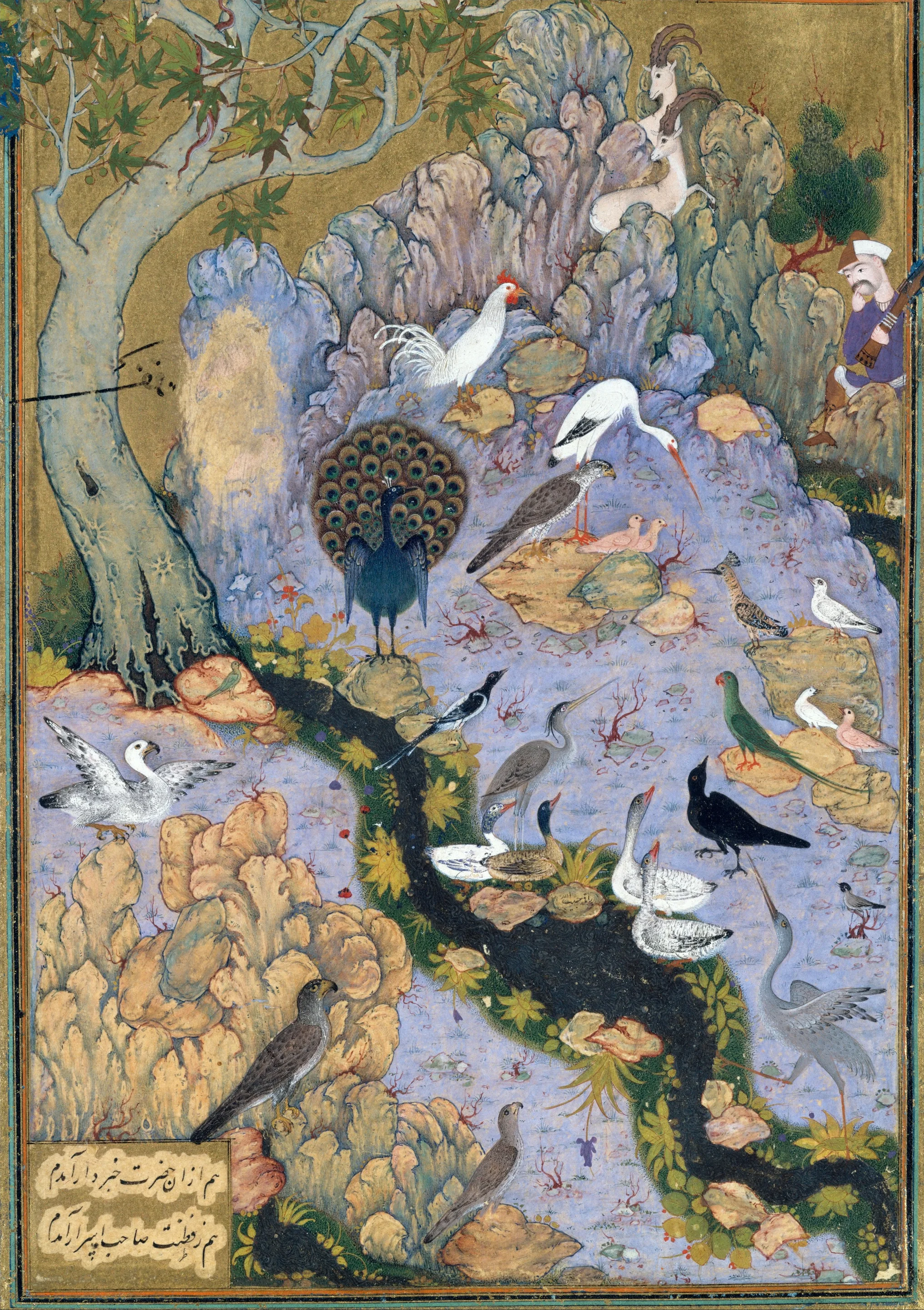
Farid ud-Din Attar of Nishapur (about 1145 to 1221) wrote the Mantiq ut-Tair, the Speech of the Birds, as one long story: the birds of the world set out under the hoopoe to find their king, the Simurgh, cross seven valleys, and thirty arrive. Twenty passages are given here in plain words, in Attar's own Sufi sense first, with Edward FitzGerald's free Bird-Parliament of 1862 beside those he kept. The ending turns on a pun: si murgh, thirty birds.
The hoopoe: we have a king
لیک با من گر شما همره شوید محرم آن شاه و آن درگه شوید وارهید از ننگ خودبینی خویش تا کی از تشویر بیدینی خویش هرک در وی باخت جان از خود برست در ره جانان ز نیک و بد برست جان فشانید و قدم در ره نهید پایکوبان سر بدان درگه نهید هست ما را پادشاهی بی خلاف در پس کوهی که هست آن کوه قاف نام او سیمرغ، سلطان طیور او به ما نزدیک و ما زو دور دور در حریم عزت است آرام او نیست حد هر زفانی نام او صد هزاران پرده دارد بیشتر هم ز نور و هم ز ظلمت پیش در در دو عالم نیست کس را زهرهای کاو تواند یافت از وی بهرهای دایما او پادشاه مطلق است در کمال عز خود مستغرق است او به سر ناید ز خود آن جا که اوست کی رسد علم و خرد آن جا که اوست؟ نه بدو ره، نه شکیبایی از او صد هزاران خلق سودایی از او
But if you will travel with me, you will come close to that king and that court. Be rid of the shame of seeing only yourselves; how long will you squirm in your own unbelief? Whoever stakes his life on him is free of himself, free of good and bad on the road to the Beloved. Give your lives, set foot on the road, and dance your way to that door. We have a king, no doubt of it, beyond a mountain, and the mountain is Qaf. His name is Simurgh, sultan of the birds. He is near to us, and we are far, far from him. His rest is in the sanctuary of might; his name is beyond every tongue. A hundred thousand veils and more hang before him, of light and of dark. In both worlds no one has the nerve to win so much as a share of him. He is king without condition, always, sunk in the fullness of his own might. He does not come to an end of himself, where he is; how could knowledge and reason reach where he is? No road to him, and no bearing to be without him; a hundred thousand creatures are mad for him.
Note //
The hoopoe's announcement, in its own Sufi sense: the king is near and the birds are far, which is the distance of forgetting, not of miles. "Rid of the shame of seeing only yourselves" is khud-bini, self-regard; the site's I-claim. FitzGerald's Tajidar (crown-wearer) is this hoopoe, and his speech is a free expansion of these lines.
The feather that fell in China
ابتدای کار سیمرغ ای عجب جلوهگر بگذشت بر چین نیمشب در میان چین فتاد از وی پری لاجرم پُرشور شد هر کشوری هر کسی نقشی از آن پَر برگرفت هر که دید آن نقش کاری درگرفت آن پَر اکنون در نگارستان چینست اطلبو العلم و لو بالصین ازینست گر نگشتی نقش پر او عیان این همه غوغا نبودی در جهان این همه آثار صنع از فر اوست جمله انمودار نقش پر اوست چون نه سر پیداست وصفش را نه بن نیست لایق بیش از این گفتن سخن هر که اکنون از شما مَرد رهید سر به راه آرید و پا اندر نهید
The Simurgh's story began, strange to say, when he passed over China at midnight, showing himself. In the middle of China one feather fell from him, and every land was thrown into uproar. Everyone took an impression of that feather; whoever saw the impression set to work. The feather is now in China's gallery of pictures: hence "seek knowledge, even in China". If the picture of his feather had not appeared, there would be none of this clamour in the world. All these works of making are from his splendour; all are a showing of the picture of one feather. Since his description has no head and no foot, it is not fitting to say more than this. Now whoever among you is a man of the road, set your head to the road and your foot upon it.
Note //
In the Sufi reading the feather is the one trace of the Simurgh in the world, and all art, religion and longing are copies of it; the hadith "seek knowledge even in China" is turned to the point. The site reads the feather as appearance (position 2): every form is a picture of the one, real as picture and never on its own. FitzGerald omits the story.
Bayazid in the empty night
بایزید آمد شبی بیرون ز شهر از خروش خلق خالی دید دهر ماهتابی بود بس عالمفروز شب شده از پرتو او مثل روز آسمان پر انجم آراسته هر یکی کار دگر را خاسته شیخ چندانی که در صحرا بگشت کس نمیجنبید در صحرا و دشت شورشی بر وی پدید آمد به زور گفت یا رب در دلم افتاد شور با چنین درگه که در رفعت توراست این چنین خالی ز مشتاقان چراست هاتفی گفتش که ای حیران راه هر کسی را راه ندهد پادشاه عزت این در چنین کرد اقتضا کز در ما دور باشد هر گدا چون حریم عز ما نور افکند غافلان خفته را دور افکند سالها بودند مردان انتظار تا یکی را بار بود از صد هزار
One night Bayazid went out of the city and found the world empty of the noise of people. There was moonlight, lighting up the world, night made day by its rays; the sky set out with stars, each one risen to its own work. As far as the shaikh walked in the open country nothing stirred on plain or field. A turmoil rose in him, hard to hold: "Lord, a fire has fallen in my heart. With a court such as yours, high as yours, why is it so empty of longing ones?" A voice answered: "You, bewildered on the road! The king does not give the road to everyone. The honour of this door asks for this: that every beggar be kept far from our door. When the sanctuary of our might throws its light, it throws the heedless and the sleeping far away." For years men waited, so that one in a hundred thousand might be let in.
Note //
Bayazid Bastami (died 874) is the Sufi of "Glory be to me". The story is told as the birds take to the road and is kept in its own sense: the door is not open to the crowd. The site would add only that the one shut out is the beggar, the one who comes as somebody; FitzGerald sets the story early, in the Tajidar's first speech.
The nightingale and the rose
بلبل شیدا درآمد مستِ مست وز کمال عشق نه نیست و نه هست معنیی در هر هزار آواز داشت زیر هر معنی جهانی راز داشت شد در اسرار معانی نعرهزن کرد مرغان را زفانبند از سخن گفت: بر من ختم شد اسرار عشق جملهٔ شب میکنم تکرار عشق نیست چون داوود یک افتاده کار تا زبور عشق خوانم زار زار زاری اندر نی ز گفتار من است زیر چنگ از نالهٔ زار من است گلسِتانها پر خروش از من بوَد در دل عشاق جوش از من بود بازگویم هر زمان رازی دگر در دهم هر ساعت آوازی دگر عشق چون بر جان من زور آورد همچو دریا جان من شور آورد هر که شور من بدید، از دست شد گر چه بس هشیار آمد، مست شد چون نبینم محرمی سالی دراز تن زنم، با کس نگویم هیچ راز چون کند معشوق من در نوبهار مشک بوی خویش بر گیتی نثار میبپردازد خوشی با او دلم حل کنم بر طلعت او مشکلم باز معشوقم چو ناپیدا شود بلبل شوریده کم گویا شود زآنک رازم درنیابد هر یکی راز بلبل گل بداند بیشکی من چنان در عشق گل مستغرقم کز وجود خویش محو مطلقم در سرم از عشقِ گل سودا بس است زآنک مطلوبم گل رعنا بس است طاقت سیمرغ نارد بلبلی بلبلی را بس بود عشق گلی چون بود صد برگ دلدار مرا کی بود بیبرگیی کار مرا؟ گل که حالی بشکفد چون دلکشی از همه در روی من خندد خوشی چون ز زیر پرده گل حاضر شود خنده بر روی منش ظاهر شود کی تواند بود بلبل یک شبی خالی از عشق چنان خندان لبی؟ هدهدش گفت: ای به صورت مانده باز! بیش از این در عشق رعنایی مناز عشقِ رویِ گل بسی خارت نهاد کارگر شد بر تو و کارت نهاد گل اگر چه هست بس صاحبجمال حسن او در هفتهای گیرد زوال عشق چیزی کآن زوال آرد پدید کاملان را آن ملال آرد پدید خندهٔ گل گر چه در کارت کشد روز و شب در نالهٔ زارت کشد درگذر از گل که گل هر نوبهار بر تو میخندد نه در تو، شرم دار
The lovesick nightingale came in drunk, drunk, neither nothing nor something, from the fullness of love. He had a meaning in each of his thousand songs, and under each meaning a world of secrets. He cried out in the secrets of meaning and tied the tongues of the birds with his speech. "The secrets of love end in me. All night long I repeat love. There is no David now, fallen on hard times, to sing love's psalms the way I wail them. The grief in the reed is from my speech; the grief under the harp is from my cry. The rose gardens are full of my uproar; the boiling in lovers' hearts is from me. Every moment I tell another secret, every hour I strike up another tune. When love presses hard on my life my life heaves like the sea. Whoever saw my frenzy was lost; however sober he came, he left drunk. When for a long year I find no confidant I hold my peace and tell no one my secret. But when my beloved, in the new spring, scatters her musk over the world, my heart opens gladly to her, and I solve my difficulties on her face. When my beloved disappears again the distracted nightingale falls silent. Not everyone understands my secret; the rose knows the nightingale's secret, no doubt. I am so drowned in love of the rose that I am wiped clean out of my own being. The passion for the rose is enough for my head; my desire is only the fair rose. A nightingale cannot bear the Simurgh; the love of a rose is enough for a nightingale. When I have a hundred-petalled darling how could my work be without petals? When the rose opens, so winning, she laughs at me gladly, out of all the garden. When the rose comes out from under her veil her laughter shows on my face. How could a nightingale be one night without the love of such a laughing lip?" The hoopoe said: "You, stuck at the surface! Boast no more of love for a pretty thing. Love of the rose's face has planted many thorns in you; it has worked on you and set you to work. The rose is lovely, yes, but her beauty fails within a week. Love of something that passes brings only weariness to the perfect. If the rose's laughter draws you into her work, it keeps you wailing day and night. Pass the rose by. Every new spring the rose laughs at you, not with you. Be ashamed.
Note //
The nightingale's excuse, the first of the birds', and the hoopoe's answer: love of a beauty that passes keeps the lover at the surface (surat). "Neither nothing nor something" (na nist o na hast) is Attar's own phrase for the lover beside himself. The site's reading agrees with the hoopoe and adds that what passes is real as appearance, so the fault is not the rose but the resting there; FitzGerald gives the speech at length and the reply.
The peacock and paradise: be the whole
بعد از آن طاووس آمد زرنگار نقش پرش صد چه؟ بلکه صد هزار چون عروسی جلوه کردن ساز کرد هر پر او جلوهای آغاز کرد گفت: تا نقاش غیبم نقش بست چینیان را شد قلم انگشت دست گر چه من جبریل مرغانم ولیک رفت بر من از قضا کاری نه نیک یار شد با من به یک جا مار زشت تا بیفتادم به خواری از بهشت چون بَدَل کردند خلوت جای من تختبندِ پای من شد بایِ من عزم آن دارم کزین تاریکجای رهبری باشد به خُلدم رهنمای من نه آن مَردَم که در سلطان رسَم بس بود اینم که در دروان رسَم کی بود سیمرغ را پروای من؟ بس بود فردوس عالی جای من من ندارم در جهان کاری دگر تا بهشتم ره دهد باری دگر هدهدش گفت: ای ز خود گم کرده راه! هر که خواهد خانهای از پادشاه گوی نزدیکیِ او، این زآن به است؟ خانهای، از حضرت سلطان به است؟ خانهٔ نفس است خُلد پر هوس خانهٔ دل مقعد صدق است و بس حضرت حق هست دریای عظیم قطرهٔ خُرد است جنات النعیم قطره باشد هر که را دریا بود هر چه جز دریا بود، سودا بود چون به دریا میتوانی راه یافت سوی یک شبنم چرا باید شتافت؟ هر که داند گفت با خورشید راز کی تواند ماند از یک ذره باز؟ هر که کُل شد، جزو را با او چه کار؟ وآن که جان شد، عضو را با او چه کار؟ گر تو هستی مَرد کُلی، کُل ببین کُل طلب، کُل باش، کُل شو، کُل گزین
Next the peacock came, painted in gold; the picture on his feathers was a hundred, no, a hundred thousand. Like a bride he began to show himself, and every feather began its own display. "When the painter of the unseen painted me, the Chinese painters' pens turned to fingers of flesh. I am the Gabriel of the birds, and yet by fate a thing not good came upon me: the ugly snake became my companion in one place, and so I fell in disgrace from paradise. When they changed the place of my retreat my feet became my chains. I mean to find a guide from this dark place to lead me back to the garden of eternity. I am not the man to reach the sultan; it is enough for me to reach his gate. What does the Simurgh care for me? The high paradise is place enough for me. I have no other business in the world than to find my way once more to paradise." The hoopoe said: "You have lost the road from yourself! Whoever wants a house from the king, tell me, is being near him better than the house? Is a house better than the presence of the sultan? The paradise full of wanting is the house of the appetite; the house of the heart is the seat of truth, and nothing else. is the vast sea; the gardens of delight are one small drop. Whoever has the sea has the drop; whatever is other than the sea is a fever. When you can find the way to the sea why hurry toward one dewdrop? Whoever can speak his secret with the sun, how could he be held back by one mote? Whoever has become , what has he to do with the part? Whoever has become life, what has he to do with a limb? If you are a man of , see : seek , be , become , choose .
Note //
Kull, "the whole", is Attar's word here and the site's; the last couplet is kept word for word. The Sufi point is that paradise is a reward and the presence is the giver; the site adds that the drop which "has" the sea is the pot and space of position 4. FitzGerald's peacock keeps the Eden story and the answer "the whole True Garden of the Universal Soul".
The owl and his ruin
کوف آمد پیش چون دیوانهای گفت: من بگزیدهام ویرانهای عاجزیام در خرابی زاده من در خرابی میروم بیباده من گر چه معموری بسی خوش یافتم هم مخالف، هم مشوش یافتم هرک در جمعیتی خواهد نشست در خرابی بایدش رفتن چو مست در خرابی جای میسازم به رنج زآنک باشد در خرابی جای گنج عشق گنجم در خرابی ره نمود سوی گنجم جز خرابی ره نبود دور بردم از همه کس رنج خویش بوک یابم بی طلسمی گنج خویش گر فرو رفتی به گنجی پای من باز رستی این دلِ خودرأی من عشق بر سیمرغ جز افسانه نیست زآنک عشقش کار هر مردانه نیست من نیَم در عشق او مردانهای عشق، گنجم باید و ویرانهای هدهدش گفت: ای ز عشق گنج مست! من گرفتم کآمدت گنجی به دست بر سر آن گنج، خود را مرده گیر عمر رفته، ره به سر نابرده گیر عشق گنج و عشق زر از کافریست هرک از زر بت کند او آزریست زر پرستیدن بود از کافری نیستی آخر ز قوم سامری هر دلی کز عشق زر گیرد خلل در قیامت صورتش گردد بدل
The owl came forward like a madman. "I have chosen a ruin. I am a weakling, born among ruins; I go about the ruins without wine. I have found many a fine built place and found it hostile, found it troubled. Whoever wants to sit at peace must go among ruins like a drunk. I make my home in ruins, with pains, because treasure lies in ruins. Love of treasure showed me the way into ruins; there was no way to my treasure but ruin. I have carried my pains far from everyone in the hope of finding my treasure with no spell on it. If my foot once sank into a treasure this wilful heart of mine would be set free. Love of the Simurgh is nothing but a tale; his love is not the work of every brave man. In his love I am no brave man; I need love, a treasure, and a ruin." The hoopoe said: "Drunk on the love of treasure! Suppose a treasure came into your hand. Count yourself dead on top of that treasure, your life gone, the road not travelled to its end. Love of treasure, love of gold, is unbelief; whoever makes an idol of gold is of Azar's house. To worship gold is unbelief; you are, after all, of the Samiri's people. Every heart cracked by the love of gold will have its face changed on the last day.
Note //
Azar is Abraham's idol-making father and the Samiri the maker of the golden calf; the hoopoe's charge is idolatry, in the Sufi sense of loving the gift in place of the giver. The owl's "treasure in ruins" is a Persian commonplace that Attar turns against him. FitzGerald's owl and the miser's son follow.
What are we to him? You are his shadow
ما همه مشتی ضعیف و ناتوان بیپر و بیبال، نه تن، نه توان کی رسیم آخر به سیمرغ رفیع؟ گر رسد از ما کسی، باشد بدیع نسبت ما چیست با او؟ بازگوی زآنک نتوان شد به عمیا رازجوی گر میان ما و او نسبت بُدی هر یکی را سوی او رغبت بُدی او سلیمانست و ما موری گدا درنگر کو از کجا، ما از کجا کرده موری را میان چاه بند کی رسد در گرد سیمرغ بلند؟ خسروی کار گدایی کی بود؟ این به بازوی چو مایی کی بود؟ هدهد آن گه گفت: کای بیحاصلان! عشق کی نیکو بود از بددلان؟ ای گدایان! چند ازین بیحاصلی؟ راست ناید عاشقی و بددلی هر که را در عشق چشمی باز شد پایکوبان آمد و جانباز شد تو بدان کآن گه که سیمرغ از نقاب آشکارا کرد رخ چون آفتاب صدهزاران سایه بر خاک او فکند پس نظر بر سایهٔ پاک او فکند سایهٔ خود کرد بر عالم نثار گشت چندین مرغ هر دم آشکار صورت مرغانِ عالم سر به سر سایهٔ اوست، این بدان ای بیهنر! این بدان چون این بدانستی نخست سوی آن حضرت نسَب کردی درست حق بدانستی ببین آن گه بباش چون بدانستی مکن این راز فاش هرک او از کسب مستغرق بوَد حاش لله، گر تو گویی حق بوَد گر تو گشتی آنچ گفتم نه حقی لیک در حق دائماً مستغرقی مرد مستغرق حلولی کی بود؟ این سخن کار فضولی کی بود؟ چون بدانستی که ظلِ کیستی فارغی گر مردی و گر زیستی گر نگشتی هیچ سیمرغ آشکار نیستی سیمرغ هرگز سایهدار باز اگر سیمرغ میگشتی نهان سایهای هرگز نماندی در جهان هرچ این جا سایهای پیدا شود اول آن چیز آشکار آن جا شود دیدهٔ سیمرغ بین گر نیستت دل چو آیینه منور نیستت چون کسی را نیست چشم آن جمال وز جمالش هست صبر لامحال با جمالش عشق نتوانست باخت از کمال لطف خود آیینه ساخت هست از آیینه دل،در در دل نگر تا ببینی روی او در دل نگر
"We are all a handful of weak and helpless things, without feather, without wing, no body, no strength. How will we ever reach the high Simurgh? If one of us arrived it would be a marvel. What is our relation to him? Tell us, for one cannot go seeking a secret blind. If there were a kinship between him and us, every one of us would be drawn to him. He is Solomon, and we a beggar ant; look where he is and where we are. An ant tied up at the bottom of a well, how could it reach the dust of the high Simurgh? Since when is kingship the business of beggars? How could this be for arms like ours?" Then the hoopoe said: "You empty-handed ones! How can love be good from the faint-hearted? Beggars! How long this emptiness? Loving and a faint heart do not go together. Whoever has had an eye opened in love comes dancing and ready to give up his life. Know this: when the Simurgh drew the veil from his face, which is like the sun, he threw a hundred thousand shadows on the earth, then cast his glance on his own pure . He scattered his over the world, and so many birds appeared at every moment. The forms of the birds of the world, every one, are his . Know this, you unskilled! Know this, and when you have first known it you have traced your kinship to that presence rightly. Know , then watch, and be; and when you know it, do not tell the secret. Whoever is drowned in that gaining, God forbid that you should call him . If you became what I said, you are not , but you are drowned in , always. How could be one who says ? Since when is this talk the business of busybodies? When you know whose you are you are at ease whether you die or live. If the Simurgh had never shown himself the Simurgh would never have cast a ; and if the Simurgh were to hide himself no would be left in the world. Whatever appears here, the thing itself first appeared there. If you lack the eye that sees the Simurgh, your heart is not a lit mirror. Since no one has the eye for that beauty, and no one can bear to be patient without it, and his beauty could not play at love, in the fullness of his kindness he made a mirror. The mirror is the heart. Look into the heart; look into the heart to see his face.
Note //
The centre of the poem's teaching, kept in Attar's own Sufi terms: the birds are the Simurgh's shadow, cast when he unveiled; the one who knows it is "drowned in the Truth", not the Truth, and not a believer in indwelling (hulul), which Attar rules out by name. The site's position 4, the person as awareness appearing through one frame, is the same picture; the site's "appearance" is his "shadow". FitzGerald renders this speech freely as the Shadows of the Light.
The king who made a mirror
پادشاهی بود بس صاحبجمال در جهانِ حُسن، بیمثل و مثال مُلک عالم مُصحفِ اسرارِ او در نکویی آیتی دیدار او میندانم هیچ کس آن زهره یافت کو تواند از جمالش بهره یافت روی عالم پُر شد از غوغای او خلق را از حد بشد سودای او گاه شبدیزی برون راندی به کوی برقعی گلگون فرو هشتی به روی هرک کردی سوی آن برقع نگاه سر بریدندیش از تن بیگناه وآنک نام او براندی بر زفان قطع کردندی زفانش در زمان ور کسی اندیشه کردی زآن وصال عقل و جان بر باد دادی زآن محال روز بودی کز غم عشقش هزار میبمردند، اینت عشق و اینت کار گر کسی دیدی جمالش آشکار جان بدادی و بمردی زار زار مردن از عشقِ رخِ آن دلنواز بهتر از صد زندگانیِ دراز نه کسی را صبر بودی زو دمی نه کسی را تاب او بودی همی خلق میبودند دائم زین طلب صبر نه با او و بی او ای عجب گر کسی را تاب بودی یک زمان شاه روی خویش بنمودی عیان لیک چون کس تاب دید او نداشت لذتی جز در شنید او نداشت چون نیامد هیچ خلقی مرد او جمله میمردند و دل پُر درد او آینه فرمود: حالی پادشاه! کاندر آینه توان کردن نگاه روی را از آینه میتافتی هر کس از رویش نشانی یافتی گر تو میداری جمال یار دوست دل! بدان، کآیینهٔ دیدار اوست دل به دست آر و جمال او ببین آینه کن جان، جلال او ببین پادشاهِ توست بر قصرِ جلال قصر روشن زآفتاب آن جمال پادشاه خویش را در دل ببین هوش را در ذرهٔ حاصل ببین هر لباسی کآن به صحرا آمدست سایهٔ سیمرغ زیبا آمدست گر تو را سیمرغ بنماید جمال سایه را سیمرغ بینی بیخیال گر همه چل مرغ و گر سیمرغ بود هرچ دیدی سایهٔ سیمرغ بود سایه را سیمرغ چون نبوَد جدا گر جدایی گویی آن نبوَد روا هر دو چون هستند با هم بازجوی درگذر از سایه وآن گه راز جوی چون تو گم گشتی چنین در سایهای کی ز سیمرغت رسد سرمایهای؟ گر تو را پیدا شود یک فتح باب تو درون سایه بینی آفتاب سایه در خورشید گم بینی مدام خود همه خورشید بینی والسلام
There was a king of great beauty, without like or likeness in the world of beauty. The kingdom of the world was the book of his secrets; his face was a verse of its loveliness. I do not know of anyone who had the nerve to win a share of his beauty. The face of the world filled with the uproar of him; the people's madness for him went past all bounds. Sometimes he rode out on a black horse, a rose-red veil let down over his face. Whoever looked toward that veil, they cut his head from his body, though guiltless; whoever let the king's name run on his tongue, they cut out his tongue on the spot; and if anyone thought of union with him, reason and life went to the wind for that impossible thing. There were days when a thousand died of grief for love of him: such love, such work! If anyone saw his beauty openly he gave up his life and died in agony. To die for the love of that face is better than a hundred long lives. No one had patience for a moment without him, and no one had the strength to bear him. People were always in this search, no patience with him and none without him, strange to say. If anyone had been able to bear it one moment the king would have shown his face plainly; but since no one could bear the sight of him there was no pleasure except in hearing of him. Since no one proved a match for him, all were dying, their hearts full of pain for him. The king ordered a mirror made, so that one could look into the mirror. He turned his face toward the mirror, and everyone found a sign of his face. If you hold your friend's beauty dear, heart, know that the heart is the mirror of his sight. Win the heart and see his beauty; make your life a mirror and see his majesty. Your king is on the palace of majesty, the palace lit by the sun of that beauty. See your own king in your heart; see in the one particle you have. Every robe that has come out into the open is the of the lovely Simurgh. If the Simurgh shows you his beauty you will see the as the Simurgh, with no imagining. Whether it is forty birds or thirty birds, whatever you saw was the of the Simurgh. Since the is not separate from the Simurgh, if you say "separate" it is not allowed. The two are together: seek them both, pass beyond the and then seek the secret. Lost as you are in a , how will any capital come to you from the Simurgh? If one door is opened to you you will see the sun inside the . You will see the lost in the sun, always; you will see it all sun. That is all.
Note //
Attar's parable for the mirror of the heart, followed by his own gloss: the shadow is not separate from the Simurgh, and seen rightly it is all sun. The Sufi sense and the site's non-dual reading meet here without strain, since the site's "real as appearance, never on its own" is the shadow that is not separate, and the couplet on thirty and forty birds plants the pun on which the poem ends. FitzGerald condenses the mirror into eight lines of the hoopoe's speech.
Why is the road empty?
صد هزاران مرغ در راه آمدند سایه وان ماهی و ماه آمدند چون پدید آمد سر وادی ز راه النفیر از آن نفر برشد به ماه هیبتی زان راه برجان اوفتاد آتشی در جان ایشان اوفتاد برکشیدند آن همه بر یک دگر چه پر و چه بال و چه پای و چه سر جمله دست از جان بشسته پاکباز بار ایشان بس گران و ره دراز بود راهی خالی السیر ای عجب ذرهای نه شر نه خیر ای عجب بود خامشی و آرامش درو نه فزایش بود نه کاهش درو سالکی گفتش که ره خالی چراست هدهدش گفت این ز فریاد شماست
A hundred thousand birds set out on the road, a over the fish below and the moon above. When the head of the valley came into view, a cry went up from that crowd as high as the moon. A dread fell on them from that road; a fire fell into their hearts. They all drew in, one against another, wing and feather, foot and head. All of them had washed their hands of life, clean gamblers; their burden was heavy and the road long. It was a road empty of travellers, strange to say, not a particle of harm in it, nor of good. There was silence in it, and rest; no increase in it and no decrease. A traveller asked, "Why is the road empty?" The hoopoe said, "That is because of your clamour.
Note //
The hoopoe's one-line answer, in its own sense, is that the road is empty of everything but the travellers' own noise. The site reads "no increase and no decrease" as position 1's fullness, and the clamour as the I-claim, which is the only thing on the road at all. FitzGerald has no equivalent passage.
The valley of seeking
چون فرو آیی به وادی طلب پیشت آید هر زمانی صدتعب صد بلا در هر نفس اینجا بود طوطی گردون، مگس اینجا بود جد و جهد اینجات باید سالها زآن که اینجا قلب گردد حالها ملک اینجا بایدت انداختن ملک اینجا بایدت در باختن در میان خونت باید آمدن وز همه بیرونت باید آمدن چون نماند هیچ معلومت به دست دل بباید پاک کرد از هرچه هست چون دل تو پاک گردد از صفات تافتن گیرد ز حضرت نور ذات چون شود آن نور بر دل آشکار در دل تو یک طلب گردد هزار چون شود در راه او آتش پدید ور شود صد وادی ناخوش پدید خویش را از شوق او دیوانهوار بر سر آتش زند پروانهوار سر طلب گردد ز مشتاقی خویش جرعهای می، خواهد از ساقی خویش جرعهای ز آن باده چون نوشش شود هر دو عالم کل فراموشش شود غرقهٔ دریا بماند خشک لب سر جانان میکند از جان طلب ز آرزوی آن که سربشناسد او ز اژدهای جان ستان نهراسد او کفر و ایمان گر به هم پیش آیدش درپذیرد تا دری بگشایدش چون درش بگشاد، چه کفر و چه دین زانک نبود زان سوی در آن و این
When you come down into the valley of seeking, a hundred hardships meet you at every moment. A hundred troubles here in every breath; the parrot of heaven is a fly here. Years of striving and effort are needed here, because here your states are turned upside down. Here you must throw away possessions, here you must gamble away possessions. You must come into the middle of your own blood, and you must come out of everything. When nothing known is left in your hand the heart must be cleaned of all that is. When your heart is clean of qualities the light of the essence begins to shine from the presence. When that light shows itself on the heart one seeking in your heart becomes a thousand. If fire appears on his road, or a hundred foul valleys appear, out of longing for him, like a madman, he throws himself on the fire like a moth. Seeking becomes a passion from his own longing; he asks a draught of wine from his own cupbearer. When he drinks a draught of that wine both worlds are wholly forgotten. Drowned in the sea, he stays dry-lipped and asks the secret of the Beloved from his own life. In the wish to know that secret he does not fear the life-stealing dragon. If unbelief and faith come before him together he accepts both, so that a door may open. When the door has opened, what unbelief, what faith? Beyond that door there is no "that" and "this".
Note //
Talab, seeking, is the first of the seven valleys; "when nothing known is left in your hand" is the Sufi emptying, and the last couplet, no "that" and "this" beyond the door, is the whole poem in small. FitzGerald's Vale of Search is the first of his three valleys; he writes in a note that seven are "quite enough" reduced to three.
The valley of love
بعد ازین وادی عشق آید پدید غرق آتش شد کسی کانجا رسید کس درین وادی به جز آتش مباد وانک آتش نیست عیشش خوش مباد عاشق آن باشد که چون آتش بود گرم رو سوزنده و سرکش بود عاقبت اندیش نبود یک زمان در کشد خوش خوش بر آتش صد جهان لحظهای نه کافری داند نه دین ذرهای نه شک شناسد نه یقین نیک و بد در راه او یکسان بود خود چو عشق آمد نه این نه آن بود ای مباحی این سخن آن تونیست مرتدی تو، این به دندان تو نیست هرچ دارد، پاک دربازد به نقد وز وصال دوست مینازد به نقد دیگران را وعدهٔ فردا بود لیک او را نقد هم اینجا بود تا نسوزد خویش را یک بارگی کی تواند رست از غم خوارگی تا بریشم در وجود خود نسوخت در مفرح کی تواند دل فروخت میتپد پیوسته در سوز و گداز تا بجای خود رسد ناگاه باز ماهی از دریا چو بر صحرا فتد میتپد تا بوک در دریا فتد عشق اینجا آتشست و عقل دود عشق کامد در گریزد عقل زود عقل در سودای عشق استاد نیست عشق کار عقل مادر زاد نیست گر ز غیبت دیدهای بخشند راست اصل عشق اینجا ببینی کز کجاست هست یک یک برگ از هستی عشق سر ببر افکنده از مستی عشق گر ترا آن چشم غیبی باز شد با تو ذرات جهان هم راز شد
After this the valley of love comes into view; whoever arrives there is drowned in fire. Let no one be in this valley but fire; and whoever is not fire, may his living not be sweet. The lover is the one who is like fire: hot-faced, burning, headstrong. Not for a moment does he think of the end; he draws a hundred worlds gladly onto the fire. For one moment he knows neither unbelief nor faith; not a grain of doubt, nor of certainty. Good and bad are the same on his road; when love has come there is neither this nor that. You who make everything permitted, this is not for you; you are an apostate, this is not for your teeth. Whatever he has he stakes clean, in cash, and in cash he takes pride in union with the Friend. Others have the promise of tomorrow, but for him the cash is here. Until he burns himself up once and for all how can he be free of the grief of being small? Until the silk in his own being has burnt how can he set his heart on the cordial? He writhes always in burning and melting, until suddenly he comes back to his own place. When a fish falls from the sea onto dry land it writhes until it may fall back into the sea. Love here is fire and reason smoke; when love comes, reason runs away at once. Reason is no master in the trade of love; love is not the work of inborn reason. If they give you a true eye from the unseen you will see here where the root of love is. Every single leaf of being is of love, its head cut off, thrown down by love's drunkenness. If that unseen eye of yours is opened, the particles of the world share their secret with you.
Note //
Ishq, love, is the second valley, and its mark is the lover who burns without thought of the end. The one line of warning, to the "permitter" (mubahi) who takes "neither unbelief nor faith" as licence, is Attar's own fence around the teaching. FitzGerald has no valley of love; his three are Search, Knowledge, and One and Wonder.
The valley of knowing
بعد از آن بنمایدت پیش نظر معرفت را وادیی بی پا و سر هیچ کس نبود که او این جایگاه مختلف گردد ز بسیاری راه هیچ ره دروی نه هم آن دیگرست سالک تن، سالک جان، دیگرست باز جان و تن ز نقصان و کمال هست دایم در ترقی و زوال لاجرم بس ره که پیش آمد پدید هر یکی بر حد خویش آمد پدید کی تواند شد درین راه جلیل عنکبوت مبتلا همسیرِ پیل سِیر هر کس تا کمال وی بود قرب هر کس حسب حال وی بود گر بپرد پشه چندانی که هست کی کمال صرصرش آید بدست لاجرم چون مختلف افتاد سیر هم روش هرگز نیفتد هیچ طیر معرفت زینجا تفاوت یافتست این یکی محراب و آن بت یافتست چون بتابد آفتاب معرفت از سپهر این ره عالی صفت هر یکی بینا شود بر قدر خویش بازیابد در حقیقت صدر خویش سر ذراتش همه روشن شود گلخن دنیا برو گلشن شود مغز بیند از درون نه پوست او خود نبیند ذرهای جز دوست او هرچ بیند روی او بیند مدام ذره ذره کوی او بیند مدام صد هزار اسرار از زیر نقاب روز میبنمایدت چون آفتاب صد هزاران مرد گم گردد مدام تا یکی اسراربین گردد تمام
After that there shows before your sight the valley of knowing, which has no foot and no head. There is no one who does not here go a different way, so many are the roads. No road in it is the same as another; the traveller of the body and the traveller of the spirit differ. Spirit and body, by their lack and their fullness, are always rising and falling. So many roads appear, each one appearing at its own measure. How could the crippled spider, on this great road, keep pace with the elephant? Each one's travel is as far as his perfection; each one's nearness is according to his state. Let the gnat fly as far as it can, how will it have the perfection of the gale? Since the travel falls out differently, no two birds will ever go the same way. Knowing takes its differences from here: this one found a prayer-niche and that one an idol. When the sun of knowing shines from the sky of this high road, each one sees according to his measure and finds again his true seat in . The secret of its particles all becomes bright for him; the furnace of the world becomes a rose garden for him. He sees the kernel from inside, not the shell; he sees not one particle except the Friend. Whatever he sees, he sees his face always; particle by particle he sees his street always. A hundred thousand secrets from under the veil show themselves to you like the sun by day. A hundred thousand men go astray for good so that one may become a complete seer of secrets.
Note //
Ma'rifat, knowing, is the third valley, and Attar's point is the degrees of it: each sees "according to his measure", which is the site's position 9 said six hundred years earlier. "Not one particle except the Friend" is where the degrees end. FitzGerald's Mountain Range of Knowledge corresponds.
The valley of needing nothing
بعد ازین وادی استغنا بود نه درو دعوی و نه معنی بود میجهد از بینیازی صرصری میزند بر هم به یک دم کشوری هفت دریا یک شمر اینجا بود هفت اخگر یک شرر اینجا بود هشت جنت نیز اینجا مردهایست هفت دوزخ همچو یخ افسرده ایست هست موری را هم اینجا ای عجب هر نفس صد پیل اجری بی سبب تا کلاغی را شود پر، حوصله کس نماند زنده در صد قافله صد هزاران سبز پوش از غم بسوخت تا که آدم را چراغی برفروخت صد هزاران جسم خالی شد ز روح تا درین حضرت دروگر گشت نوح صد هزاران پشه در لشگر فتاد تا براهیم از میان با سرفتاد صد هزاران طفل سر ببریده گشت تا کلیم الله صاحب دیده گشت صد هزاران خلق در زنار شد تا که عیسی محرم اسرار شد صد هزاران جان و دل تاراج یافت تا محمد یک شبی معراج یافت قدر نه نو دارد اینجا نه کهن خواه اینجا هیچ کن خواهی مکن گر جهانی دل کبابی دیدهای همچنان دانم که خوابی دیدهای گر درین دریا هزاران جان فتاد شبنمی در بحر بیپایان فتاد گر فرو شد صد هزاران سر بخواب ذرهای با سایهای شد ز آفتاب گر بریخت افلاک و انجم لخت لخت در جهان کم گیر برگی از درخت گر ز ماهی در عدم شد تا به ماه پای مور لنگ شد در قعر چاه گر دو عالم شد همه یک بارنیست در زمین ریگی همان انگار نیست گر نماند از دیو وز مردم اثر از سر یک قطره باران در گذر گر بریخت این جملهٔ تنها به خاک موی حیوانی اگر نبود چه باک گر شد اینجا جزو و کل کلی تباه کم شد از روی زمین یک برگ کاه گر به یک ره گشت این نه طشت گم قطرهای در هشت دریا گشت گم
After this is the valley of needing nothing, where there is no claim and no meaning. A gale springs up out of that having no need and in one breath knocks a country flat. The seven seas are one pool here; the seven fires one spark here. The eight heavens too are a corpse here; the seven hells a frozen piece of ice. Here, strange to say, an ant has the ration of a hundred elephants a breath, for no reason. Before one crow can grow its feathers no one is left alive in a hundred caravans. A hundred thousand green-robed ones burned with grief before one lamp was lit for Adam. A hundred thousand bodies were emptied of spirit before Noah became a carpenter in this presence. A hundred thousand gnats fell on the army before Abraham came out of it with his head. A hundred thousand children had their throats cut before Moses became a man of sight. A hundred thousand people put on the unbeliever's girdle before Jesus became a keeper of secrets. A hundred thousand hearts and lives were plundered before Muhammad, one night, found his ascent. Here there is no worth for new or old; here, do nothing if you like, or do. If you have seen a world of roasted hearts, I take it you have seen a dream. If a thousand lives fell into this sea, a dewdrop fell into the endless sea. If a hundred thousand heads went down to sleep, one particle went with its from the sun. If the heavens and stars poured down in pieces, count it one leaf less from a tree in the world. If everything from the fish to the moon went into nothing, an ant's foot went lame at the bottom of a well. If both worlds vanished at once, count it a grain of sand gone from the earth. If no trace was left of demon or man, pass over it as the top of one raindrop. If all these bodies were poured onto the dust, if a hair of an animal was not, what harm? If part and whole were ruined wholly here, one straw went from the face of the earth. If these nine dishes were lost at one stroke, a drop was lost in the eight seas.
Note //
Istighna, needing nothing, is the fourth valley: the independence of the one, before which the loss of worlds is a leaf from a tree. Attar's list of prophets is kept as it stands. The site reads the valley as position 1's fullness, which has nowhere to move and so nothing to lose; FitzGerald gives it as the sea in which the seven seas and the two worlds are swept away.
The valley of oneness
بعد از این وادی توحید آیدت منزل تفرید و تجرید آیدت رویها چون زین بیابان درکنند جمله سر از یک گریبان برکنند گر بسی بینی عدد، گر اندکی آن یکی باشد درین ره در یکی چون بسی باشد یک اندر یک مدام آن یک اندر یک، یکی باشد تمام نیست آن یک کان احد آید ترا زان یکی کان در عدد آید ترا چون برونست از احد وین از عدد از ازل قطع نظر کن وز ابد چون ازل گم شد، ابد هم جاودان هر دو را کی هیچ ماند در میان چون همه هیچی بود هیچ این همه کی بود دو اصل جز پیچ این همه
After this comes , the station of singling out and stripping bare. When faces turn in from this desert they all put out their heads from one collar. Whether you see many in number or few, on this road it is that one, in one. Since many is one within one, always, that one within one is one complete. That one is not the one that comes to you as a unit, nor the one that comes to you in counting. Since it is beyond unit and beyond number, cut your sight from before-time and from after-time. When before-time is lost, and after-time for ever, what of either is left in between? When all is nothing, this all is nothing; how could there be two roots other than the twist of this all?
Note //
Tawhid, oneness, is the fifth valley, and Attar is exact: the one meant is not the one of arithmetic, not a unit and not a count. That is the site's "not-two" rather than "one", and "two roots" (do asl) is the dualist's error, which he dismisses as a twist. FitzGerald compresses the valley into the Table Land of One and Wonder.
The valley of bewilderment
بعد ازین وادی حیرت آیدت کار دایم درد و حسرت آیدت هر نفس اینجا چو تیغی باشدت هر دمی اینجا دریغی باشدت آه باشد، درد باشد، سوز هم روز و شب باشد، نه شب نه روز هم ازبن هر موی این کس نه به تیغ میچکد خون مینگارد ای دریغ آتشی باشد فسرده مرد این یا یخی بس سوخته از درد این مرد حیران چون رسد این جایگاه در تحیر مانده و گم کرده راه هرچ زد توحید بر جانش رقم جمله گم گردد از و گم نیز هم گر بدو گویند مستی یا نهای نیستی گویی که هستی یا نهای در میانی یا برونی از میان بر کناری یا نهانی یا عیان فانیی یا باقیی یا هر دوی یا نهٔ هر دو توی یا نه توی گوید اصلا میندانم چیز من وان ندانم هم ندانم نیز من عاشقم اما ندانم بر کیم نه مسلمانم نه کافر، پس چیم لیکن از عشقم ندارم آگهی هم دلی پرعشق دارم هم تهی
After this comes the valley of bewilderment; there the work is always pain and longing. Every breath here is a sword for you; every moment here a sigh for you. There is a groan, there is pain, and burning too; it is day and night, and neither night nor day. From the root of every hair of this man, not by any sword, blood drips. Alas! he writes. The man of this valley is a fire gone cold, or a piece of ice burnt through with this pain. When the bewildered man reaches this place he stays in bewilderment and has lost the road. Whatever oneness wrote on his spirit is all lost from him, and the losing lost too. If they say to him, "Are you drunk or not? Are you nothing, or are you something or not? Are you in the middle, or outside the middle? At the edge, or hidden, or in plain sight? Are you passing away, or lasting, or both, or neither of the two, or are you you, or not you?" he says, "I know nothing at all about myself, and that not knowing I do not know either. I am a lover, but I do not know of whom. I am not a Muslim, not an unbeliever; then what am I? Yet I have no awareness of my love: I have a heart full of love, and empty."
Note //
Hayrat, bewilderment, is the sixth valley, after oneness and not before it, which is Attar's most careful placing: the not-knowing comes when even the knowledge of oneness is gone. The site keeps this valley in the Sufi sense and notes only that "I do not know" is the knower speaking, which is position 8. FitzGerald's "blinded, deafen'd, madden'd, drunk with doubt" renders it.
The valley of poverty and passing away
بعد ازین وادی فقرست و فنا کی بود اینجا سخن گفتن روا عین وادی فراموشی بود لنگی و کری و بیهوشی بود صد هزاران سایهٔ جاوید تو گم شده بینی ز یک خورشید تو بحرکلی چون بجنبش کرد رای نقشها بر بحر کی ماند بجای هر دو عالم نقش آن دریاست بس هرک گوید نیست این سوداست بس هرک در دریای کل گم بوده شد دایما گم بودهٔ آسوده شد دل درین دریای پر آسودگی مینیابد هیچ جز گم بودگی گر ازین گم بودگی بازش دهند صنع بین گردد، بسی رازش دهند سالکان پخته و مردان مرد چون فرو رفتند در میدان درد گم شدن اول قدم، زین پس چه بود لاجرم دیگر قدم را کس نبود چون همه در گام اول گم شدند تو جمادی گیر اگر مردم شدند عود و هیزم چون به آتش در شوند هر دو بر یک جای خاکستر شوند این به صورت هر دو یکسان باشدت در صفت فرق فراوان باشدت گر پلیدی گم شود در بحر کل در صفات خود فروماند بذل لیک اگر پاکی درین دریا بود او چون نَبوَد در میان زیبا بود نبود او و او بود، چون باشد این از خیال عقل بیرون باشد این
After this is the valley of poverty and passing away; how could speaking be allowed here? The essence of this valley is forgetting; it is lameness and deafness and losing one's senses. A hundred thousand everlasting shadows of yours you will see lost by one sun of yours. When sea stirred itself to move, how could the pictures on the sea stay in place? Both worlds are the picture of that sea, no more; whoever says they are not, it is mere fever. Whoever has been lost in sea has been lost for ever, and at rest. The heart, in this sea full of rest, finds nothing except being lost. If they give him back from this being lost he becomes a seer of the making, and they give him many secrets. When the ripened travellers, men who are men, went down into the field of pain, being lost was the first step; after that, what? So no one took a second step. Since all were lost at the first step, count them stones, if they became men. When aloe and firewood go into the fire both become ash in one place. In form they are both the same to you; in quality there is a great difference. If something foul is lost in sea it stays stuck in its own qualities; but if something pure is in this sea, when it is not there, it is beautiful. It is not, and it is: how can this be? It is beyond the imagining of reason.
Note //
Faqr and fana, poverty and passing away, the seventh valley: both worlds are pictures on one sea, and the lover is lost in it. Attar then says what the site also says in its own words, that the lost one may be "given back" and becomes a seer of the making: free while living, position 7. "It is not, and it is" is fana with baqa, and the site's "the knower lives the same life without confinement".
The moths and the candle
یک شبی پروانگان جمع آمدند در مضیفی طالب شمع آمدند جمله میگفتند میباید یکی کو خبر آرد ز مطلوب اندکی شد یکی پروانه تا قصری ز دور در فضاء قصر یافت از شمع نور بازگشت و دفتر خود بازکرد وصف او بر قدر فهم آغاز کرد ناقدی کو داشت در جمع مهی گفت او را نیست از شمع آگهی شد یکی دیگر گذشت از نور در خویش را بر شمع زد از دور در پر زنان در پرتو مطلوب شد شمع غالب گشت و او مغلوب شد بازگشت او نیز و مشتی راز گفت از وصال شمع شرحی باز گفت ناقدش گفت این نشان نیست ای عزیز همچو آن یک کی نشان دادی تو نیز دیگری برخاست میشد مست مست پای کوبان بر سر آتش نشست دست درکش کرد با آتش به هم خویشتن گم کرد با او خوش به هم چون گرفت آتش ز سر تا پای او سرخ شد چون آتشی اعضای او ناقد ایشان چو دید او را ز دور شمع با خود کرده هم رنگش ز نور گفت این پروانه در کارست و بس کس چه داند، این خبر دارست و بس آنک شد هم بیخبر هم بیاثر از میان جمله او دارد خبر تا نگردی بیخبر از جسم و جان کی خبر یابی ز جانان یک زمان هرکه از مویی نشانت باز داد صد خط اندر خون جانت باز داد نیست محرم نفس کس این جایگاه در نگنجد هیچ کس این جایگاه
One night the moths came together in a lodging, wanting the candle. All of them said, "We need someone to bring us a little news of what we want." One moth went as far as a palace, from a distance, and in the courtyard of the palace found the candle's light. He came back and opened his notebook and began to describe it, as far as he understood. A judge who was among them, a great one, said, "He has no knowledge of the candle." Another went and passed beyond the light, and threw himself at the candle from a distance. Beating his wings he entered the glow of what he wanted; the candle prevailed and he was overcome. He too came back and told a handful of secrets, gave some account of union with the candle. The judge said, "This is no sign, dear one; you have given no more of a sign than the other." Another rose and went, drunk, drunk, and dancing sat down on the top of the fire. He drew in his arms with the fire, lost himself gladly with it. When the fire took him from head to foot his limbs turned red like a fire. Their judge, when he saw him from afar, made one colour with the candle by its light, said, "This moth is in the work, and nothing else. Who can know? He has the news, and nothing else. The one who became without news and without trace, of them all, he has the news. Until you become without news of body and spirit, how will you have news of the Beloved for one moment? Whoever gives you a sign of so much as a hair has drawn a hundred lines in the blood of your life. No one's breath is let into this place; no one fits into this place."
Note //
The most quoted story in the poem, told in the valley of poverty: knowledge of the flame belongs to the one who does not come back. The site keeps it in its own sense and notes only what Attar's judge notes, that the third moth's news is that there is no one left to bring it; position 8's regress stops in the same place. FitzGerald's version is close.
Thirty birds arrive
عاقبت از صد هزاران تا یکی بیش نرسیدند آنجا اندکی عالمی پر مرغ میبردند راه بیش نرسیدند سی آن جایگاه سی تن بیبال و پر، رنجور و سست دل شکسته، جان شده، تن نادرست حضرتی دیدند بیوصف وصفت برتر از ادراک عقل و معرفت برق استغنا همی افروختی صد جهان در یک زمان میسوختی صد هزاران آفتاب معتبر صد هزاران ماه و انجم بیشتر جمع میدیدند حیران آمده همچو ذره پای کوبان آمده جمله گفتند ای عجب چون آفتاب ذره محوست پیش این حساب کی پدید آییم ما این جایگاه ای دریغا رنج برد ما را به راه دل به کل از خویشتن برداشتیم نیست زان دست این که ما پنداشتیم آن همه مرغان چو بیدل ماندهاند همچو مرغ نیم بسمل ماندهاند محو میبودند و گم، ناچیز هم تا برآمد روزگاری نیز هم آخر از پیشان عالی درگهی چاوش عزت برآمد ناگهی دید سی مرغ خرف را مانده باز بال و پرنه، جان شده، در تن گداز پای تا سر در تحیر مانده نه تهی شان مانده نه پر مانده گفت هان ای قوم از شهر کهاید در چنین منزل گه از بهر چهاید چیست ای بیحاصلان نام شما یا کجا بودست آرام شما یا شما را کس چه گوید در جهان با چه کارآیند مشتی ناتوان جمله گفتند آمدیم این جایگاه تا بود سیمرغ ما را پادشاه ما همه سرگشتگان درگهیم بیدلان و بیقراران رهیم مدتی شد تا درین راه آمدیم از هزاران، سی به درگاه آمدیم بر امیدی آمدیم از راه دور تا بود ما را درین حضرت حضور کی پسندد رنج ما آن پادشاه آخر از لطفی کند در ما نگاه گفت آن چاوش کای سرگشتگان همچو در خون دل آغشتگان گر شما باشید و گرنه در جهان اوست مطلق پادشاه جاودان صد هزاران عالم پر از سپاه هست موری بر در این پادشاه از شما آخر چه خیزد جز زحیر بازپسگردید ای مشتی حقیر
In the end, of a hundred thousand, barely one, only a few, arrived there. A world full of birds set out on the road; no more than thirty reached that place. Thirty bodies without wing or feather, sick and faint, hearts broken, spirits gone, bodies unsound. They saw a presence without description or quality, above the grasp of reason and of knowing. The lightning of needing nothing kept flashing, burning a hundred worlds in one moment. A hundred thousand splendid suns, a hundred thousand moons and stars and more, they saw gathered there, bewildered, come dancing like a mote. All of them said, "Strange! Like the sun, a mote is wiped out before this reckoning. How will we appear in this place? Alas, the pains we took on the road! We have taken our hearts wholly off ourselves; this is not of the kind we thought." As all those birds were left heartless, left like a bird half-slaughtered, they stayed wiped out and lost, worth nothing, until a time had passed over them too. At last, from that high court, the herald of might came out suddenly. He saw thirty worn-out birds left behind, wingless, featherless, spirits gone, melting in their bodies, head to foot bewildered, neither empty nor full. He said, "Ho, you people, what city are you from? What are you doing in a halt like this? What are your names, you empty-handed ones? Where has your resting place been? What does anyone in the world call you? What use is a handful of weaklings?" They all said, "We came to this place so that the Simurgh might be our king. We are all the bewildered of this court, the heartless and restless of the road. It is a while since we took to this road; of thousands, thirty have come to the court. We came on a hope, from a long way off, so that we might have presence in this presence. How could that king approve our pains? In the end, out of kindness, he will look on us." The herald said, "You bewildered ones, you who are soaked in the blood of your hearts: whether you exist or not in the world, he is king without condition, for ever. A hundred thousand worlds full of armies are an ant at this king's door. What will come of you but groaning? Go back, you handful of nobodies."
Note //
The arrival: thirty birds, si murgh, a pun that only works in Persian and that the whole poem has been walking toward. The herald's rebuff ("whether you exist or not") is the valley of needing nothing in person. FitzGerald's thirty "desperate draggled Things" and his Angel of Flame correspond.
The scroll, and the thirty see the Simurgh
چون نگه کردند آن سی مرغ زار در خط آن رقعهٔ پر اعتبار هرچ ایشان کردهبودند آن همه بود کرده نقش تا پایان همه آن همه خود بود سخت این بود لیک کان اسیران چون نگه کردند نیک رفته بودند و طریقی ساخته یوسف خود را به چاه انداخته جان یوسف را به خواری سوخته وانگه او را بر سری بفروخته میندانی تو گدای هیچ کس میفروشی یوسفی در هر نفس یوسفت چون پادشه خواهد شدن پیشوای پیشگه خواهد شدن تو به آخر هم گدا، هم گرسنه سوی او خواهی شدن هم برهنه چون از و کار تو بر خواهد فروخت از چه او را رایگان باید فروخت جان آن مرغان ز تشویر و حیا شد حیای محض و جان شد توتیا چون شدند از کل کل پاک آن همه یافتند از نور حضرت جان همه باز از سر بندهٔ نو جان شدند باز از نوعی دگر حیران شدند کرده و ناکردهٔ دیرینه شان پاک گشت و محو گشت از سینهشان آفتاب قربت از پیشان بتافت جمله را از پرتو آن جان بتافت هم ز عکس روی سیمرغ جهان چهرهٔ سیمرغ دیدند از جهان چون نگه کردند آن سی مرغ زود بیشک این سی مرغ آن سیمرغ بود در تحیر جمله سرگردان شدند باز از نوعی دگر حیران شدند خویش را دیدند سیمرغ تمام بود خود سیمرغ سی مرغ مدام چون سوی سیمرغ کردندی نگاه بود این سیمرغ این کین جایگاه ور بسوی خویش کردندی نظر بود این سیمرغ ایشان آن دگر ور نظر در هر دو کردندی بهم هر دو یک سیمرغ بودی بیش و کم بود این یک آن و آن یک بود این در همه عالم کسی نشنود این
When those thirty wretched birds looked at the writing on that weighty scroll, everything they had ever done was drawn there to the last stroke. That was hard; but this was the thing: when those captives looked closely, they had gone and made a road and thrown their own Joseph into the well, burned the life of Joseph in disgrace, and then sold him for a trifle. You do not know, beggar of no one, that you sell a Joseph every breath. When your Joseph is to become king, to become the leader at the court, you will go to him at the last a beggar and hungry, and naked too. Since your work is to be lit up from him, why must you sell him for nothing? The spirits of those birds, from shame and reproach, became pure shame, and spirit became collyrium. When they were made clean, all of them, of all, all found spirit from the light of the presence. Again, from the beginning, they became new servants; again, in another way, they were bewildered. What they had done and not done of old was cleaned and wiped from their breasts. The sun of nearness shone out before them; the spirit shone on them all from its ray. And in the reflection of the Simurgh's face, in the world, they saw the face of the Simurgh from the world. When those thirty birds looked, at once, without doubt . In bewilderment they all went giddy; again, in another way, they were bewildered. They saw themselves as the Simurgh entire; the Simurgh himself was thirty birds, always. When they looked toward the Simurgh, this Simurgh was that one, in that place; and if they looked toward themselves, these thirty birds were that other. And if they looked at both together, both were one Simurgh, no more, no less. This one was that, and that one was this; in all the world no one has heard of this.
Note //
The climax: the scroll is the brothers' bill of sale for Joseph, so that what the birds read is their own selling of the one in themselves, and then si murgh see Simurgh and the pun becomes the teaching. The site reads "this one was that, and that one was this" as you-are-that in Persian, with the one difference that Attar keeps the mirror between. FitzGerald's "They That, That They: Another, yet the Same" is his rendering of it.
This presence is a mirror
آن همه غرق تحیر ماندند بی تفکر وز تفکر ماندند چون ندانستند هیچ از هیچ حال بی زفان کردند از آن حضرت سؤال کشف این سر قوی در خواستند حل مایی و توی درخواستند بی زفان آمد از آن حضرت خطاب کاینهست این حضرت چون آفتاب هر که آید خویشتن بیند درو جان و تن هم جان و تن بیند درو چون شما سی مرغ اینجا آمدید سی درین آیینه پیدا آمدید گر چل و پنجاه مرغ آیید باز پردهای از خویش بگشایید باز گرچه بسیاری به سر گردیدهاید خویش را بینید و خود را دیدهاید هیچ کس را دیده بر ما کی رسد چشم موری بر ثریا کی رسد دیده ای موری که سندان برگرفت پشهٔ پیلی به دندان برگرفت هرچ دانستی، چو دیدی آن نبود و آنچ گفتی و شنیدی، آن نبود این همه وادی که از پس کردهاید وین همه مردی که هر کس کردهاید جمله در افعال مایی رفتهاید وادی ذات صفت را خفتهاید چون شما سی مرغ حیران ماندهاید بیدل و بیصبر و بیجان ماندهاید ما به سیمرغی بسی اولیتریم زانک سیمرغ حقیقی گوهریم محو ما گردید در صد عز و ناز تا به ما در خویش را یابید باز محو او گشتند آخر بر دوام سایه در خورشید گم شد والسلام تا که میرفتند و میگفت این سخن چون رسیدند و نه سر ماند و نه بن لاجرم اینجا سخن کوتاه شد ره رو و رهبر نماند و راه شد
All of them were left drowned in bewilderment, without thought, and left by thought. Since they knew nothing of any state, without a tongue they asked that presence: they asked the unveiling of this mighty secret, they asked the solving of "we" and "you". Without a tongue the answer came from that presence: "This presence is a mirror, like the sun. Whoever comes sees himself in it; body and spirit see body and spirit in it. Since you came here as thirty birds, you appeared as thirty in this mirror. If you come back as forty or fifty birds you will draw a veil from yourselves again. Though you have wandered far and wide, you see yourselves, and have seen yourselves. How could anyone's eye reach us? How could an ant's eye reach the Pleiades? Have you seen an ant lift an anvil, or a gnat take an elephant in its teeth? Whatever you knew, when you saw, was not that; whatever you said and heard was not that. All these valleys you have put behind you, all this manliness each of you has shown, you have gone all the way in our acts; you have slept in the valley of the essence and the attributes. Since you thirty birds are left bewildered, left without heart, without patience, without spirit, we are far worthier of being Simurgh, for we are the true Simurgh in essence. Be wiped out in us, in a hundred honours and graces, so that you may find yourselves again in us." They were wiped out in him at last, for good: the was lost in the sun. That is all. While they travelled, he spoke these words; when they arrived, neither head nor foot was left. So here the speech falls short: no traveller remained, no guide; the road remained.
Note //
The answer, in Attar's Sufi terms: the presence is a mirror, so what the thirty see is themselves, and what they saw and said "was not that"; then fana, the shadow lost in the sun. The site's reading differs by one step, as the note on passage 16 also says: the shadow was never separate (passage 8), so what is lost is the claim, not the birds, and "no traveller, no guide; the road remained" is the last line of the story proper. FitzGerald ends with "back into your Sun subside".
Touch an underlined word to see the Persian behind it. The lighter lines are how the tradition read the verse; the rest is the verse.
The renderings on this page are shared under CC BY-NC 4.0, in the words of Pranav Ashar.