Akka Mahadevi: ten vachanas
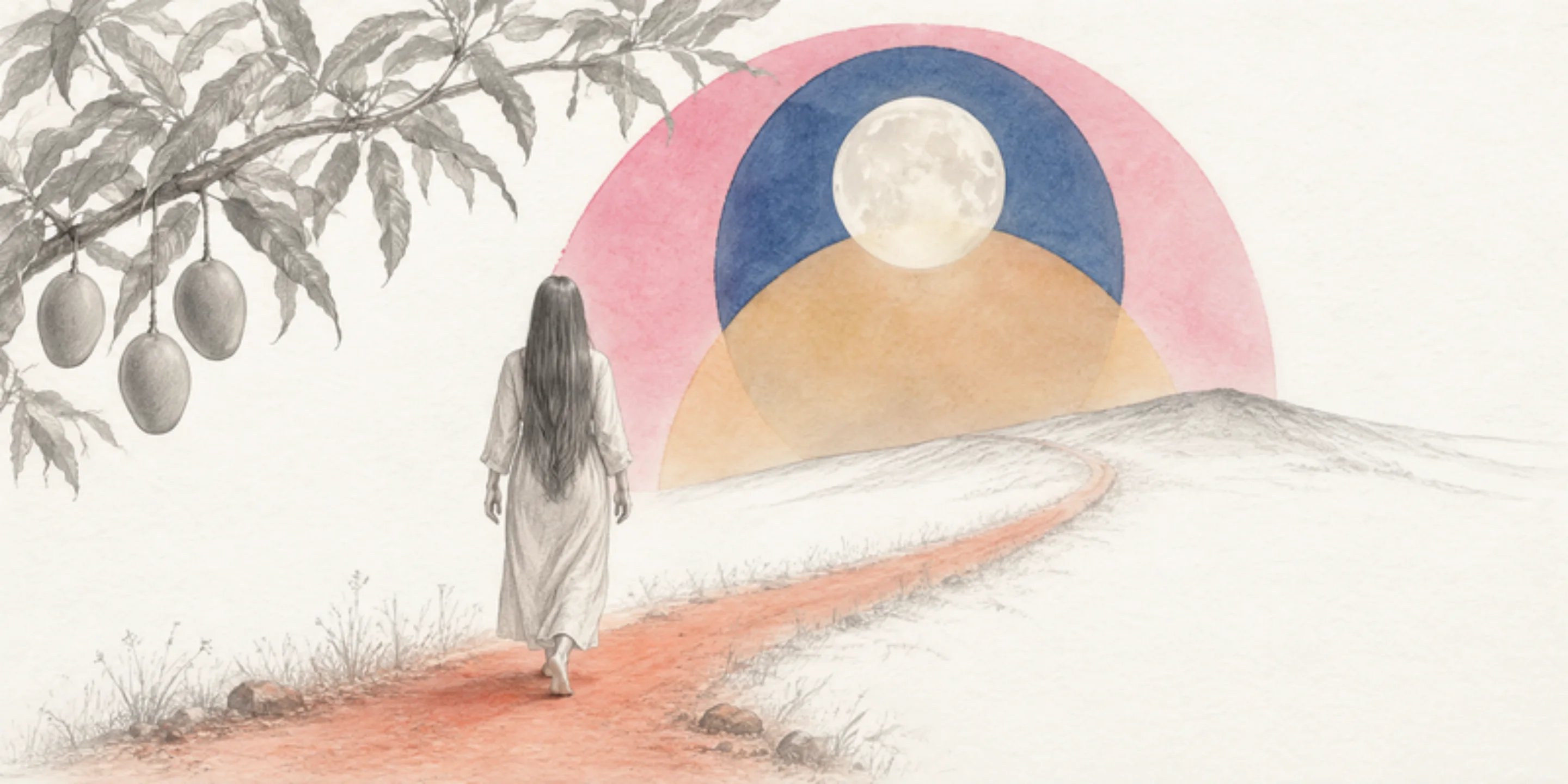
In the words of Pranav Ashar
How we renderThe heart of the Akka Mahadevi: ten vachanas
In brief
Mahadevi of Udutadi, called Akka, elder sister, by the sharanas, left a king's house in the twelfth century, walked to Kalyana wearing her hair, answered Allama's questions in the hall of experience and went on to Srisailam, where she is said to have died young. She signs every vachana Chennamallikarjuna, the beautiful Mallikarjuna, the Shiva of that hill. About 430 survive, love poems and arguments at once. Ten are given here in plain words, in her own Virashaiva sense first. No public-domain English version exists.
Then you, now you, always you
ಅಂದೂ ನೀನೆ ಇಂದೂ ನೀನೆ ಎಂದೂ ನೀನೆ ಕೇಳಾ ತಂದೆ. ನಿನ್ನ ಬೆಂಬಳಿವಿಡಿದ ಹಳೆಮಗಳಾನಯ್ಯ ಅಂದೂ ಇಂದೂ ಎಂದೂ ನಿನ್ನ ನಂಬಿದ ಒಲವಿನ ಶಿಶು ನಾನಯ್ಯ. ಒಂದಲ್ಲದೆ ಎರಡರಿಯೆನಯ್ಯಾ. ಎನ್ನ ತಂದೆ ಕೇಳಾ ಚೆನ್ನಮಲ್ಲಿಕಾರ್ಜುನಾ ನಿಮ್ಮ ಎಂಜಲನುಂಬ ಹಳೆಯವಳಾನಯ್ಯಾ.
aṃdū nīne iṃdū nīne eṃdū nīne kēḷā taṃde. ninna beṃbaḷiviḍida haḷemagaḷānayya aṃdū iṃdū eṃdū ninna naṃbida olavina śiśu nānayya. oṃdallade eraḍariyenayyā. enna taṃde kēḷā cennamallikārjunā nimma eṃjalanuṃba haḷeyavaḷānayyā.
Then it was you, now it is you, always it is you; listen, father. I am the old daughter who followed at your back; then, now and always, the child of your love who trusted you. I know one; I do not know two. Listen, my father Chennamallikarjuna: I am the old servant who eats what you leave.
Note //
Chennamallikarjuna, 'the beautiful Mallikarjuna', is the Shiva of Srisailam and the name Akka signs every vachana with; eating the god's leavings (enjalu) is a privilege of devotion, not a humiliation. 'I know one, I do not know two' is the whole of the site's position in six Kannada syllables, spoken from inside devotion rather than against it.
A house on the hill
ಬೆಟ್ಟದ ಮೇಲೊಂದು ಮನೆಯ ಮಾಡಿ ಮೃಗಗಳಿಗಂಜಿದಡೆಂತಯ್ಯಾ? ಸಮುದ್ರದ ತಡಿಯಲೊಂದು ಮನೆಯ ಮಾಡಿ ನೊರೆತೆರೆಗಳಿಗಂಜಿದಡೆಂತಯ್ಯಾ? ಸಂತೆಯೊಳಗೊಂದು ಮನೆಯ ಮಾಡಿ ಶಬ್ದಕ್ಕೆ ನಾಚಿದಡೆಂತಯ್ಯಾ? ಚೆನ್ನಮಲ್ಲಿಕಾರ್ಜುನದೇವ ಕೇಳಯ್ಯಾ ಲೋಕದೊಳಗೆ ಹುಟ್ಟಿದ ಬಳಿಕ ಸ್ತುತಿನಿಂದೆಗಳು ಬಂದಡೆ ಮನದಲ್ಲಿ ಕೋಪವ ತಾಳದೆ ಸಮಾಧಾನಿಯಾಗಿರಬೇಕು.
beṭṭada mēloṃdu maneya māḍi mṛgagaḷigaṃjidaḍeṃtayyā? samudrada taḍiyaloṃdu maneya māḍi noreteregaḷigaṃjidaḍeṃtayyā? saṃteyoḷagoṃdu maneya māḍi śabdakke nācidaḍeṃtayyā? cennamallikārjunadēva kēḷayyā lōkadoḷage huṭṭida baḷika stutiniṃdegaḷu baṃdaḍe manadalli kōpava tāḷade samādhāniyāgirabēku.
You build a house on the hill, and then you fear the wild beasts? You build a house on the seashore, and then you fear the foam and the waves? You build a house in the market, and then you shrink from the noise? Listen, Chennamallikarjuna: once you are born into the world, when praise and blame come, keep no anger in the mind; stay at peace.
Note //
Akka walked out of a king's house and across the Deccan without clothes, and heard about it all the way; this is her answer. The site hears in it the Gita's test (2.55 to 72): freedom is shown under pressure, not in the quiet, and the pressure is no more than what a house in the market gets.
If I am hungry
ಹಸಿವಾದಡೆ ಊರೊಳಗೆ ಭಿಕ್ಷಾನ್ನಗಳುಂಟು. ತೃಷೆಯಾದಡೆ ಕೆರೆ ಹಳ್ಳ ಬಾವಿಗಳುಂಟು. ಅಂಗಶೀತಕ್ಕೆ ಬೀಸಾಟ ಅರಿವೆಗಳುಂಟು. ಶಯನಕ್ಕೆ ಹಾಳು ದೇಗುಲಗಳುಂಟು. ಚೆನ್ನಮಲ್ಲಿಕಾರ್ಜುನಯ್ಯಾ ಆತ್ಮಸಂಗಾತಕ್ಕೆ ನೀನೆನಗುಂಟು.
hasivādaḍe ūroḷage bhikṣānnagaḷuṃṭu. tṛṣeyādaḍe kere haḷḷa bāvigaḷuṃṭu. aṃgaśītakke bīsāṭa arivegaḷuṃṭu. śayanakke hāḷu dēgulagaḷuṃṭu. cennamallikārjunayyā ātmasaṃgātakke nīnenaguṃṭu.
If I am hungry, there is alms-food in the town. If I am thirsty, there are tanks, streams and wells. For the body's cold, there are thrown-away rags. For sleep, there are ruined temples. Chennamallikarjuna, for , there is you for me.
Note //
Atma-sangata, the company of the self, is the one need the town cannot meet, and she says it is already met. The Wikisource text has a misprint in the first line (ಬ್ಥಿಕ್ಷಾನ್ನ), corrected here to ಭಿಕ್ಷಾನ್ನ. The site reads the last line without the distance: the companion of the self is not a second person but the self recognised.
Bees, mango tree, moonlight, cuckoo
ಅಳಿಸಂಕುಲವೆ ಮಾಮರವೆ ಬೆಳುದಿಂಗಳೆ ಕೋಗಿಲೆಯೆ ನಿಮ್ಮನೆಲ್ಲರನೂ ಒಂದ ಬೇಡುವೆನು. ಎನ್ನೊಡೆಯ ಚೆನ್ನಮಲ್ಲಿಕಾರ್ಜುನದೇವ ಕಂಡಡೆ ಕರೆದು ತೋರಿರೆ.
aḷisaṃkulave māmarave beḷudiṃgaḷe kōgileye nimmanellaranū oṃda bēḍuvenu. ennoḍeya cennamallikārjunadēva kaṃḍaḍe karedu tōrire.
Swarm of bees, mango tree, moonlight, cuckoo: I ask one thing of all of you. If you see my Chennamallikarjuna, call him and show me.
Note //
The spring night of Sanskrit love poetry, bees, mango, moon and cuckoo, is turned into a search party. The site adds only that the one she asks is already what is asking, and that the vachana knows it: she asks the whole night, because he is not elsewhere.
As a shadow to the body
ಕಾಯಕ್ಕೆ ನೆಳಲಾಗಿ ಕಾಡಿತ್ತು ಮಾಯೆ. ಪ್ರಾಣಕ್ಕೆ ಮನವಾಗಿ ಕಾಡಿತ್ತು ಮಾಯೆ. ಮನಕ್ಕೆ ನೆನಹಾಗಿ ಕಾಡಿತ್ತು ಮಾಯೆ. ನೆನಹಿಂಗೆ ಅರುಹಾಗಿ ಕಾಡಿತ್ತು ಮಾಯೆ. ಅರುಹಿಂಗೆ ಮರಹಾಗಿ ಕಾಡಿತ್ತು ಮಾಯೆ. ಜಗದ ಜಂಗುಳಿಗೆ ಬೆಂಗೋಲನೆತ್ತಿ ಕಾಡಿತ್ತು ಮಾಯೆ. ಚೆನ್ನಮಲ್ಲಿಕಾರ್ಜುನಾ ನೀನೊಡ್ಡಿದ ಮಾಯೆಯನಾರಿಗೂ ಗೆಲಬಾರದು.
kāyakke neḷalāgi kāḍittu māye. prāṇakke manavāgi kāḍittu māye. manakke nenahāgi kāḍittu māye. nenahiṃge aruhāgi kāḍittu māye. aruhiṃge marahāgi kāḍittu māye. jagada jaṃguḷige beṃgōlanetti kāḍittu māye. cennamallikārjunā nīnoḍḍida māyeyanārigū gelabāradu.
As a shadow to the body, hounded me. As the mind to the life, hounded me. As memory to the mind, hounded me. As knowing to memory, hounded me. As forgetting to knowing, hounded me. Raising its goad over the crowds of the world, hounded me. Chennamallikarjuna, the you spread no one can defeat.
Note //
Maya is rendered 'appearance' throughout the site, and here it is a shadow, which is the right picture: real as a shadow, never on its own. She does not claim to beat it, and the site does not either; knowledge ends the covering, not the projecting, so the shadow goes on falling for the one who knows what casts it.
The breath's own fragrance
ಉಸುರಿನ ಪರಿಮಳವಿರಲು ಕುಸುಮದ ಹಂಗೇಕಯ್ಯಾ? ಕ್ಷಮೆ ದಮೆ ಶಾಂತಿ ಸೈರಣೆಯಿರಲು ಸಮಾಧಿಯ ಹಂಗೇಕಯ್ಯಾ? ಲೋಕವೆ ತಾನಾದ ಬಳಿಕ ಏಕಾಂತದ ಹಂಗೇಕಯ್ಯಾ ಚೆನ್ನಮಲ್ಲಿಕಾರ್ಜುನಾ?
usurina parimaḷaviralu kusumada haṃgēkayyā? kṣame dame śāṃti sairaṇeyiralu samādhiya haṃgēkayyā? lōkave tānāda baḷika ēkāṃtada haṃgēkayyā cennamallikārjunā?
When the breath has its own fragrance, ? With forgiveness, restraint, peace and patience, what need of samadhi? Once the world itself is oneself, what need of solitude, Chennamallikarjuna?
Note //
Three things the religious life prizes, flowers to offer, trance, retreat, each made unnecessary by what it was for. The last line is her 'free while living': nowhere to withdraw to, because the world is not outside. The site's daily-practice line says the same from the other end: attention to the task, and awareness goes nowhere.
The beautiful one with no death
ಸಾವಿಲ್ಲದ ಕೇಡಿಲ್ಲದ ರೂಹಿಲ್ಲದ ಚೆಲುವಂಗೆ ನಾನೊಲಿದೆ. ಎಡೆಯಿಲ್ಲದ ಕಡೆಯಿಲ್ಲದ ತೆರಹಿಲ್ಲದ ಕುರುಹಿಲ್ಲದ ಚೆಲುವಂಗೆ ನಾನೊಲಿದೆ ಎಲೆ ಅವ್ವಗಳಿರಾ? ಭವವಿಲ್ಲದ ಭಯವಿಲ್ಲದ ನಿರ್ಭಯ ಚೆಲುವಂಗೊಲಿದೆ ನಾನು. ಸೀಮೆಯಿಲ್ಲದ ನಿಸ್ಸೀಮಂಗೊಲಿದೆ ನಾನು. ಚೆನ್ನಮಲ್ಲಿಕಾರ್ಜುನನೆಂಬ ಗಂಡಂಗೆ ಮಿಗೆ ಮಿಗೆ ಒಲಿದೆ ಎಲೆ ಅವ್ವಗಳಿರಾ.
sāvillada kēḍillada rūhillada celuvaṃge nānolide. eḍeyillada kaḍeyillada terahillada kuruhillada celuvaṃge nānolide ele avvagaḷirā? bhavavillada bhayavillada nirbhaya celuvaṃgolide nānu. sīmeyillada nissīmaṃgolide nānu. cennamallikārjunaneṃba gaṃḍaṃge mige mige olide ele avvagaḷirā.
with the beautiful one who has no death, no decay, . with the beautiful one with no place, no end, no gap, ; mothers, do you hear? with the fearless beauty who has no birth and no fear. with the boundless one who has no boundary. I love, more and more, the husband called Chennamallikarjuna, mothers.
Note //
Her answer to the women who asked why she left a living king: the husband she took has none of the things a husband has. Every 'no' is the Upanishads' not-this-not-this, and the site reads the one she loves as the Self, with the love kept, since nothing in the position asks her to give it up.
Like the colour inside gold
ಎನ್ನ ನಾನರಿಯದಲ್ಲಿ ಎಲ್ಲಿರ್ದೆ ಹೇಳಯ್ಯಾ ಚಿನ್ನದೊಳಗಣ ಬಣ್ಣದಂತೆ ಎನ್ನೊಳಗಿರ್ದೆ. ಅಯ್ಯಾ ಎನ್ನೊಳಗೆ ಇನಿತಿರ್ದು ಮೈದೋರದ ಭೇದವ ನಿಮ್ಮಲ್ಲಿ ಕಂಡೆ ಕಾಣಾ ಚೆನ್ನಮಲ್ಲಿಕಾರ್ಜುನಾ.
enna nānariyadalli ellirde hēḷayyā cinnadoḷagaṇa baṇṇadaṃte ennoḷagirde. ayyā ennoḷage initirdu maidōrada bhēdava nimmalli kaṃḍe kāṇā cennamallikārjunā.
Where were you, when I did not know myself? Tell me. Like the colour inside gold, you were inside me. , of being this much inside me and never showing a body: I saw it in you, see, Chennamallikarjuna.
Note //
The colour is not added to the gold and cannot be taken out of it; this is the vachana the site would put beside 'you are that'. Not-knowing, in the first line, changed nothing about where he was, which is the site's point about the covering: it hides, it does not remove.
If I say 'I know'
ಅರಿದೆನೆಂದಡೆ ಅರಿಯಬಾರದು ನೋಡಾ. ಘನಕ್ಕೆ ಘನ ತಾನೆ ನೋಡಾ. ಚೆನ್ನಮಲ್ಲಿಕಾರ್ಜುನನ ನಿರ್ಣಯವಿಲ್ಲದೆ ಸೋತೆನು.
arideneṃdaḍe ariyabāradu nōḍā. ghanakke ghana tāne nōḍā. cennamallikārjunana nirṇayavillade sōtenu.
If I say 'I know', it cannot be known, look. To , it is itself , look. Without a settled account of Chennamallikarjuna, I gave up.
Note //
Three lines, and the Kena Upanishad's whole argument: the one who says 'I know it' does not. Ghana, 'the vast' or 'the dense', is the Virashaiva word for the ultimate. 'I gave up' (sotenu, 'I lost') is not defeat; the site reads it as the I-claim's resignation, which is where knowing begins.
One must know oneself
ಅಯ್ಯಾ ತನ್ನ ತಾನರಿಯಬೇಕಲ್ಲದೆ ತನ್ನಲ್ಲಿ ಅರಿವು ಸ್ವಯವಾಗಿರಲು ಅನ್ಯರಲ್ಲಿ ಕೇಳಲುಂಟೆ? ಚೆನ್ನಮಲ್ಲಿಕಾರ್ಜುನಾ ನೀನರಿವಾಗಿ ಎನಗೆ ಮುಂದುದೋರಿದ ಕಾರಣ ನಿಮ್ಮಿಂದ ನಿಮ್ಮನರಿವೆನು.
ayyā tanna tānariyabēkallade tannalli arivu svayavāgiralu anyaralli kēḷaluṃṭe? cennamallikārjunā nīnarivāgi enage muṃdudōrida kāraṇa nimmiṃda nimmanarivenu.
, one must know oneself by oneself; when knowing is one's own, in oneself, is there any asking others? Chennamallikarjuna, because you, as knowing, showed me the way ahead, through you I know you.
Note //
'You, as knowing' (nin arivagi) is the hinge: the god is not the object known but the knowing itself, which is why nobody else can be asked. This is the site's witness, position 8, in her words: not a someone watching, but the presence in which knowing happens, so 'through you I know you' is not a circle but a description.
Touch an underlined word to see the Kannada behind it. The lighter lines are how the tradition read the verse; the rest is the verse.
The renderings on this page are shared under CC BY-NC 4.0, in the words of Pranav Ashar.