Wang Yangming
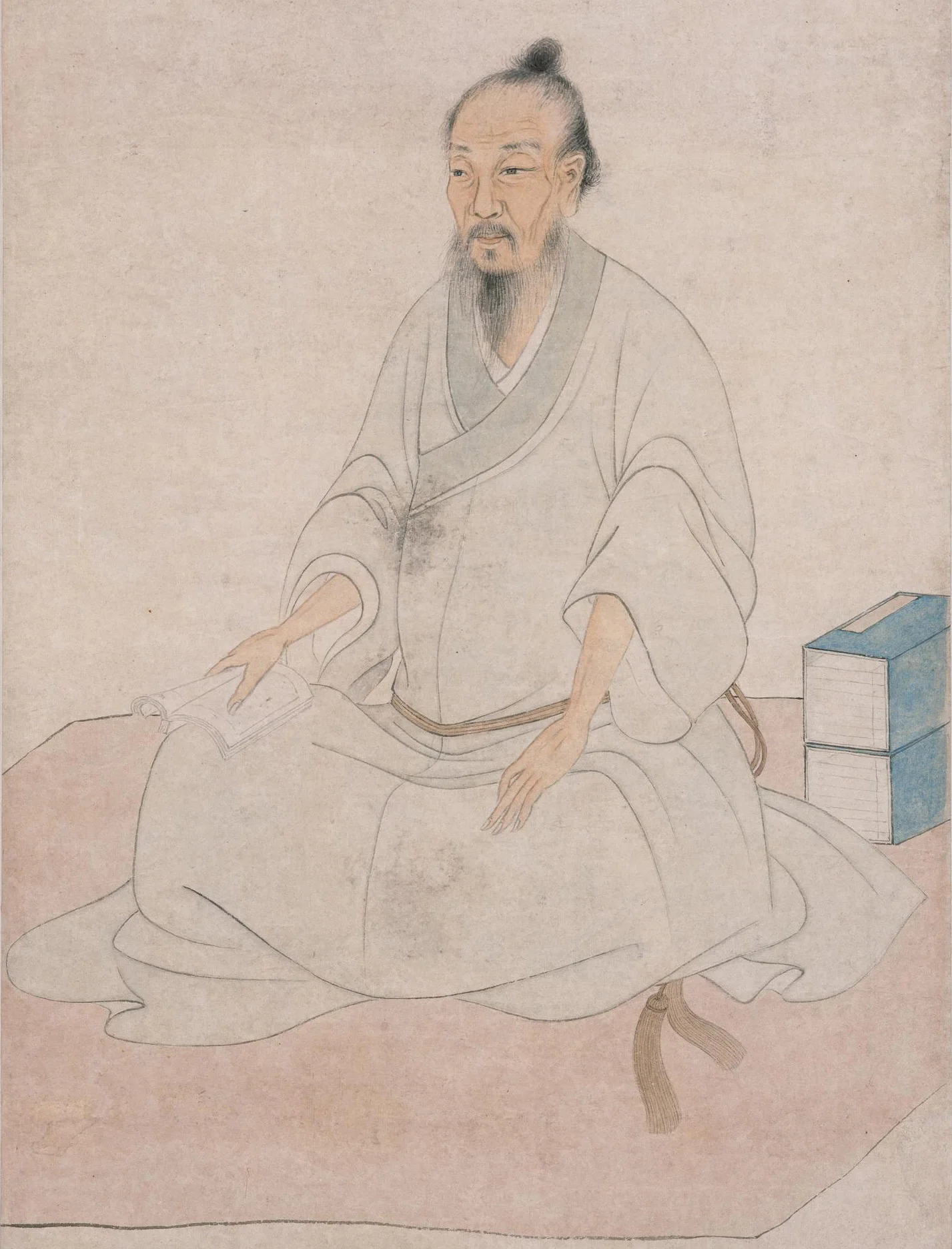
1472 to 1529 · Born at Yuyao, Zhejiang, China; exiled to Longchang, Guizhou (1506 to 1510)
Life
Wang Shouren, called Yangming, was a scholar-official of the Ming dynasty. The bamboo episode dates from his youth, when he tried to follow the school of Zhu Xi literally. In 1506 he offended a eunuch who held great power. He was flogged and exiled to Longchang in the hills of Guizhou. There, in 1508, he had his great insight: the principle he had looked for in things was in his own mind. He later served as a general and governor, putting down rebellions, and taught many students. His conversations were collected as Instructions for Practical Living. He died in 1529.
What they saw
Wang taught that the mind is principle. Everyone has innate knowing (liangzhi) of the good, which needs no study to have and only needs to be cleared of selfish desire to work. He compared it to the sun behind clouds.
Knowing and acting are one, he taught. To know filial piety and not practise it is not yet to know it. Knowing that does not act is only half grown.
He was a Confucian, not a Buddhist or Vedantin, and cared most about conduct. Yet his innate knowing, always present and only covered, and his refusal to split knowing from doing, sit close to the Gita and to the site's daily practice.
In their words
In paraphrase: there has never been knowing that does not act. Knowing that does not act is not yet knowing.
After Wang Yangming, Instructions for Practical Living (Chuanxi lu), section 5; paraphrase. Compare Frederick Goodrich Henke, The Philosophy of Wang Yang-ming (1916).
Where this path meets the others
Wang's innate knowing, covered and never lost, is close to Advaita's covering. His unity of knowing and acting is the Gita's. See Not-knowing and Action without attachment.
The bamboo was never the problem.
Works
- Instructions for Practical Living (Chuanxi lu)compiled 1518 to 1556
Further reading
- Frederick Goodrich Henke, The Philosophy of Wang Yang-ming (1916)
- Wing-tsit Chan, Instructions for Practical Living (1963; in copyright)
Next on your path
Sources
- Henke (1916) for the Chuanxi lu, paraphrased. Public domain.
- Chan (1963), introduction, for the life (bamboo, exile, the Longchang insight in 1508), paraphrased.