Swami Vivekananda
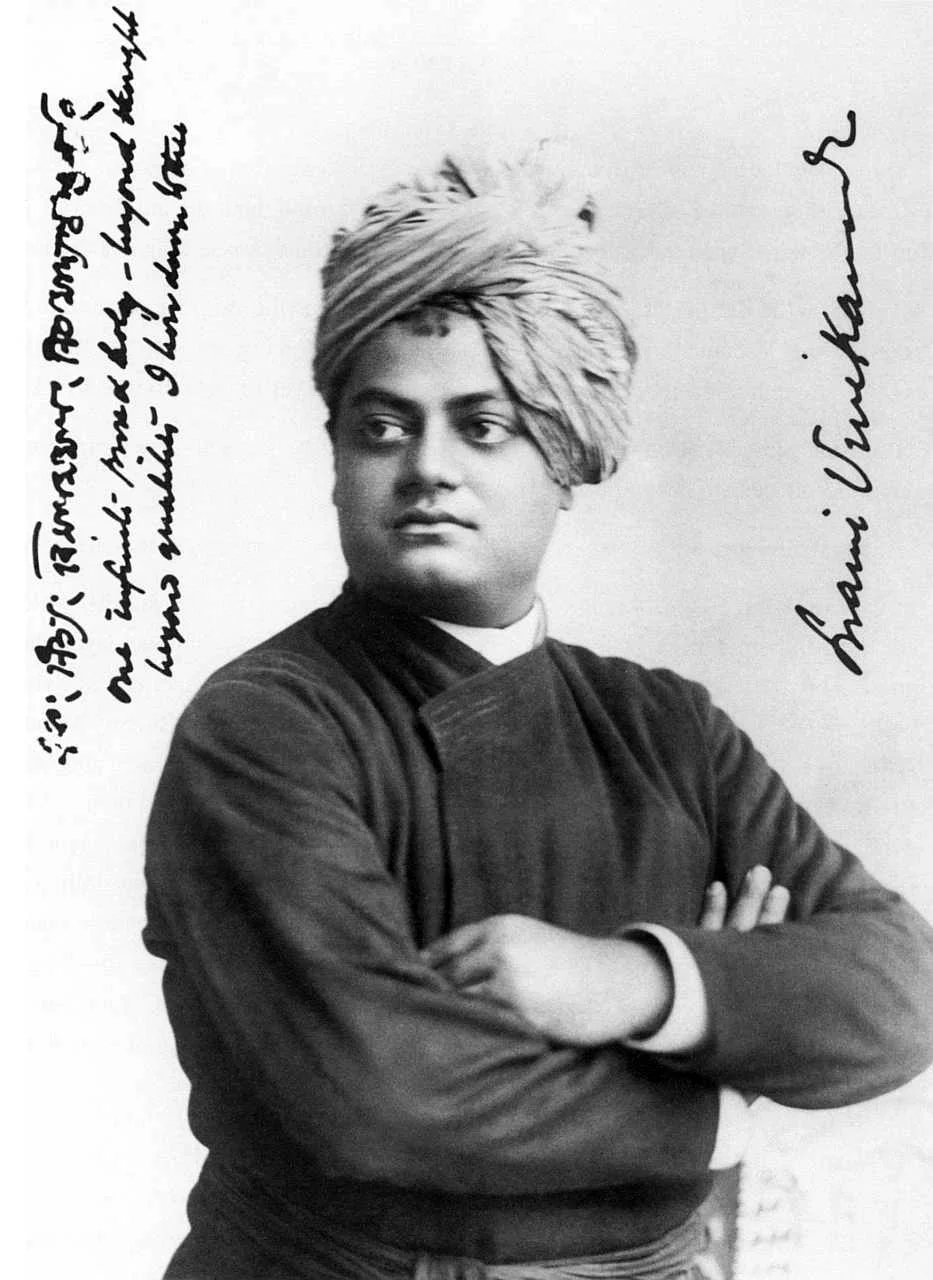
12 January 1863 to 4 July 1902 · Born in Calcutta (Kolkata); died at Belur Math, near Kolkata
Life
Narendranath Datta was born in Calcutta in 1863, the son of a lawyer, and studied Western philosophy at the Scottish Church College. He asked everyone he met whether they had seen God. Ramakrishna, a priest at the Dakshineswar temple, said yes. Narendra became his disciple and, after Ramakrishna's death in 1886, a monk, Vivekananda. He walked across India, then went to the Chicago Parliament in 1893 and taught in America and England for several years. In 1897 he founded the Ramakrishna Mission, joining monastic life to service of the poor. He died at Belur in 1902. He was thirty-nine.
What they saw
Vivekananda presented Vedanta as the meeting place of all religions and as something that could be tested, like a science. He taught four yogas, of knowledge, devotion, work and meditation, as roads to one recognition: that each person is the Self.
He put service at the centre. To serve the poor and the sick was, for him, to serve the whole appearing as them; he coined the phrase “service to man is service to God” in that spirit. His Advaita was practical and impatient. He wanted strong people, not pious ones.
His view that all religions lead to one truth comes from his teacher Ramakrishna. Some scholars note that his Vedanta also borrowed from Western ideas of experience and science. Both are part of his gift.
In their words
“Each soul is potentially divine. The goal is to manifest this Divinity within, by controlling nature, external and internal.”
Swami Vivekananda, Raja Yoga (1896), epigraph (also chapter 1)
Where this path meets the others
Vivekananda carried Ramakrishna's many paths into the world, and his service ideal is the Gita's action without attachment. See Ramakrishna and many paths and Action without attachment.
Serve the one appearing as the poor.
Works
- Raja Yoga1896
- Karma Yoga1896
- Jnana Yoga1899
Further reading
- The Complete Works of Swami Vivekananda (Advaita Ashrama, 1907 onward; the early volumes are public domain)
- Romain Rolland, The Life of Vivekananda and the Universal Gospel (1930)
Next on your path
Sources
- Swami Vivekananda, Raja Yoga (London, 1896). Public domain.
- The Chicago address: Complete Works, vol. 1.
- On Western influences: for example Anantanand Rambachan, The Limits of Scripture (1994), paraphrased.
- “Service to man is service to God”: a phrase widely attributed to him; the wording varies in the sources.