Rabia of Basra
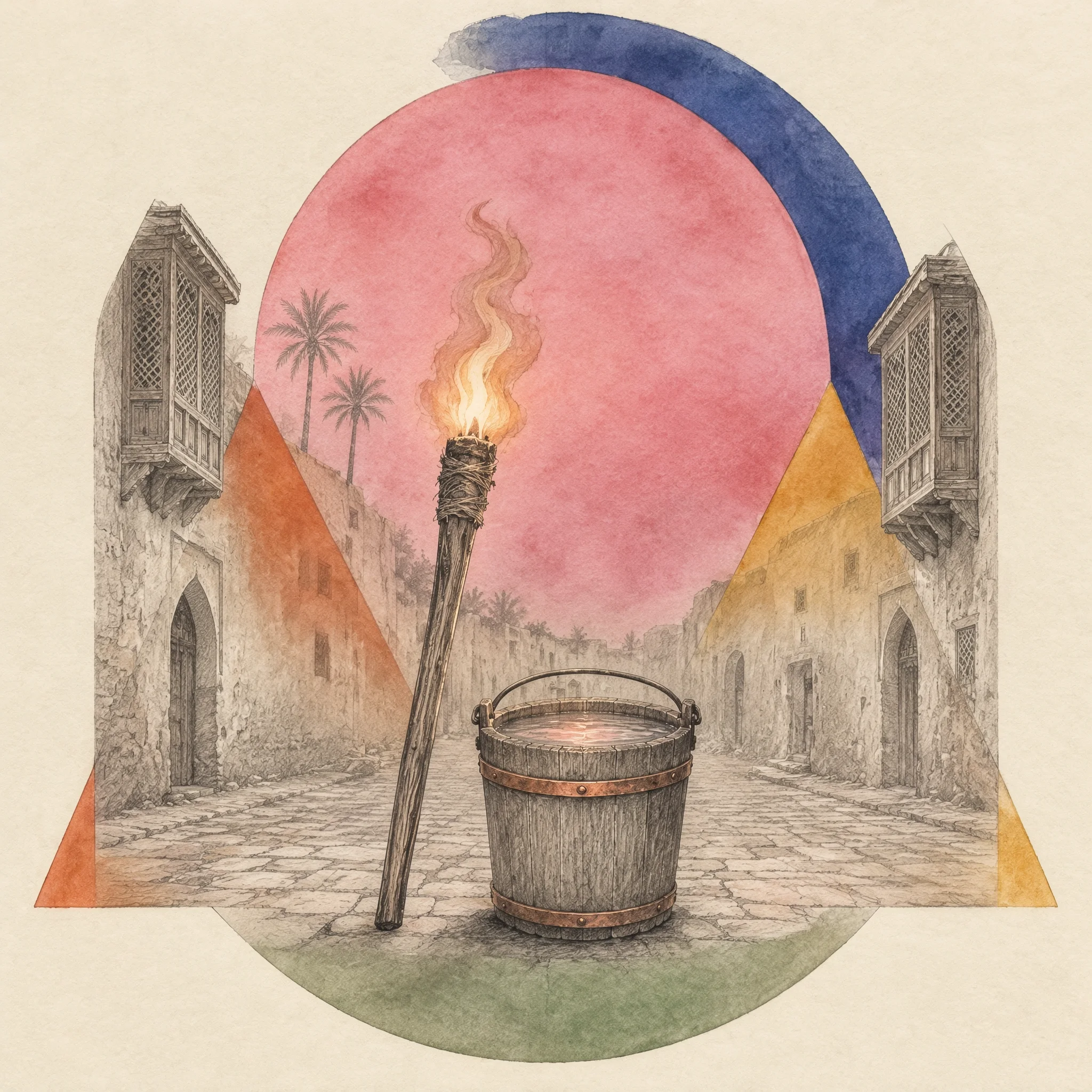
About 714 to 801 (dates traditional) · Basra, Iraq
Life
Rabia al-Adawiyya is the most famous woman mystic of Islam. What is known of her comes from later Sufi writers, above all Attar's Memorial of the Saints, written four centuries afterwards. They say she was born poor in Basra, was sold into slavery as a girl, and was freed when her master saw a light above her as she prayed at night. She refused offers of marriage and lived in poverty and prayer until old age. Every later Sufi repeated her prayers.
What they saw
Before Rabia, much of Islamic piety was fear of hell and hope of paradise. She taught love. God is to be loved for God's sake, not for reward or out of fear. If I worship you for fear of hell, she prayed, burn me in it; if for hope of paradise, shut me out of it.
In this love there is no bargain, and so in the end no one left to bargain. Later Sufis read her as the first teacher of love that leaves no lover.
She gave every later mystic of love, Christian, Sufi and Hindu, a measure: love that wants nothing back.
In their words
In paraphrase: if I worship you for fear of hell, burn me in hell; if for hope of paradise, keep me out of it. But if I worship you for your own sake, do not hold back your beauty from me.
After Rabia's prayer as told in Attar's Memorial of the Saints; paraphrase, not a quotation.
Where this path meets the others
Rabia and the love that leaves no lover sets her beside the Gita and Akka Mahadevi. See Devotion and Love.
Burn paradise. Then love.
Further reading
- Margaret Smith, Rabi'a the Mystic and Her Fellow-Saints in Islam (1928)
- Attar, Memorial of the Saints (Tadhkirat al-Awliya), abridged tr. A. J. Arberry (1966; in copyright)
Next on your path
Sources
- Margaret Smith (1928), for the traditions of her life, paraphrased; they are later traditions, not records.
- The torch and water story: Aflaki and Attar's traditions, as given by Smith (1928).