Pyrrho of Elis
About 360 to about 270 BCE · Elis, in the western Peloponnese; travelled to India with Alexander's army
Life
Pyrrho was a painter from Elis who joined the philosopher Anaxarchus in Alexander the Great's campaign to India, around 330 BCE. There, ancient writers say, he met the “naked sages” (gymnosophists) and the Magi. Back in Elis he lived quietly with his sister, was made a high priest by his fellow citizens, and wrote nothing. His student Timon of Phlius recorded his teaching. The later school of Pyrrhonist skepticism, summarised by Sextus Empiricus around 200 CE, took his name.
What they saw
Pyrrho taught that things are undecidable. We cannot say of anything that it is more this than that. So the wise person holds no fixed views, makes no assertions, and lives by appearances without claiming they show how things actually are. The result, he said, is speechlessness at first, and then calm (ataraxia).
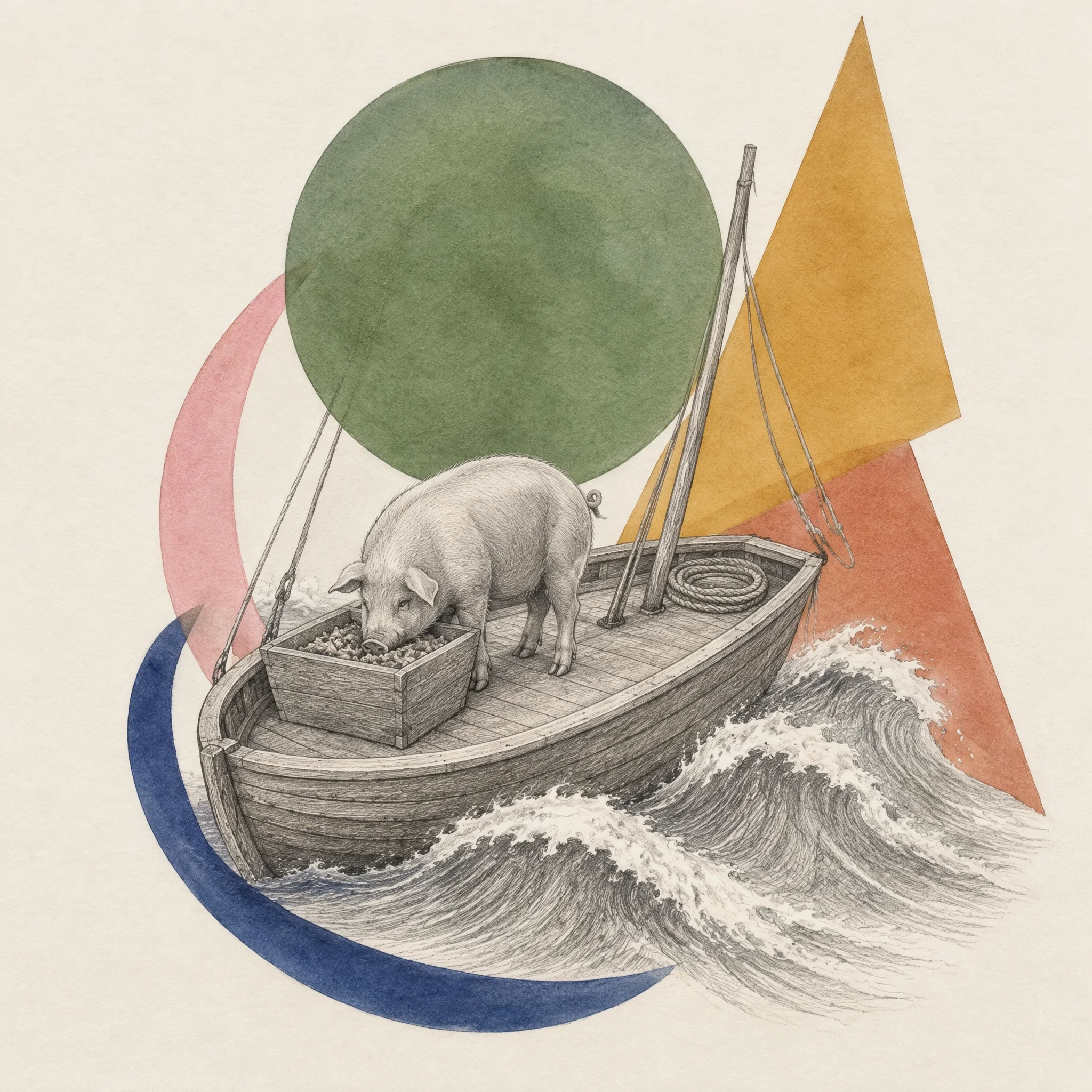
The stories about him, some of them jokes made by his enemies, show a man unbothered: walking past dangers, ignoring insults, the pig in the storm.
Scholars debate how much Pyrrho owed to India. His suspension of all views is close to Nagarjuna's refusal to hold any position, and to the Buddha's silence on certain questions.
In their words
In paraphrase: things are equally undifferentiated, unmeasurable and undecidable. So we should be without views, unmoved, and say of each thing that it no more is than is not.
After Timon, reported by Aristocles in Eusebius, Preparation for the Gospel 14.18; paraphrase.
Where this path meets the others
Pyrrho's suspension stands near Nagarjuna's emptiness, and his India visit is one of the first recorded meetings of Greece and India. See Nagarjuna and Not this, not this.
The pig kept eating.
Further reading
- Diogenes Laertius, Lives of the Eminent Philosophers, book 9, tr. R. D. Hicks (Loeb, 1925)
- Christopher Beckwith, Greek Buddha (2015; in copyright and debated)
Next on your path
Sources
- Diogenes Laertius 9.61 to 9.108, tr. Hicks (1925), for the life and the pig, paraphrased.
- Aristocles' summary of Timon in Eusebius, Praeparatio Evangelica 14.18, paraphrased.
- Beckwith's thesis of Buddhist influence is debated.