Padmapada
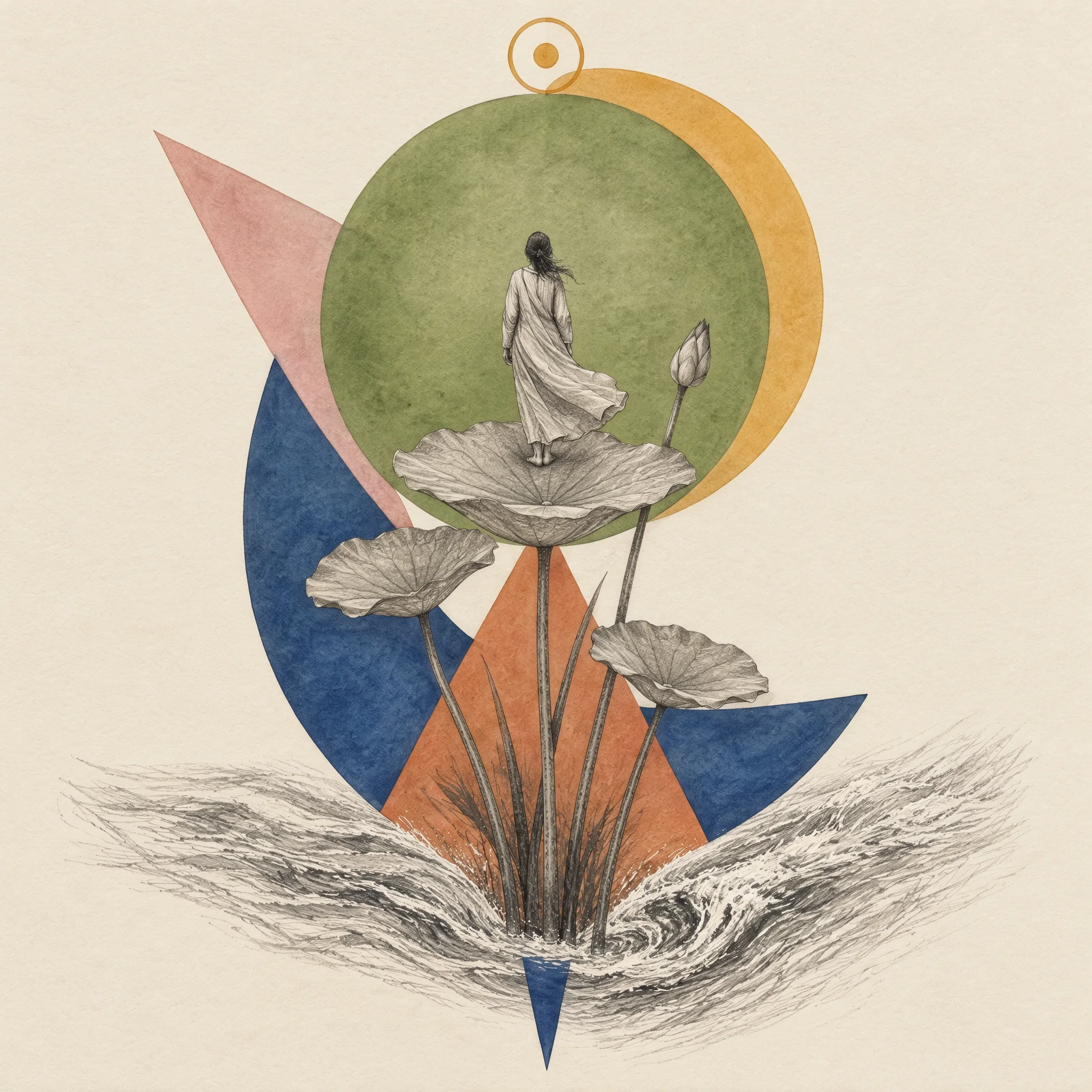
c. 8th century CE · India; by tradition the first head of the monastery at Puri
Life
Shankara had four direct students, tradition says. Padmapada was one. His name means “lotus-foot”: the story goes that when Shankara called him from the far bank of the Ganga, he walked straight across, and lotuses rose under each step. Tradition makes him the first head of the Govardhana monastery at Puri. He wrote the Panchapadika, a commentary on the opening portion of Shankara's commentary on the Brahma Sutras.
What they saw
Padmapada asked a sharp question: if the Self is always present, why do we not know it? His answer was that not-knowing (avidya) is a real power with two faces: it covers what is there, and it projects something else in its place, the way darkness hides a rope and shows a snake.
He also gave careful attention to the reflection of awareness in the mind (chidabhasa): the mind seems aware because awareness shines in it, as the moon shines with the sun's light. This picture of reflection became central to the school that grew from his work, called the Vivarana school after a later commentary on the Panchapadika by Prakashatman.
In their words
“When he shines, everything shines after him; by his light all this is lighted.”
Katha Upanishad 2.5.15, tr. Max Müller (1884)
Where this path meets the others
His image of awareness reflected in the mind is close to Plotinus' light of the One reflected in soul, and to the Sufi picture of the heart as a mirror. See Plotinus and Shankara.
The mind shines, but the light is not its own.
Works
- Panchapadikac. 8th century CE
Further reading
- The Panchapadika of Padmapada, tr. D. Venkataramiah (1948; in copyright, for further study)
Next on your path
Sources
- The lotus story and the Puri appointment are traditional and cannot be checked historically.
- Panchapadika: commentary on the first four sutras (the catuhsutri) of Shankara's Brahma Sutra commentary.
- Vivarana school named after Prakashatman's Panchapadika-vivarana (c. 13th century; date approximate).
- Katha Upanishad 2.5.15, in The Upanishads, Part II, tr. F. Max Müller, Sacred Books of the East vol. 15 (Oxford, 1884). Public domain.