Longchenpa
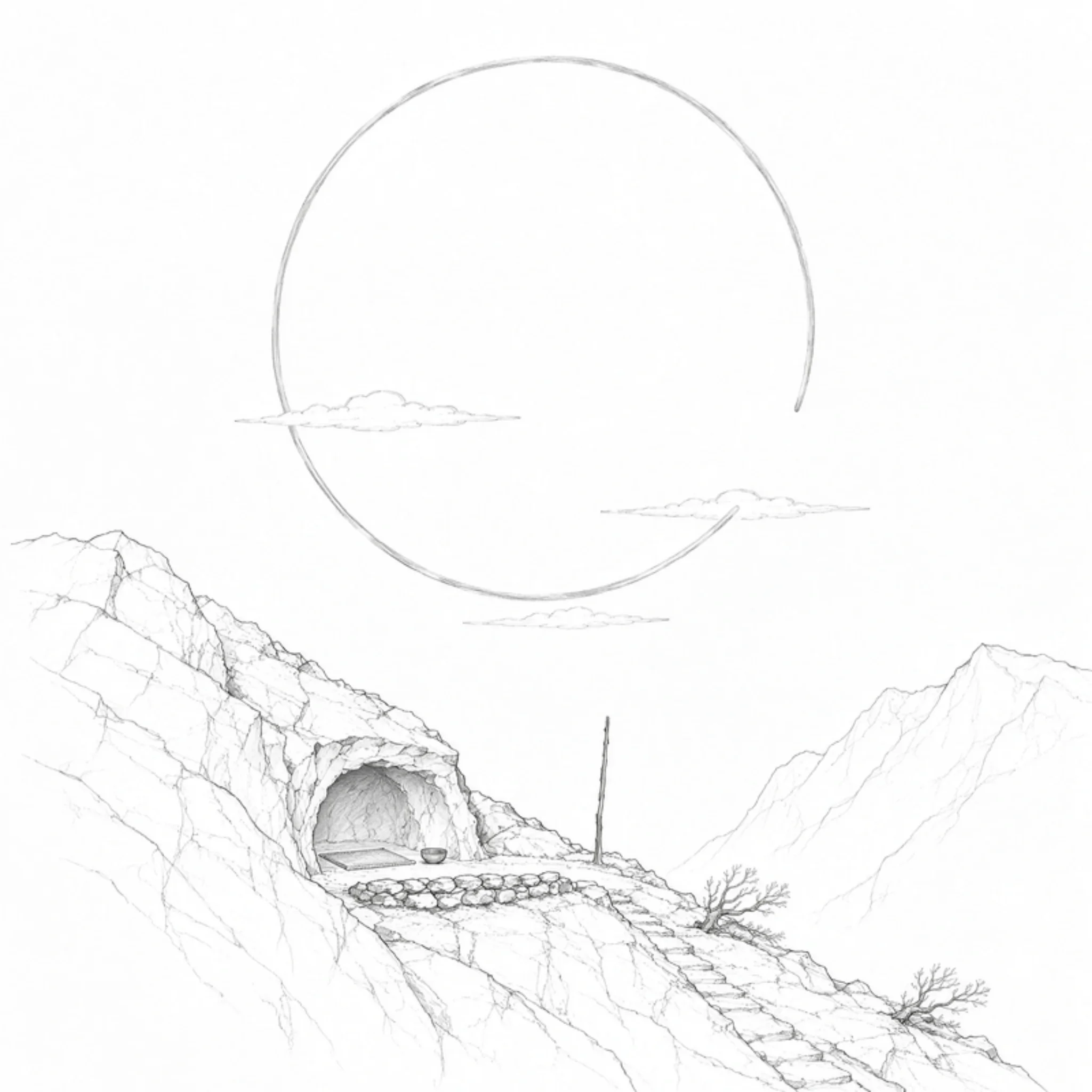
1308 to 1364 · Tibet; taught at Samye and in central Tibet, and lived for some years in exile in Bhutan
Life
Longchen Rabjam, called Longchenpa, was born in 1308 in central Tibet. He studied widely in the monastic colleges, then left them, critical of their politics, and practised in retreat. He became the great systematiser of Dzogchen, the Great Perfection teaching of the Nyingma school. He lived for some years in Bhutan after a dispute with a ruling family, and wrote some 250 works, of which the Seven Treasuries are the most famous. He died in 1364.
What they saw
Dzogchen says mind's nature is already perfect. Its word for that nature, rigpa, is close to this site's awareness: open like the sky, clear like light, and responsive. Thoughts and feelings arise in it and free themselves, like clouds, or like writing on water.
So the practice is not to build anything but to recognise what is already there, and rest. Longchenpa wrote of it as spacious and effortless, with nothing to add and nothing to take away.
Tibetan Buddhism holds this nature to be empty of any self, and would not call it the Self. Advaita would call it exactly that. The likeness in what is described is close, and the words differ.
In their words
In paraphrase: the nature of mind is like the sky. Whatever arises in it, let it be; it frees itself.
After Longchenpa's Dzogchen writings; paraphrase, not a quotation.
Where this path meets the others
Longchenpa's sky-like awareness meets Advaita's witness and the Zen teachers' original face. See Zen and Advaita and The witness.
The sky does nothing about the clouds.
Works
- The Seven Treasuries14th century
Further reading
- Longchen Rabjam, The Precious Treasury of the Basic Space of Phenomena, tr. Richard Barron (2001; in copyright)
- Tulku Thondup, Buddha Mind (1989; in copyright)
Next on your path
Sources
- Tulku Thondup, Buddha Mind (1989), for the life and teaching, paraphrased.
- The number of works (about 250) is traditional.