Kabbalah and Ein Sof
The Kabbalah took shape in Provence and Spain in the 12th and 13th centuries; Isaac Luria taught at Safed in 1570 to 1572 · Provence, Castile, and later Safed in Galilee
Life
Kabbalah, meaning received tradition, is the main form of Jewish mysticism. It took shape among scholars in Provence in the 12th century, including Isaac the Blind, and in Spain in the 13th. Its central book, the Zohar, appeared in Castile around 1280 and is usually credited to Moses de León, though it presents itself as the teaching of a 2nd-century rabbi, Shimon bar Yochai. In the 16th century Isaac Luria at Safed taught a new system, written down by his students. Hasidism later carried Kabbalah into everyday piety.
What they saw
Ein Sof means without end. It is the hidden infinite, beyond all names and attributes, of which nothing can be said. From Ein Sof come ten sefirot, the qualities through which the infinite shows itself: wisdom, understanding, love, judgment and the rest, arranged like a tree or a human body.
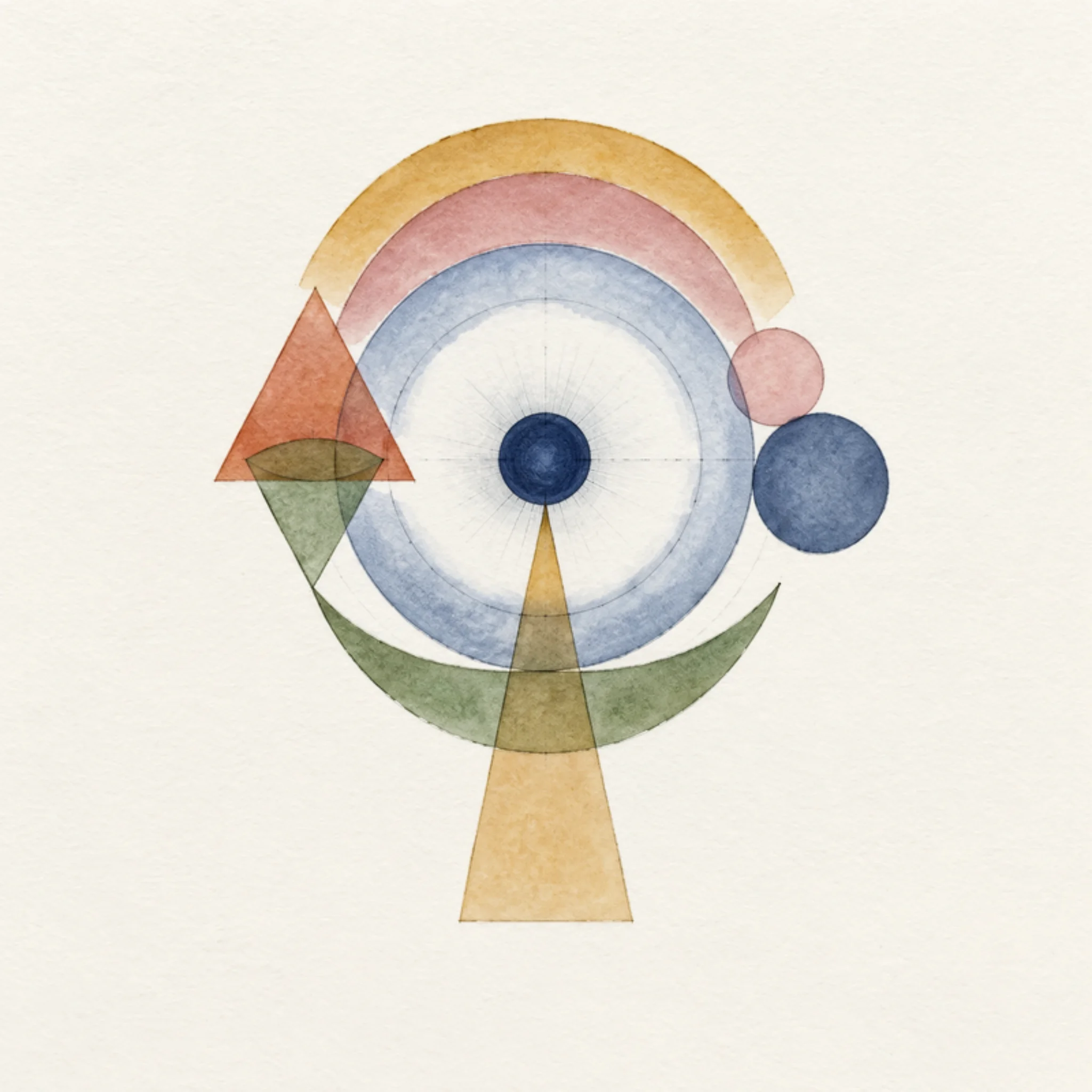
Luria added the picture of contraction (tzimtzum). The infinite drew back into itself to leave room for a world, then sent a line of light into the space. In the light's passing, vessels broke, and the work of human life is to gather the sparks.
Advaita would recognise Ein Sof, and its appearing through the sefirot is close to appearance by levels. Kabbalah keeps a creator and a creation, and its stress on repairing the world is its own.
In their words
In paraphrase: before all things, Ein Sof filled everything. To make room for the worlds, it withdrew into itself, and into the space it sent a single line of light.
After the Lurianic teaching on tzimtzum, as recorded by Hayyim Vital in Etz Hayyim; paraphrase, not a quotation.
Where this path meets the others
Ein Sof sits beside the whole and the Tao that cannot be named; the sefirot beside the order. See The whole and Martin Buber.
The light drew back so there could be a world.
Works
- The Zoharc. 1280 (Castile)
- Etz Hayyim (Hayyim Vital's record of Luria's teaching)late 16th century
Further reading
- Gershom Scholem, Major Trends in Jewish Mysticism (1941; in copyright)
- Arthur Green, A Guide to the Zohar (2004; in copyright)
Next on your path
Sources
- Scholem, Major Trends in Jewish Mysticism (1941), for history, dates and the Zohar's authorship, paraphrased.
- Lurianic tzimtzum: Hayyim Vital, Etz Hayyim, paraphrased.