Huangbo Xiyun
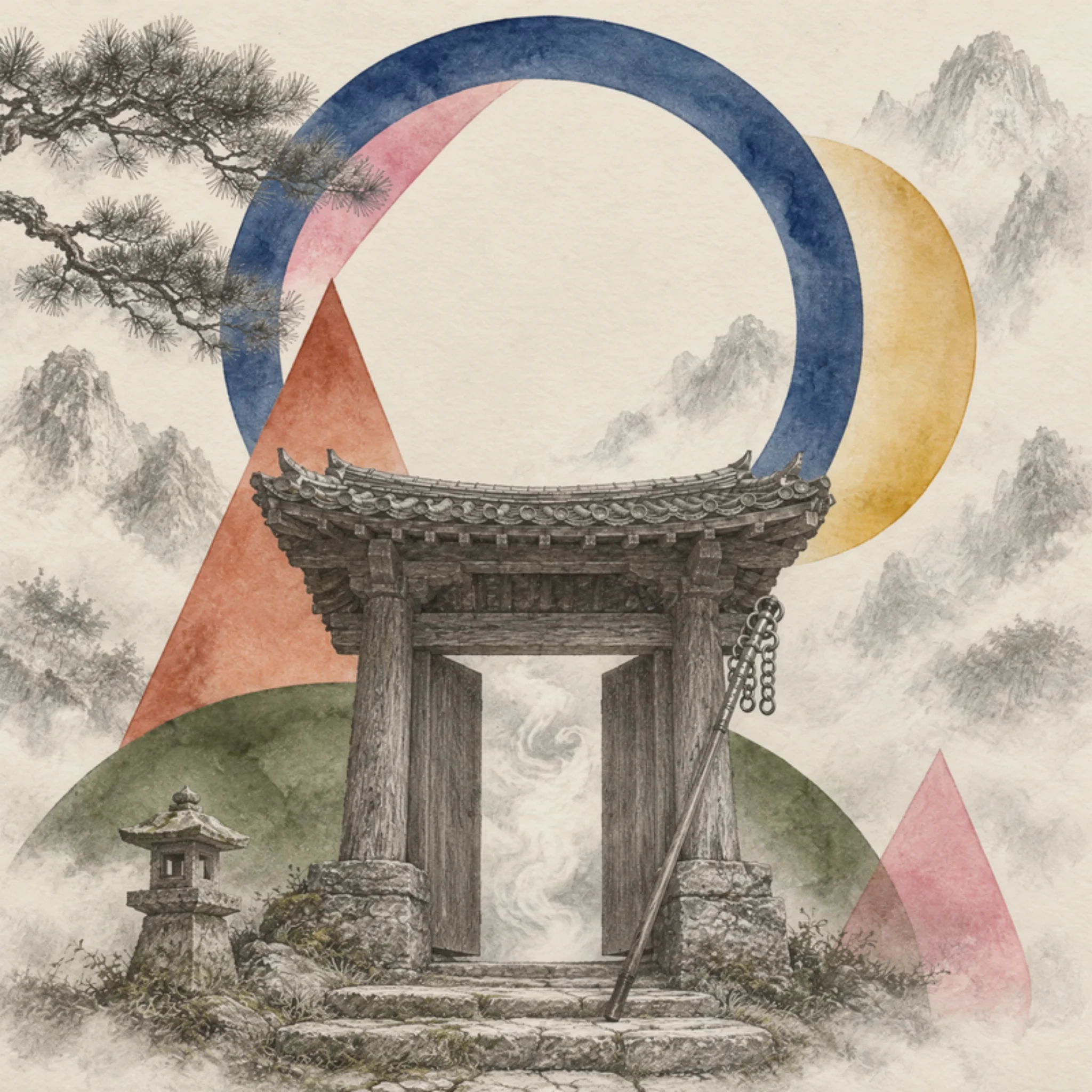
Died about 850 CE · Mount Huangbo, Jiangxi, China
Life
Huangbo Xiyun was a tall, forceful Chan master of the Tang dynasty who taught on Mount Huangbo in Jiangxi. The scholar-official Pei Xiu (9th century) recorded his teachings and published them with a preface dated 857 as the Essentials of the Transmission of Mind (Chuanxin fayao). His student Linji founded the line that became Rinzai Zen. The hitting story is Linji's.
What they saw
Huangbo's teaching rests on one word: mind. All the buddhas and all beings are only the one mind, he says, and there is nothing else. This mind has no beginning, was never born and never dies. It is not green or yellow, has no shape, and is not found in any place.
Seeking it is the problem. To use mind to look for mind is to miss it forever. Stop the seeking, and it is there, as it always was. He compares it to the sky, which light and darkness pass through without changing it.
His “mind” means something other than the thinking mind, close to what this site calls awareness. The site's reading is that his one mind and the Upanishads' Self point to the same place.
In their words
In paraphrase: all buddhas and all beings are nothing but the one mind. Use mind to look for mind and you will miss it to the end of time.
After Huangbo, Essentials of the Transmission of Mind (857); paraphrase. Modern translations, such as John Blofeld's (1958), are in copyright.
Where this path meets the others
Huangbo's one mind is the closest Chan word to awareness. See Zen and Advaita and Linji.
Stop using the mind to find the mind.
Works
- Essentials of the Transmission of Mind (Chuanxin fayao)recorded by Pei Xiu; preface 857
Further reading
- The Zen Teaching of Huang Po, tr. John Blofeld (1958; in copyright)
Next on your path
Sources
- Chuanxin fayao, preface by Pei Xiu dated 857, paraphrased.
- The three blows: The Record of Linji, paraphrased.