F. H. Bradley
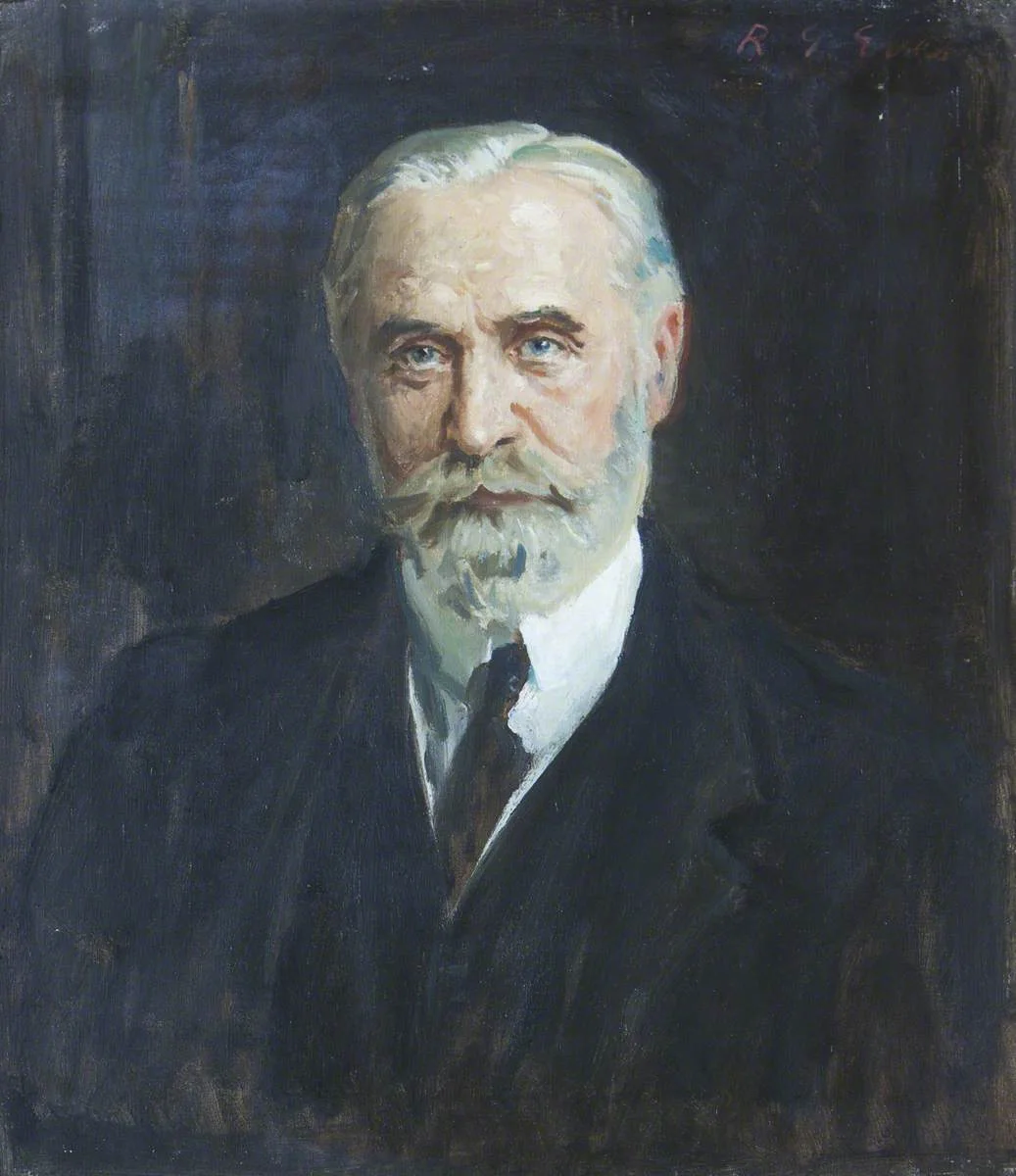
30 January 1846 to 18 September 1924 · Born at Clapham, London; fellow of Merton College, Oxford, from 1870 until his death
Life
Francis Herbert Bradley was elected a fellow of Merton College, Oxford, in 1870. A kidney illness the next year left him in poor health, and he held a fellowship with no teaching duties for the rest of his life. He wrote Ethical Studies (1876), The Principles of Logic (1883) and Appearance and Reality (1893), the most famous work of British idealism. He was the first philosopher to receive the Order of Merit, in 1924. He died that year. The poet T. S. Eliot wrote his doctoral thesis on him.
What they saw
Appearance and Reality has two halves. The first takes apart every ordinary idea: things and their qualities, relations, space, time, the self. Each, Bradley argues, contradicts itself when thought through. So each is appearance.
The second half says what is real: the Absolute, a single, all-inclusive experience in which every appearance has its place and its contradictions are resolved. Appearances are not nothing; they belong to reality and are real in degree.
No English philosopher came closer to Advaita. His appearances, real in degree, sit near dependent reality. He kept the Absolute as experience including everything, which is close to the whole.
In their words
“Metaphysics is the finding of bad reasons for what we believe upon instinct, but to find these reasons is no less an instinct.”
F. H. Bradley, Appearance and Reality (1893), preface
Where this path meets the others
Bradley and Shankara sets his Absolute beside the whole. His “appearance” is the word this site uses for Maya. See Appearance.
Even the reasons are an instinct.
Works
- Appearance and Reality1893
- Ethical Studies1876
- The Principles of Logic1883
Further reading
- F. H. Bradley, Appearance and Reality (1893)
- Richard Wollheim, F. H. Bradley (1959; in copyright)
Next on your path
Sources
- F. H. Bradley, Appearance and Reality: A Metaphysical Essay (London, 1893), preface. Public domain.
- Wollheim (1959), for the life, paraphrased.