Anandamayi Ma
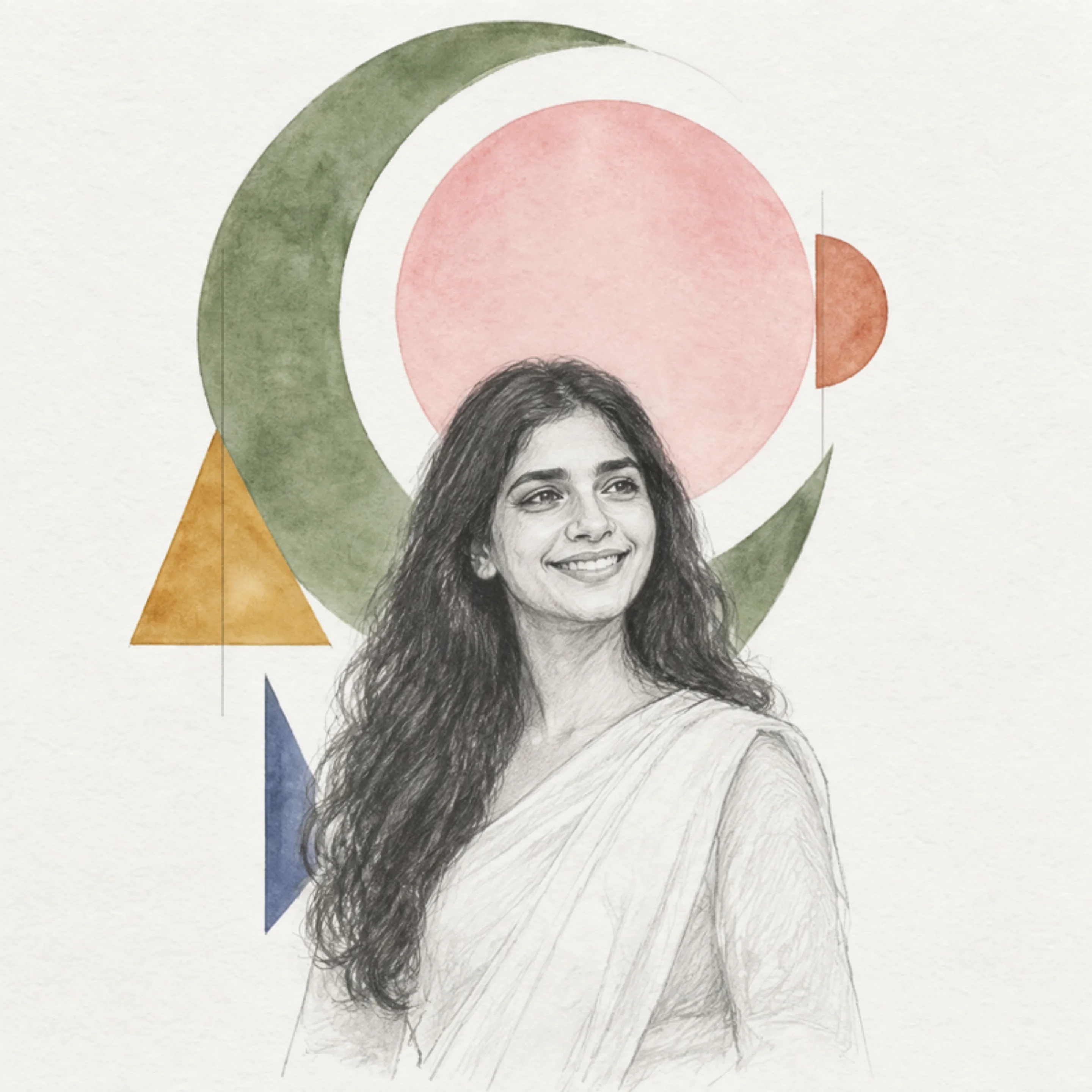
30 April 1896 to 27 August 1982 · Born at Kheora, East Bengal (today Bangladesh); died at Kishenpur, Dehradun; her shrine is at Kankhal, Haridwar
Life
Nirmala Sundari was born in 1896 in a poor Brahmin family in a village of East Bengal. She had little schooling. Married as a girl to Ramani Mohan Chakrabarti, later known as Bholanath, she spent years in intense spiritual practice that she said no one had taught her. In Dhaka in the 1920s people began to gather around her and called her Anandamayi Ma, the mother full of joy. For the rest of her life she travelled across India, staying in ashrams built for her, meeting everyone from villagers to Indira Gandhi. She died in 1982.
What they saw
Anandamayi Ma did not write. Her sayings were recorded by others, mostly in Bengali, and she gave no system. She referred to herself as “this body”, never “I”, and many who met her said that was the clearest teaching of all.
She spoke of one reality appearing as everything, and said the search for it is the one duty that matters. She also kept to ritual, devotional singing and the rules of purity of her tradition, and saw no conflict between them and not two.
She was one of the most respected women teachers of 20th-century India, and she held that position without claiming any title.
In their words
In paraphrase: there is only one Self, appearing in many forms. To look for it is the one thing worth doing; everything else follows.
After Anandamayi Ma's recorded sayings (Matri Vani and later collections, in copyright); paraphrase, not a quotation.
Where this path meets the others
Anandamayi Ma joins devotion and not two as Ramakrishna did, and her “this body” is a lived version of the Gita's person without the I-claim. See Devotion and Ramakrishna.
She called it this body.
Further reading
- Alexander Lipski, Life and Teaching of Sri Anandamayi Ma (1977; in copyright)
- Matri Vani (Shree Shree Anandamayee Charitable Society; in copyright)
Next on your path
Sources
- Lipski (1977), for the life and dates, paraphrased.
- Her sayings are in copyright and paraphrased only.