Alan Turing
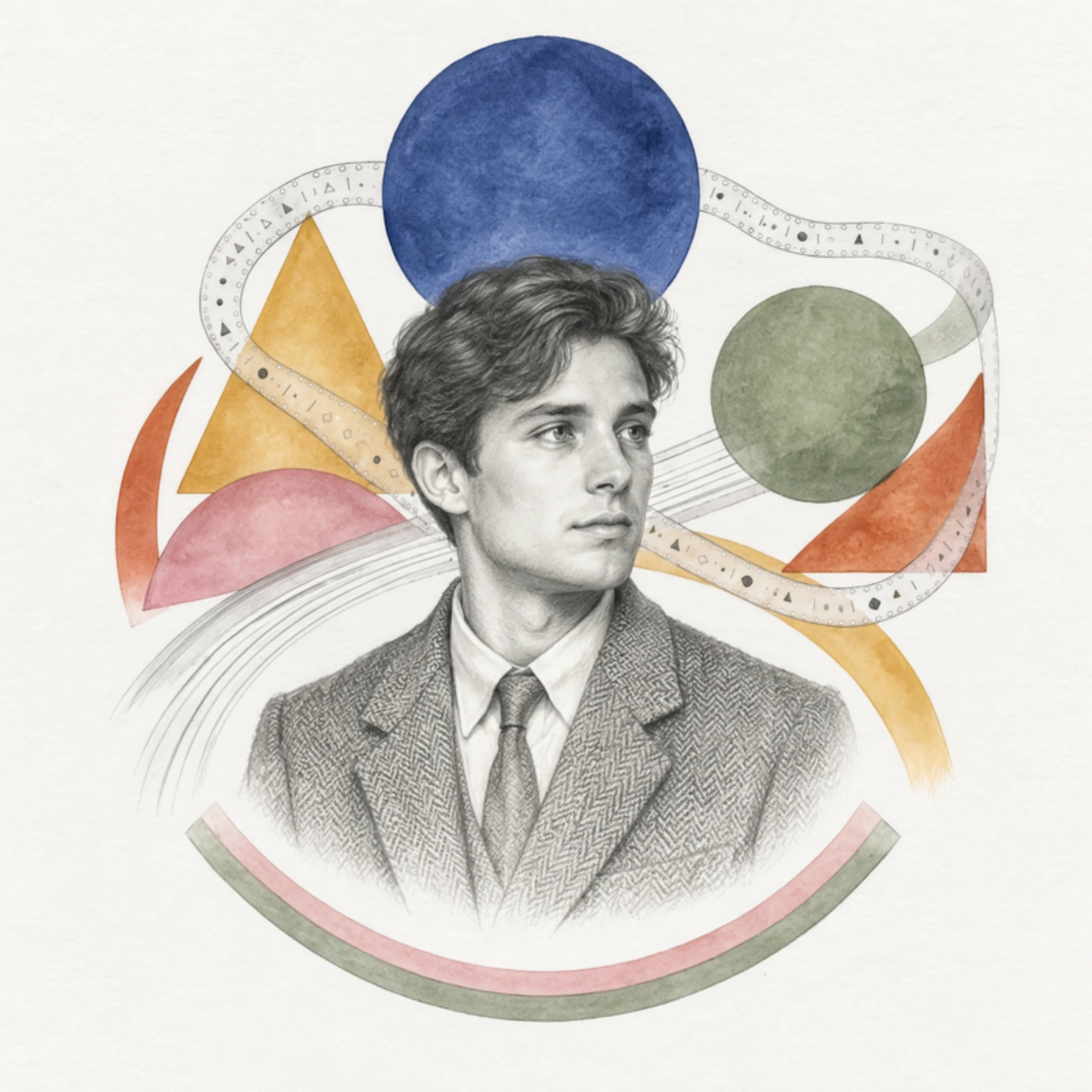
23 June 1912 to 7 June 1954 · Born in London; Cambridge, Bletchley Park and Manchester; died at Wilmslow, Cheshire
Life
Alan Mathison Turing studied mathematics at King's College, Cambridge. In 1936 he described an imaginary machine that could carry out any calculation that can be set out as rules, the idea behind every computer since. In the war his team at Bletchley Park broke German naval codes. After the war he designed early computers and, in 1950, published “Computing Machinery and Intelligence”. In 1952 he was prosecuted for homosexuality under the law of the time and forced into hormone treatment. He died of cyanide poisoning in 1954. The British government apologised in 2009 and he was pardoned in 2013.
What they saw
Turing thought the question “can machines think?” too vague to answer. He replaced it with a game. If a machine can carry on a typed conversation so well that a judge cannot reliably tell it from a person, we should say it thinks. He predicted that by about the year 2000 people would speak of machines thinking without being contradicted.
He answered many objections, including the argument from consciousness: that a machine could not feel what it says. His reply was that we cannot know another person's feelings either; we judge from behaviour.
The site's reading starts here. Behaviour can show thinking, as the Kena says the mind thinks. What the test cannot reach is what the thinking appears to.
In their words
“I propose to consider the question, ‘Can machines think?’”
A. M. Turing, “Computing Machinery and Intelligence”, Mind 59 (1950), opening sentence
Where this path meets the others
Turing's machine and the witness asks what his test does and does not show. See The Self and AI and John Searle.
Can machines think? Ask who is asking.
Works
- On Computable Numbers1936
- Computing Machinery and Intelligence1950
Further reading
- A. M. Turing, “Computing Machinery and Intelligence”, Mind 59 (1950)
- Andrew Hodges, Alan Turing: The Enigma (1983; in copyright)
Next on your path
Sources
- Hodges, Alan Turing: The Enigma (1983), for the life, paraphrased.
- Turing (1950), opening sentence and section 6 (objections), paraphrased; his works entered the public domain in the UK in 2025.