Thomas Metzinger
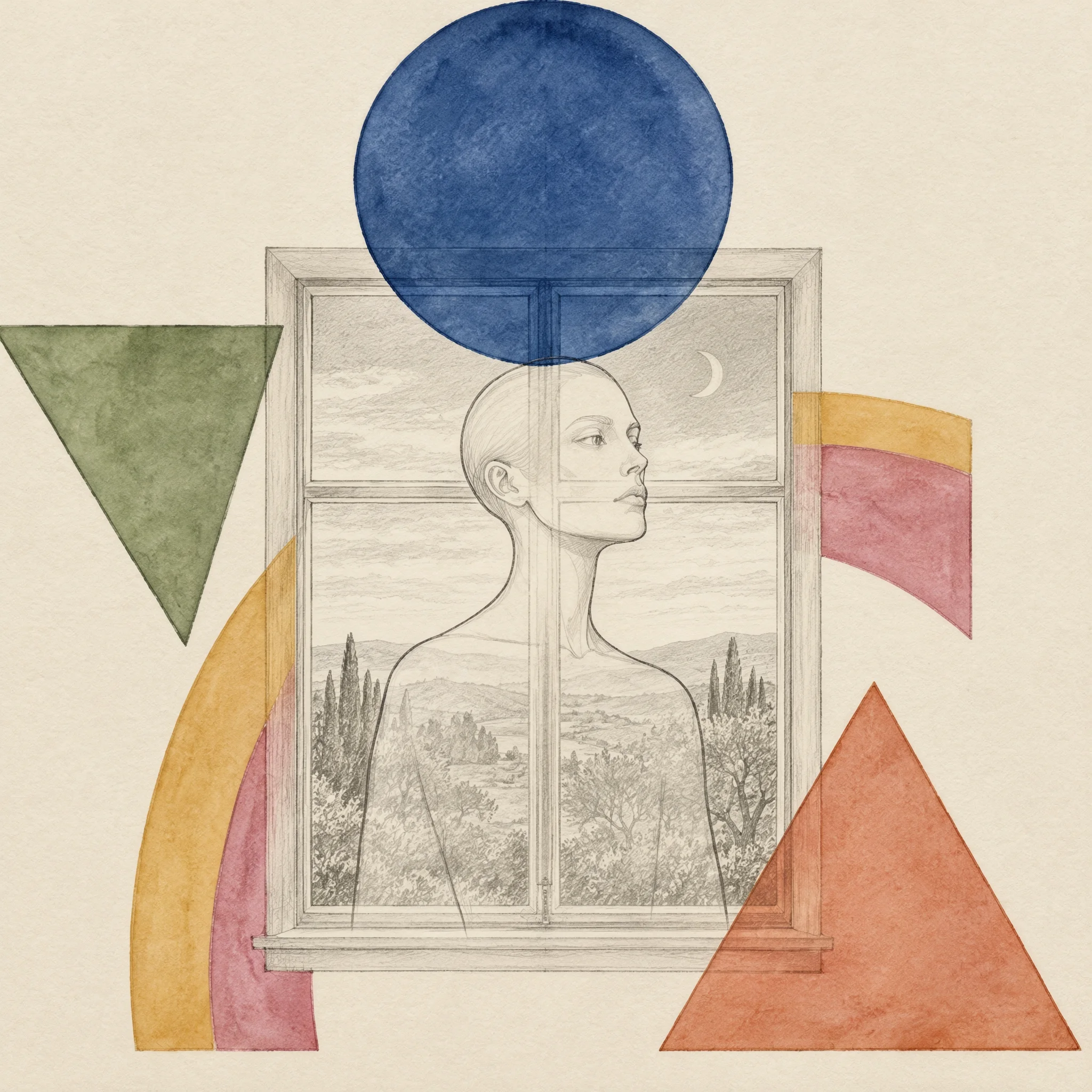
Born 12 March 1958 · Frankfurt am Main; professor emeritus at the University of Mainz
Life
Thomas Metzinger studied philosophy in Frankfurt and taught for many years at the Johannes Gutenberg University of Mainz. He works on the philosophy of mind, consciousness research and the ethics of artificial intelligence, and served on the European Commission's expert group on AI ethics (2018 to 2020). His main books are Being No One (2003) and The Ego Tunnel (2009). He has also written on meditation.
What they saw
Metzinger's self-model theory says that the brain builds a model of the organism it belongs to, and that this model is transparent: we do not see it as a model, we see through it, and so we take it to be ourselves. The felt self is the model, running. No one ever was or had a self, in the sense of a thing.
The lab experiments, in which people feel themselves located in a virtual body, show how easily the model can be moved.
Advaita would agree about the self-model: it is the I-claim and the frame. What Metzinger leaves open, and his recent work on pure awareness in meditation explores, is what the model appears to. That is where the site's witness stands.
In their words
In paraphrase: no such things as selves exist in the world; what exists is the experience of being a self, produced by a model the system cannot recognise as a model.
After Thomas Metzinger, Being No One (2003; in copyright); paraphrase.
Where this path meets the others
Metzinger's self-model is the I-claim described by neuroscience. See The I-claim, Dennett and the witness and The Self and AI.
The model is seen through. What sees?
Works
- Being No One2003
- The Ego Tunnel2009
Further reading
- Thomas Metzinger, The Ego Tunnel (2009; in copyright)
- Thomas Metzinger, Being No One (2003; in copyright)
Next on your path
Sources
- University of Mainz staff page and publisher's notes, for career details; born 12 March 1958 (Wikipedia).
- The body-swap experiments he describes: Lenggenhager, Tadi, Metzinger and Blanke, Science 317 (2007), paraphrased.