The Cloud of Unknowing
Written in the later 14th century · England (probably the East Midlands); author unknown
Life
The Cloud of Unknowing was written in English in the later fourteenth century by an unknown author, probably a priest or a Carthusian monk, as a letter of guidance to a young man drawn to contemplative prayer. The same author wrote shorter works too. One is The Book of Privy Counselling. The author asks that the book be read only by those genuinely called to this way, and read all the way through.
What they saw
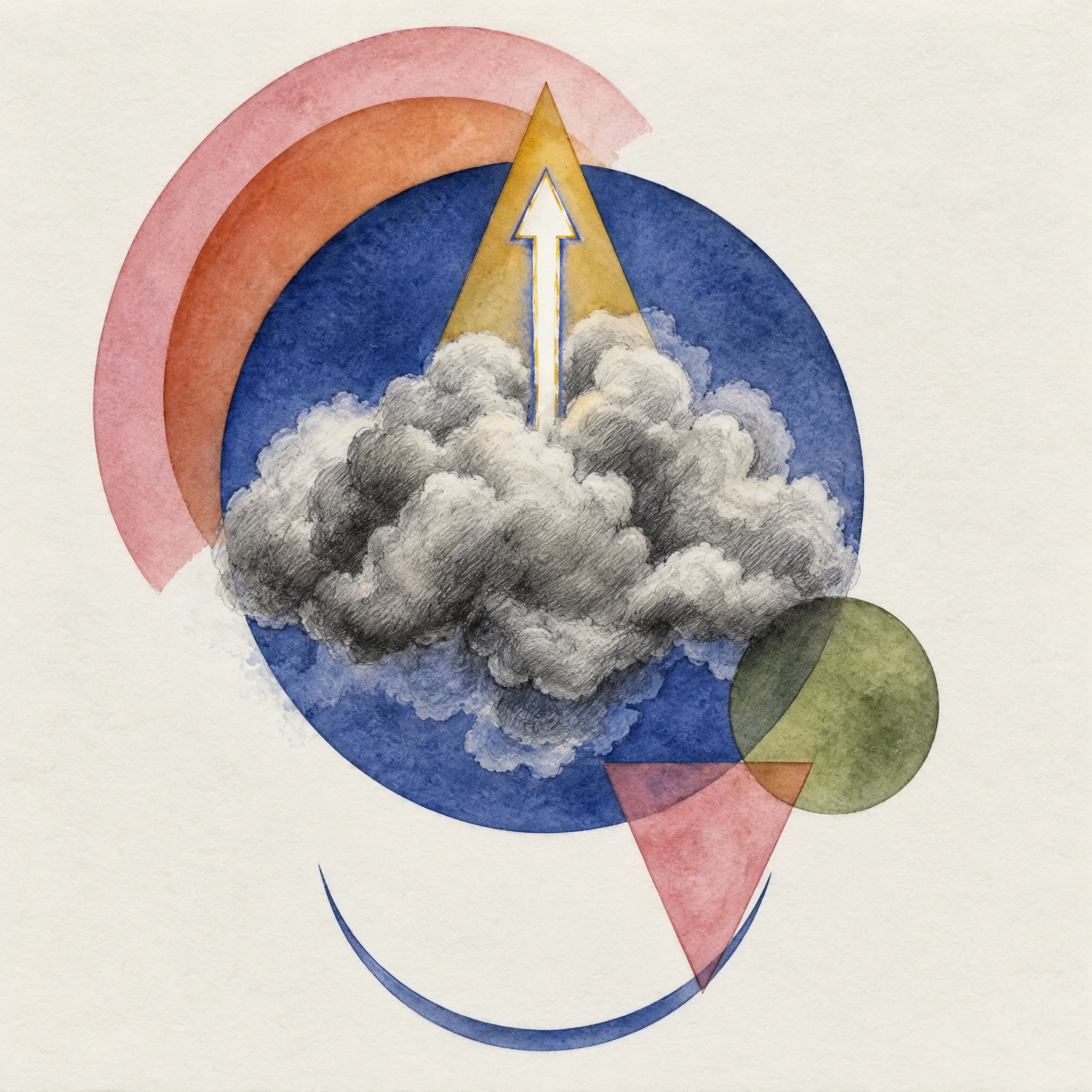
Between you and God, the author says, there is a cloud of unknowing, which the mind cannot get through. Thought, even devout thought, keeps you outside. So put every thought, even good ones, under a second cloud, a cloud of forgetting, and reach toward God with a simple, naked longing. Use a single short word, like “God” or “love”, to hold your intent.
This is the way of not-knowing: God is known by being loved, not by being understood. Thought cannot hold God; love can.
In their words
“By love may He be gotten and holden; but by thought never.”
The Cloud of Unknowing, chapter 6, ed. Evelyn Underhill (1912; reissued 1922)
“smite upon that thick cloud of unknowing with a sharp dart of longing love”
The Cloud of Unknowing, chapter 6, ed. Evelyn Underhill (1912; reissued 1922)
Where this path meets the others
Its two clouds are close to Advaita's “not this, not this”, which sets aside every object of thought, and to the Kena Upanishad's “not that which people here adore”. Its single word is close to the Sufi practice of remembrance (dhikr). See the Glossary: apophatic way.
What thought cannot hold, love can.
Works
- The Cloud of Unknowinglater 14th century
- The Book of Privy Counsellinglater 14th century
Further reading
- A Book of Contemplation the which is called The Cloud of Unknowing, ed. Evelyn Underhill (London: John M. Watkins, 1912)
Next on your path
Sources
- A Book of Contemplation the which is called The Cloud of Unknowing, ed. Evelyn Underhill (London: John M. Watkins, 1912; 2nd ed. 1922), chapter 6. Public domain.
- Authorship and date: unknown author, later 14th century, as generally agreed.