Jnaneshwar (Dnyaneshwar)
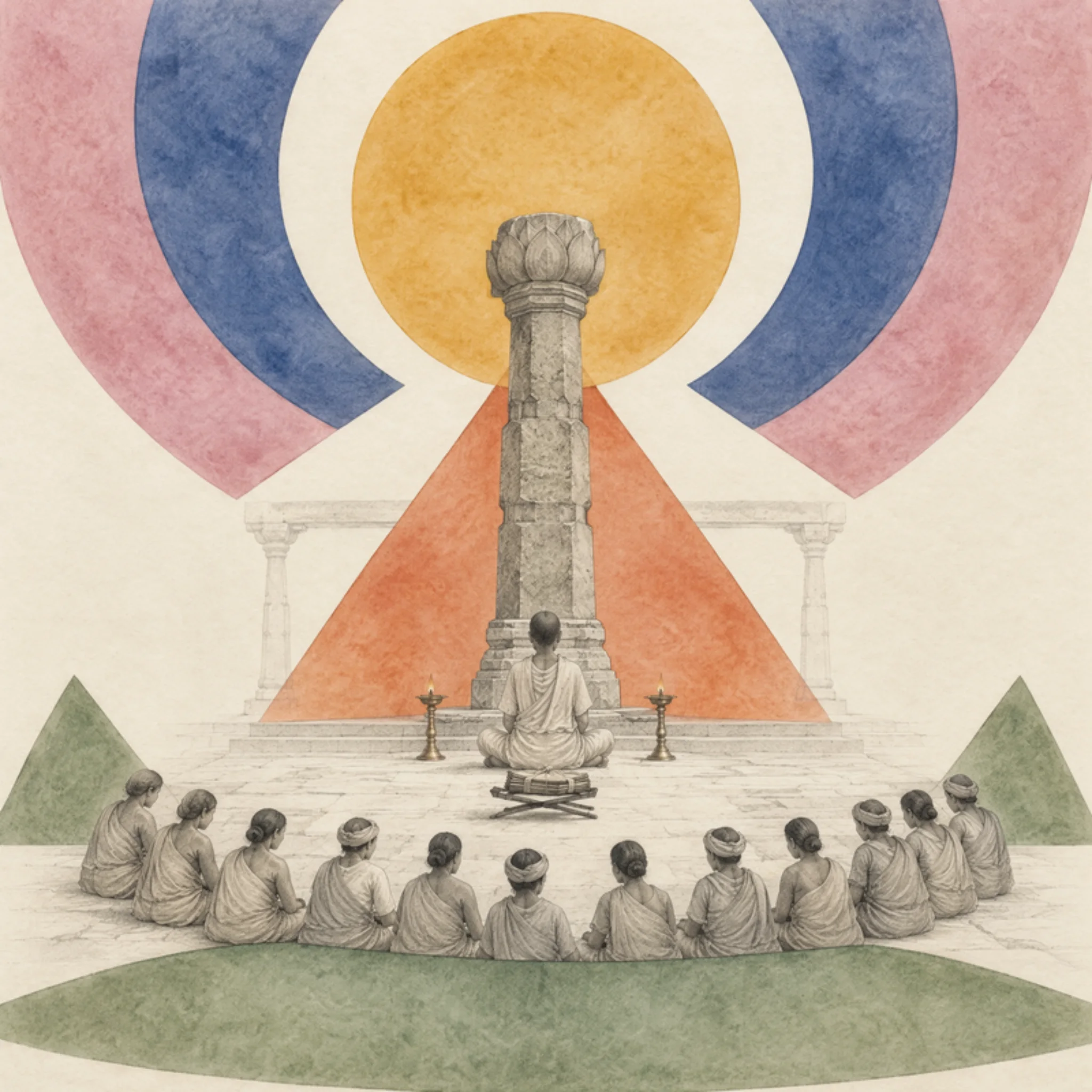
1275 to 1296 (traditional dates) · Born at Apegaon, near Paithan, Maharashtra; died at Alandi
Life
Jnaneshwar's father had taken monastic vows and then, at his teacher's order, returned to his wife. The Brahmins of the region treated the family as outcasts. The four children (Nivrittinath, Jnaneshwar, Sopan and their sister Muktabai) became teachers and poets. Around 1290, at Nevasa, Jnaneshwar dictated the Jnaneshwari, a commentary on the Gita in about 9,000 Marathi verses. He also wrote the Amritanubhava. By tradition he entered living samadhi at Alandi in 1296, aged about twenty-one. The Varkari pilgrims who walk to Pandharpur every year carry his name.
What they saw
The Jnaneshwari takes the Gita out of Sanskrit and into village speech, full of images: the moon in a puddle, a lamp in a house, a mother and her child. It reads the Gita as a song of one reality shining as all.
The Amritanubhava goes further. It praises Shiva and Shakti as one, the light and its shining. Its seventh chapter argues that not-knowing cannot actually exist, since there is only the one light and nothing for it not to know. That argument is a friendly quarrel with Advaita, which keeps not-knowing as beginningless and admits it cannot be explained.
Both arrive at the same not two. Jnaneshwar refuses to give darkness even a provisional seat.
In their words
In paraphrase: if the sun went looking for darkness, it would never find it. Not-knowing is like that when the Self looks for it.
After Amritanubhava, chapter 7; paraphrase, not a quotation.
Where this path meets the others
Jnaneshwar's refusal to admit not-knowing is close to Kashmir Shaivism's light that knows itself, and it is the sharpest Indian challenge to Advaita from within. See Kashmir Shaivism and Advaita and Not-knowing.
The sun cannot find the dark.
Works
- Jnaneshwari (Bhavartha Dipika)c. 1290
- Amritanubhavalate 13th century
Further reading
- B. P. Bahirat, The Philosophy of Jnanadeva (1956; in copyright)
- Jnaneshwari, tr. V. G. Pradhan, ed. H. M. Lambert (1967 to 1969; in copyright)
Next on your path
Sources
- Bahirat, The Philosophy of Jnanadeva (1956), for the life, the dates and the Amritanubhava, paraphrased.
- The living samadhi at Alandi is tradition.